
Green Ash
Fraxinus pennsylvanica
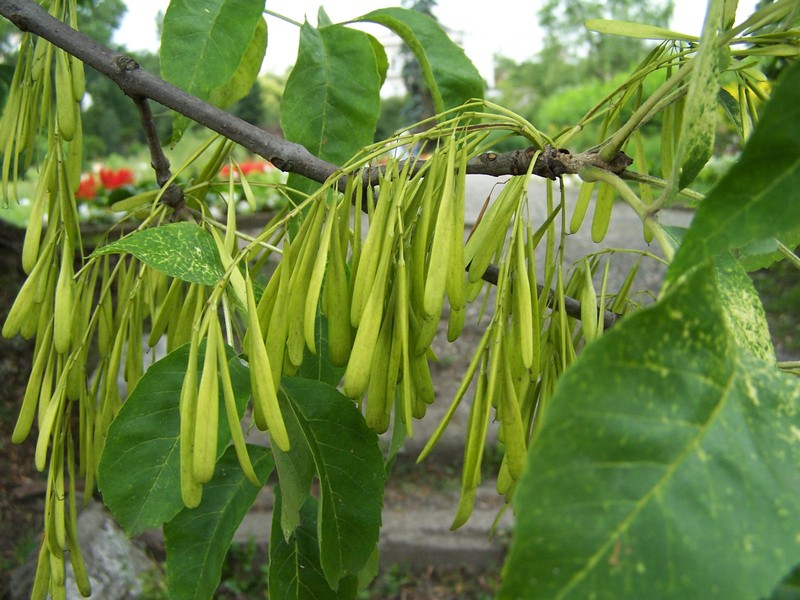
Jerzy Opioła
Taxonomy
- Division:
- Magnoliophyta | - Flowering plants
- Family:
- Oleaceae
- Genus:
- Fraxinus
- Species:
- Fraxinus pennsylvanica
Growth Characteristics
- Life Cycle:
- Perennial
- Growth Habit:
- Tree
- Height:
- More than 40 ft
- Light Requirements:
- Full Sun, Part Shade, Shade
- Drought Tolerance:
- High
- Bloom Months:
- apr, may, jun
- Bloom Colors:
- Green, Purple, Brown
Native Range
United States: Alabama, Arkansas, Colorado, Connecticut, District of Columbia, Delaware, Florida, Georgia, Iowa, Illinois, Indiana, Kansas, Kentucky, Louisiana, Massachusetts, Maryland, Maine, Michigan, Minnesota, Missouri, Mississippi, Montana, North Carolina, North Dakota, Nebraska, New Hampshire, New Jersey, New Mexico, New York, Ohio, Oklahoma, Pennsylvania, Rhode Island, South Carolina, South Dakota, Tennessee, Texas, Utah, Virginia, Vermont, Wisconsin, West Virginia, Wyoming, Canada: Alberta, Manitoba, New Brunswick, Nova Scotia, Ontario, Prince Edward Island, Quebec, Saskatchewan
Keystone Species Ranking
- Caterpillar Keystone:
- ★☆☆☆☆ Based on number of butterfly and moth species using this genus as host plant (Source: National Wildlife Federation)
Host Plant for Caterpillars
Reported Fauna Sightings
Soil Requirements
- Soil Type:
- rich, well-drained loamy soil
- pH:
- 5.5 - 7.5 (slightly acidic to neutral)
- Drainage:
- tolerates poor drainage
- Moisture:
- consistently moist
- Notes:
- Commonly found in floodplains and riverbanks
Germination Information
Pre-treatment: Seeds are soaked in clean water for 10 days with daily water changes, then stratified for 48-90 days in moist peat moss at 36 F.
Establishment: Seeds are purchased from local collectors within a 50 mile radius of the nursery. The plant is found mostly on moist fertile soils in a variety of deciduous and open coniferous forests, as well as in riparian areas. Seed sources are from south central Missouri.
Source: npn.rngr.net