
Green Ash
Fraxinus pennsylvanica
- Native to:
- Canada, United States, Virgin Islands
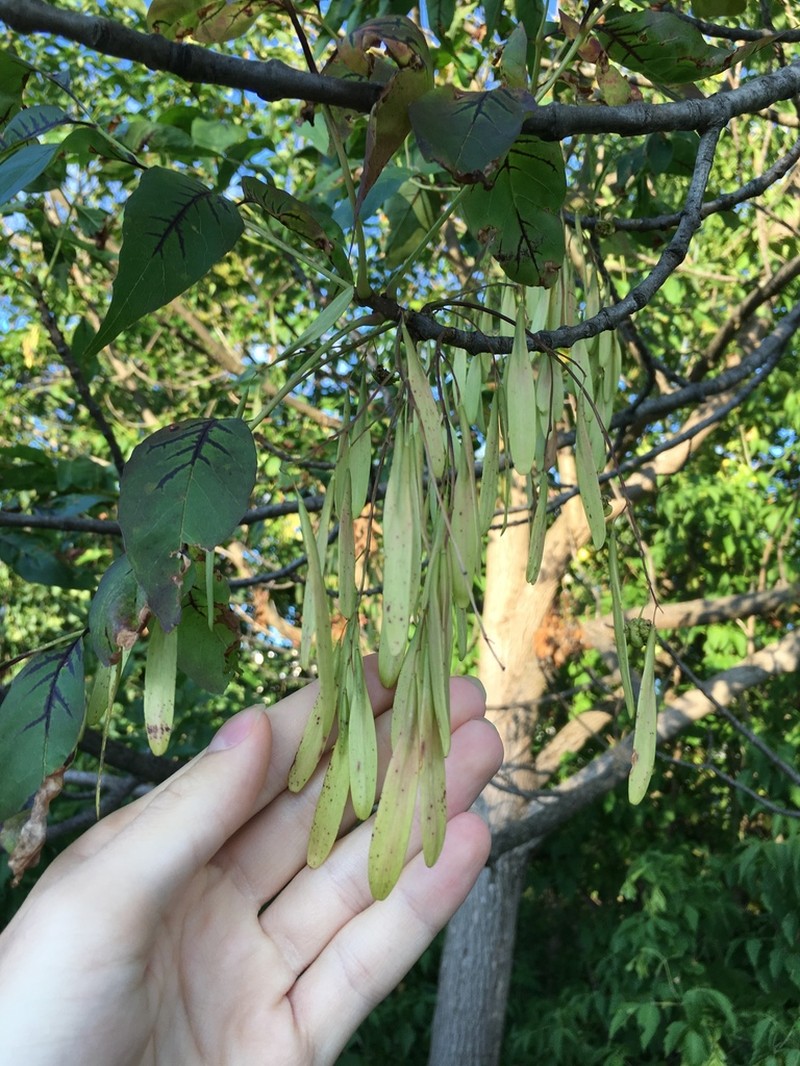
iNaturalist: © picklejar (iNaturalist #328803102)
Taxonomy
- Division:
- Magnoliophyta | - Flowering plants
- Family:
- Oleaceae
- Genus:
- Fraxinus
- Species:
- Fraxinus pennsylvanica
- USDA Symbol:
- FRPE
Growth Characteristics
- Life Cycle:
- Perennial
- Growth Habit:
- Tree
- Height:
- 2500 cm
- Light Requirements:
- Full Sun,Part Shade,Shade
- Drought Tolerance:
- Medium
- Bloom Months:
- apr,may
- Bloom Colors:
- green, purple
Wildlife Benefits
- Bees:
- ★☆☆☆☆ Documented bee visitation (GBIF)
- Butterflies & Moths:
- ★★★★☆ Documented Lepidoptera association (GBIF)
- Caterpillars:
- ★★★☆☆ Recorded caterpillar host plant (HOSTS Database)
Keystone Species Ranking
- Caterpillar Keystone:
- ★★★★★ Butterfly & moth species supported by this genus (NWF)
Host Plant for Caterpillars
Adita chionanthi, American Dagger Moth (Acronicta americana), Ash Borer (Podosesia syringae), Carpenterworm Moth (Prionoxystus robiniae), Cecropia moth (Hyalophora cecropia), Cydia ingrata, fall cankerworm (Alsophila pometaria), hibiscus Quaker (Orthosia hibisci), Marmara basidendroca, Marmara corticola, Marmara fraxinicola, Norman's Quaker (Crocigrapha normani), Olceclostera seraphica, One-spotted variant moth (Hypagyrtis unipunctata), Papaipema furcata, Promethea silkmoth (Callosamia promethea), tawny brown carpet moth (Anacamptodes ephyraria), ugly-nest caterpillar moth (Archips cerasivorana), Wanton Pinion (Lithophane petulca), Eastern Tiger Swallowtail (Papilio glaucus)
Reported Fauna Sightings
Moths:Banded Tussock Moth (Halysidota tessellaris), Caloptilia fraxinella, lilac sphinx (Sphinx kalmiae), Marmara fraxinicola, Waved Sphinx (Ceratomia undulosa) Butterflies:Baltimore checkerspot (Euphydryas phaeton), Eastern Tiger Swallowtail (Papilio glaucus)
Garden & Ecology Notes
- Wildlife Value:
- birds, small mammals
- Salt Tolerant:
- Yes
- Fall Color:
- yellow
Soil Requirements
- Soil Type:
- rich, well-drained loamy soil
- pH:
- 5.5 - 7.5 (slightly acidic to neutral)
- Drainage:
- tolerates poor drainage
- Moisture:
- consistently moist
- Notes:
- Commonly found in floodplains and riverbanks
Propagation & Germination
- Stratification:
- Cold/moist stratification required — 60–90 days
- Germination Time:
- 30–60 days
- Notes:
- Seeds require cold stratification for 60-90 days to break dormancy; germination occurs in spring.
Pre-treatment: Seeds are soaked in clean water for 10 days with daily water changes, then stratified for 48-90 days in moist peat moss at 36 F.
Establishment: Seeds are purchased from local collectors within a 50 mile radius of the nursery. The plant is found mostly on moist fertile soils in a variety of deciduous and open coniferous forests, as well as in riparian areas. Seed sources are from south central Missouri.
Source: npn.rngr.net
ORGHPS Germination Guide: Sow @ 20°C for 3 months, then place @ 4°C for 3 months. * will germinate after 20 days in 2nd warm cycle
Where to Buy
Nationwide Seller
- Sheffield's Seed (seeds)