
Tufted Evening Primrose
Oenothera caespitosa
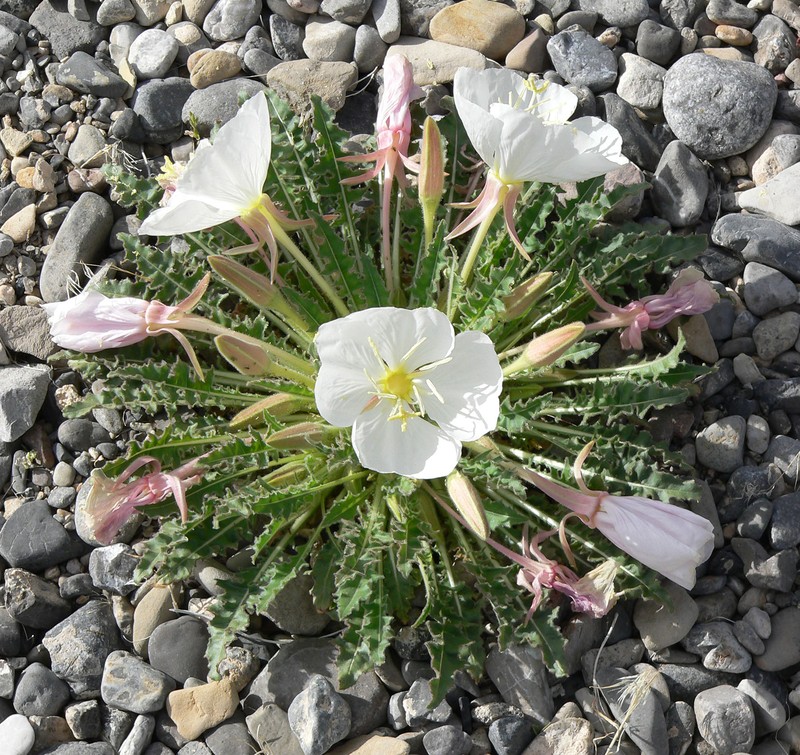
Taxonomy
- Division:
- Magnoliophyta | - Flowering plants
- Family:
- Onagraceae
- Genus:
- Oenothera
- Species:
- Oenothera caespitosa
Growth Characteristics
- Life Cycle:
- Perennial
- Growth Habit:
- Forb/herb , Subshrub
- Height:
- 1-2 ft
- Light Requirements:
- Full Sun
- Drought Tolerance:
- High
- Bloom Months:
- apr, may, jun, jul, aug
- Bloom Colors:
- White
- Ground Cover:
- Yes
Native Range
United States: Arizona, California, Colorado, Idaho, Montana, North Dakota, Nebraska, New Mexico, Nevada, Oregon, South Dakota, Texas, Utah, Washington, Wyoming, Canada: Alberta, Manitoba, Saskatchewan
Keystone Species Ranking
- Caterpillar Keystone:
- ★★★★☆ Based on number of butterfly and moth species using this genus as host plant (Source: National Wildlife Federation)
- Bee Keystone:
- ★★★☆☆ Based on number of native bee species using this genus for pollen and nectar (Source: National Wildlife Federation)
Reported Fauna Sightings
Bees: Nevada bumble bee (Bombus nevadensis), Nevada bumble bee (Bombus nevadensis), Yellow bumble bee (Bombus fervidus), Yellow bumble bee (Bombus fervidus)
Soil Requirements
- Soil Type:
- gritty, well-drained, rocky soil
- pH:
- 6.0 - 8.0 (neutral to slightly alkaline)
- Drainage:
- excellent drainage required
- Moisture:
- dry to moderate
- Notes:
- thrives in poor, low-nutrient soils
Germination Information
Pre-treatment: 5 month outdoor cold moist stratification
Establishment: Seeds are hand collected in late August when capsules turn dark brown and woody. Seeds are black at maturity. Capsules are collected using pruning shears and are stored in paper bags prior to cleaning.
Source: npn.rngr.net