
Tahitian Screwpine
Pandanus tectorius
Also known as: New Britain Island Screwpine
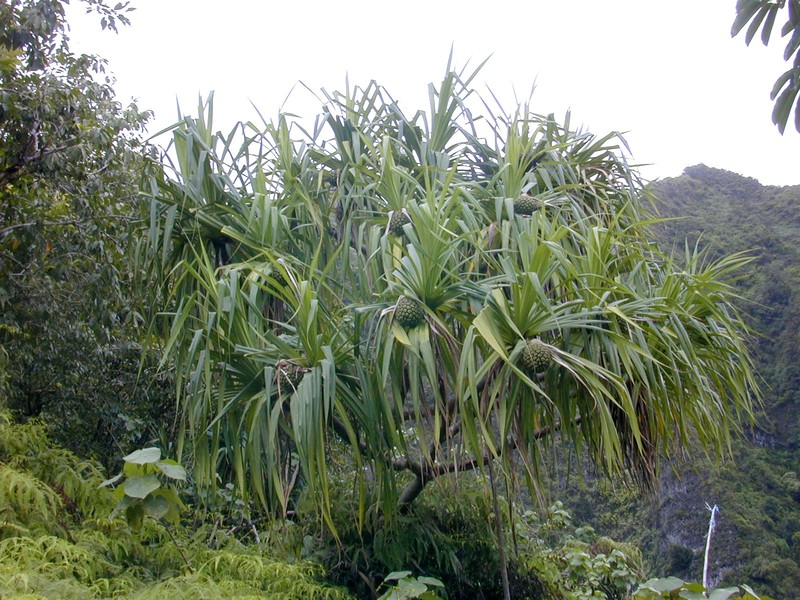
No machine-readable author provided. Marshman~commonswiki assumed (based on copyright claims).
Taxonomy
- Division:
- Magnoliophyta | - Flowering plants
- Family:
- Pandanaceae
- Genus:
- Pandanus
- Species:
- Pandanus tectorius
Growth Characteristics
- Life Cycle:
- Perennial
- Growth Habit:
- Tree
- Height:
- 12-20 ft
- Light Requirements:
- Full Sun
- Drought Tolerance:
- High
- Bloom Months:
- mar, apr, may, jun, jul, aug
- Bloom Colors:
- cream, white
Native Range
United States: Guam, Hawaii, Puerto Rico, Palau, U.S. Minor Outlying Islands
Reported Fauna Sightings
Soil Requirements
- Soil Type:
- sandy, nutrient-poor, well-drained soil
- pH:
- 6.0 - 7.5 (slightly acidic to neutral)
- Drainage:
- excellent drainage required
- Moisture:
- dry to moderate
- Notes:
- commonly found in coastal and island environments
Germination Information
Pre-treatment: For seeds: No pretreatment is necessary but it is recommended to cut off the fleshy end of the seed to reduce decomposition. Soaking for five days in water (changing the water daily) hastens germination. For cuttings: Each cutting must have a healthy terminal shoot bud. Stems are cut to 15 to 20 cm lengths, and all mature leaves are removed except the terminal leaves. Leaf buds in the axils of leaves are not removed and will form new leaves once the cuttings are well rooted. Cuttings are directly stuck into containers filled with moistened medium. No rooting hormones are used.
Establishment: Pandanus tectorius trees are either male or female. Female trees produce a large, segmented fruit somewhat resembling a pineapple. Male trees produce large clusters of tiny, fragrant flowers surrounded by white to cream colored bracts. The fruit is about the size and shape of a squat pineapple, and consists of 40 - 80 sections called keys. Each key has a fleshy end and a hard end containing 1 or 2 seeds. The fruit takes several months to ripen, turning from greenish to yellow, orange or reddish and very fragrant when ripe.
Source: npn.rngr.net