
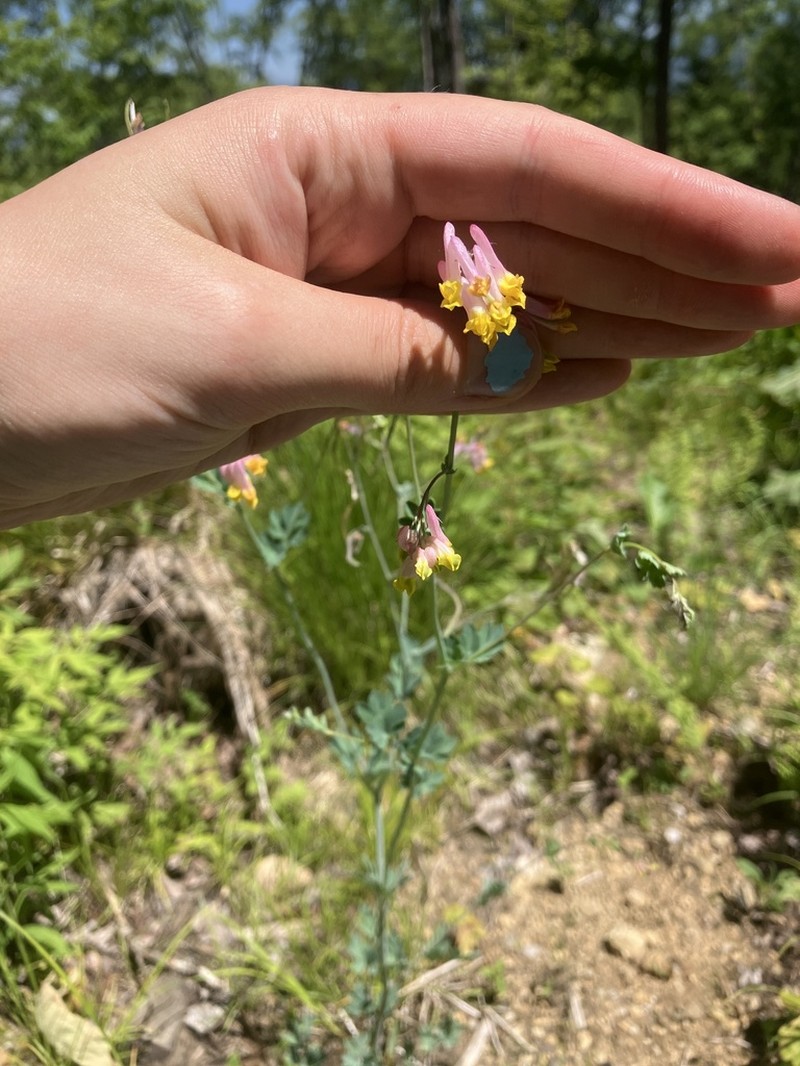
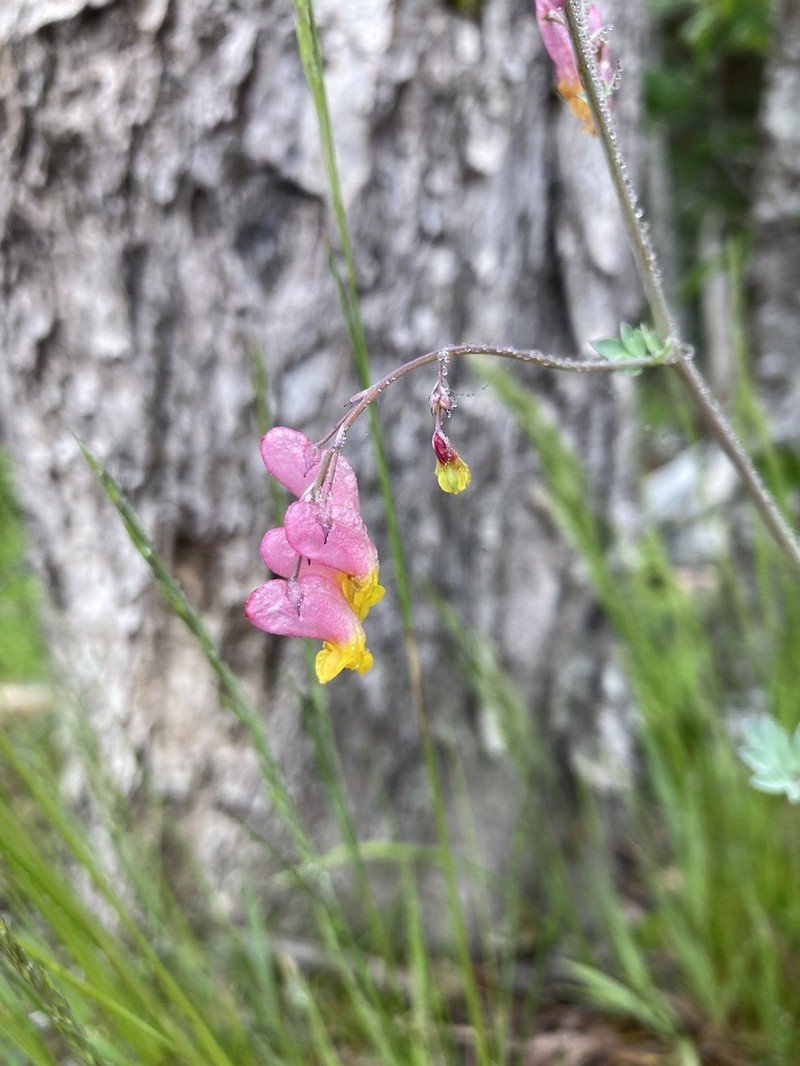
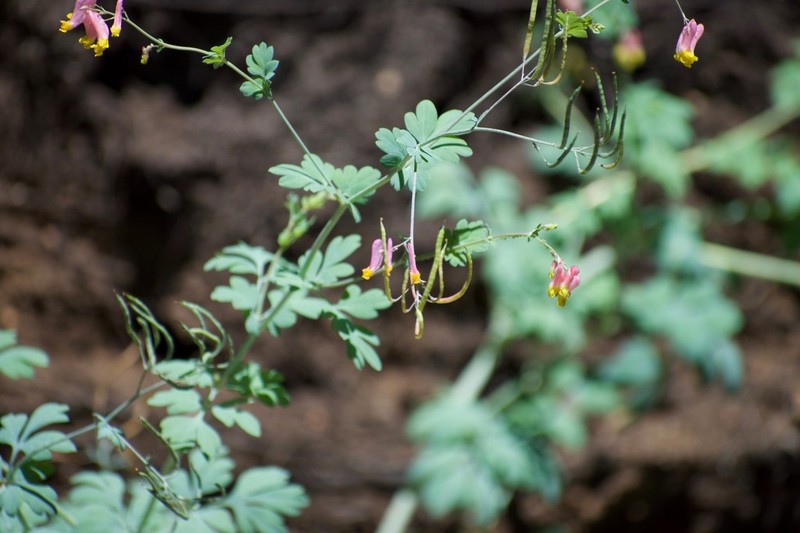
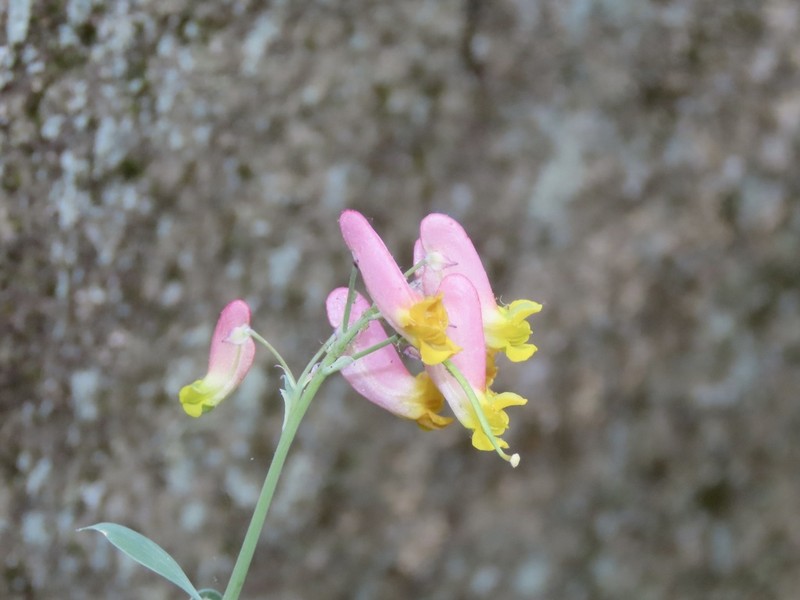
Rock Harlequin
Capnoides sempervirens
- Native to:
- Canada, Labrador, Prince Edward I., United States, Virgin Islands
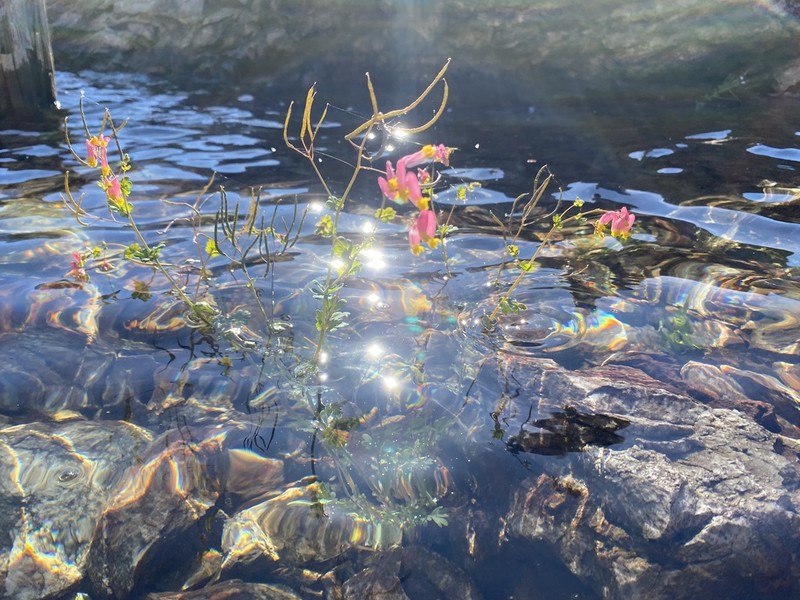
iNaturalist: © gwazala (iNaturalist #228071465)
Taxonomy
- Division:
- Magnoliophyta | - Flowering plants
- Family:
- Papaveraceae
- Genus:
- Capnoides
- Species:
- Capnoides sempervirens
- USDA Symbol:
- COSE5
Growth Characteristics
- Life Cycle:
- Annual | Biennial | Perennial
- Growth Habit:
- Forb/herb
- Height:
- 80 cm
- Light Requirements:
- Full Sun
- Drought Tolerance:
- Medium
- Bloom Months:
- may,jun,jul,aug,sep
- Bloom Colors:
- pink, yellow
Wildlife Benefits
- Bees:
- ★☆☆☆☆ Documented bee visitation (GBIF)
- Butterflies & Moths:
- ★☆☆☆☆ Documented Lepidoptera association (GBIF)
Garden & Ecology Notes
- Wildlife Value:
- bees, butterflies
- Deer Resistant:
- Yes
Soil Requirements
- Soil Type:
- sandy, well-drained, nutrient-poor soil
- pH:
- 5.5 - 7.0 (slightly acidic to neutral)
- Drainage:
- excellent drainage required
- Moisture:
- dry to moderate
- Notes:
- thrives in rocky or sandy areas
Propagation & Germination
- Stratification:
- Cold/moist stratification required — 30–60 days
- Germination Time:
- 14–30 days
- Notes:
- Seeds benefit from cold stratification for 4-8 weeks; sow in fall or after cold treatment.
Pre-treatment: Cold-moist stratification for 30 days at 1–5°C (34–41°F).; then Cold-moist stratification for 60 days.
Source: Claude AI
ORGHPS Germination Guide: Sow immediately, Either the viability of these seeds is short or the species propagates best with fresh seed. Stored seed might be coaxed into germination with temperature cycling and patience. Sow @ 20°C. Seed germinates within 3 months Requires light or the seed is very fine. Surface sow and expose to light. * dry storage impairs germination
Where to Buy
Nationwide Seller
- Prairie Moon Nursery (nursery and seeds)
- Wild Seed Project (seeds)
- Vermont Wildflower Farm (nursery and seeds)