
Turnera scabra
Turnera scabra
- Native to:
- Belize, Brazil, Colombia, Costa Rica, Ecuador, El Salvador, French Guiana, Guam, Guatemala, Guyana, Honduras, Mexico, Nicaragua, Panamá, Venezuela, Venezuelan Antilles
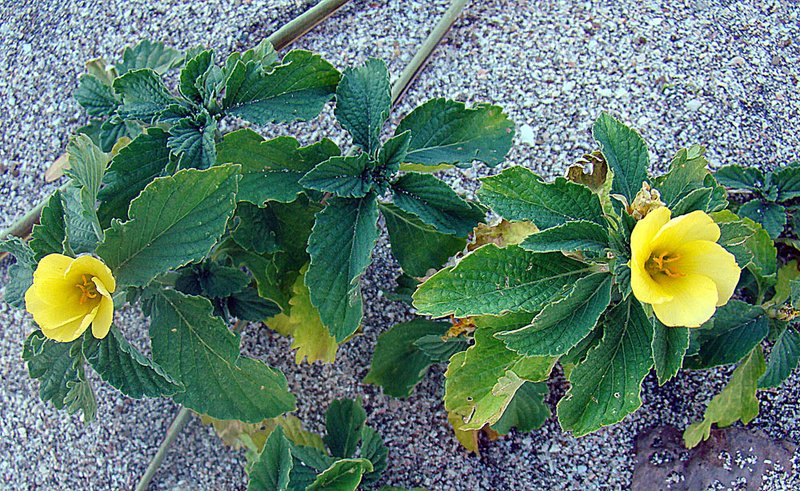
Dick Culbert (www.flickr.com) from Gibsons, B.C., Canada,Lundell, Cyrus Longworth,1907-1964,author Standley, Paul Carpenter,1884-1963,author,José Mariano da Conceição Veloso,Loddiges, Conrad, 1743?-1826 Conrad, Loddiges & Sons,Hovey & Co Henry G. Gilbert Nursery and Seed Trade Catalog Collection,Jahresbericht über die Fortschritte der Pharmakognosie, Pharmacie und Toxikologie.,Sociedad Mexicana de Historia Natural (www.wikidata.org),Rusby, Henry Hurd,1855-1940,author Pennell, Francis W.(Francis Whittier),1886-1952,author,Smith, John Donnell,,Maisch, John M. (John Michael), 1831-1893,Barkley, Fred A.(Fred Alexander),1908-1989,author,Report, F Word

Taxonomy
- Division:
- Magnoliophyta | - Flowering plants
- Family:
- Passifloraceae
- Genus:
- Turnera
- Species:
- Turnera scabra
- USDA Symbol:
- TUSC2
Growth Characteristics
- Height:
- 100 cm
- Light Requirements:
- Full Sun
- Drought Tolerance:
- High
- Bloom Months:
- apr,may,jun,jul,aug,sep,oct
- Bloom Colors:
- yellow
Host Plant for Caterpillars
cotton tipworm (Crocidosema plebejana), Io moth (Automeris io)
Garden & Ecology Notes
- Wildlife Value:
- bees, butterflies
Soil Requirements
- Soil Type:
- sandy, well-drained, nutrient-poor soil
- pH:
- 5.5 - 7.0 (slightly acidic to neutral)
- Drainage:
- excellent drainage required
- Moisture:
- dry to moderate
- Notes:
- native to arid regions, prefers low fertility