
Arizona Sycamore
Platanus wrightii
- Native to:
- Mexico, United States
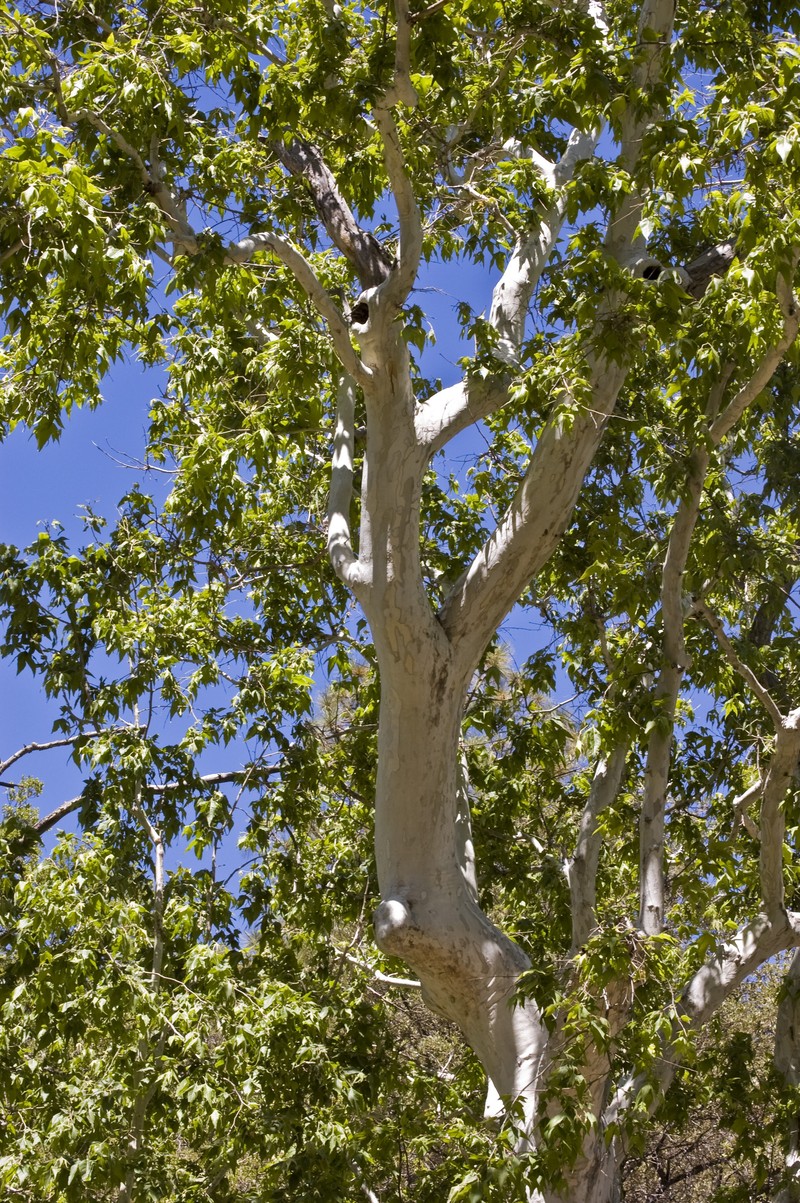
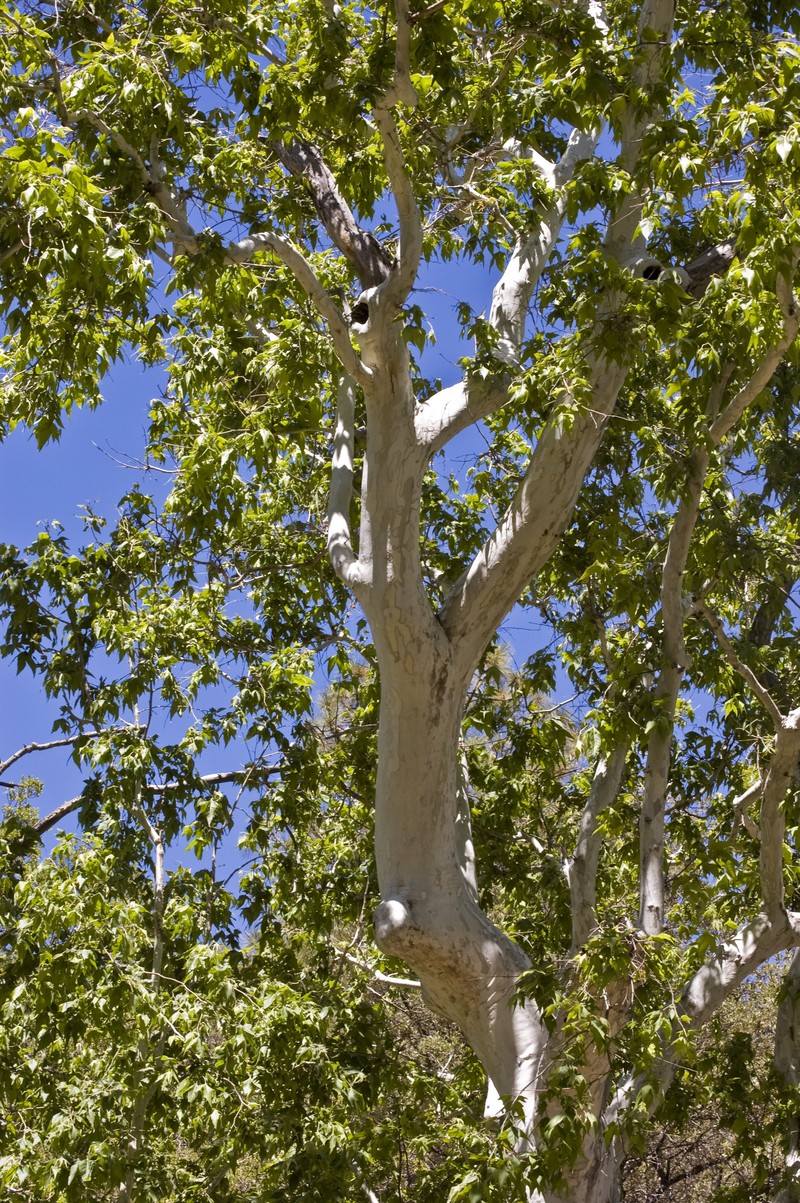
Kretyen at Flickr (www.flickr.com)

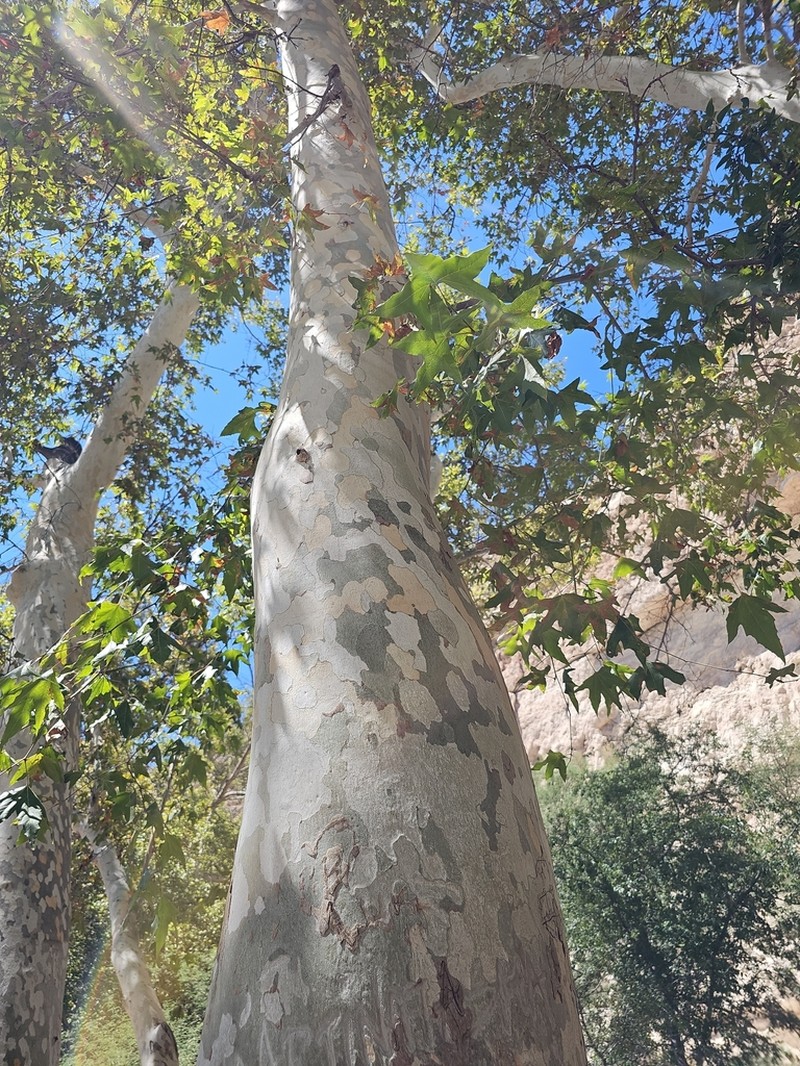
Taxonomy
- Division:
- Magnoliophyta | - Flowering plants
- Family:
- Platanaceae
- Genus:
- Platanus
- Species:
- Platanus wrightii
- USDA Symbol:
- PLWR2
Growth Characteristics
- Life Cycle:
- Perennial
- Growth Habit:
- Tree
- Height:
- 2500 cm
- Light Requirements:
- Full Sun
- Drought Tolerance:
- Medium
Wildlife Benefits
- Caterpillars:
- ★☆☆☆☆ Recorded caterpillar host plant (HOSTS Database)
Keystone Species Ranking
- Caterpillar Keystone:
- ★★★★☆ Butterfly & moth species supported by this genus (NWF)
Host Plant for Caterpillars
Garden & Ecology Notes
- Wildlife Value:
- birds, small mammals
- Fall Color:
- yellow
- Fire Ecology:
- Fire adapted — tolerates or benefits from fire
- Fire Notes:
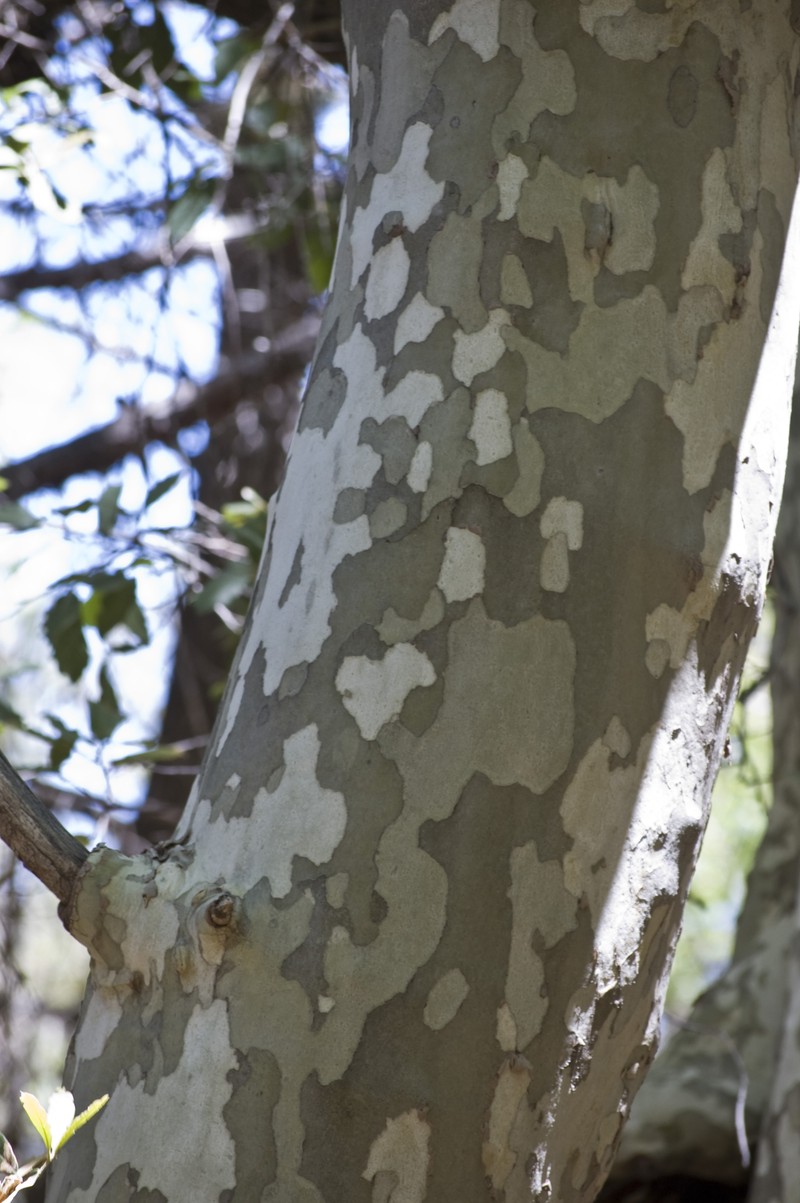
- Thick bark provides some fire resistance; can resprout after low-severity fire.
Soil Requirements
- Soil Type:
- well-drained, sandy or rocky soil
- pH:
- 6.0 - 7.5 (slightly acidic to neutral)
- Drainage:
- excellent drainage required
- Moisture:
- dry to moderate
- Notes:
- native to riparian areas, tolerates periodic flooding
Propagation & Germination
- Stratification:
- Cold/moist stratification required — 30–60 days
- Germination Time:
- 14–30 days
- Notes:
- Seeds require cold stratification for 30-60 days; sow in spring after last frost.
Pre-treatment: Mounding method: Harvest stems layered during the previous year just above the soil surface while dormant in early spring. Remove any residual media from the previous year's mound to allow new stems to emerge from the crown of stock plants. By late May, new stems are 0.5 m high and the mounding process is initiated using soilless media composed of pumice, peat and bark mix, commercial peat and perlite mix, and pumice alone. Use inverted bottomless containers to contain the mound.
Establishment: P. wrightii is found along streams from 600 to 2000m in elevation, from northern Mexico to southern New Mexico and Arizona. The propagation method is mound layering of stock plants established in field nursery. Stock plants are seedlings in 1 gallon pots planted into sandy loam soil and heavily fertilized in May. Surface soil is amended with sulfur to prevent chlorosis; alkalinity of irrigation water is 150mg/L as CaC03 with a ph of 8.0. During establishment, stock plants are flood irrigated on a weekly basis during the growing season.
Source: npn.rngr.net