
Big Bluestem
Andropogon gerardii
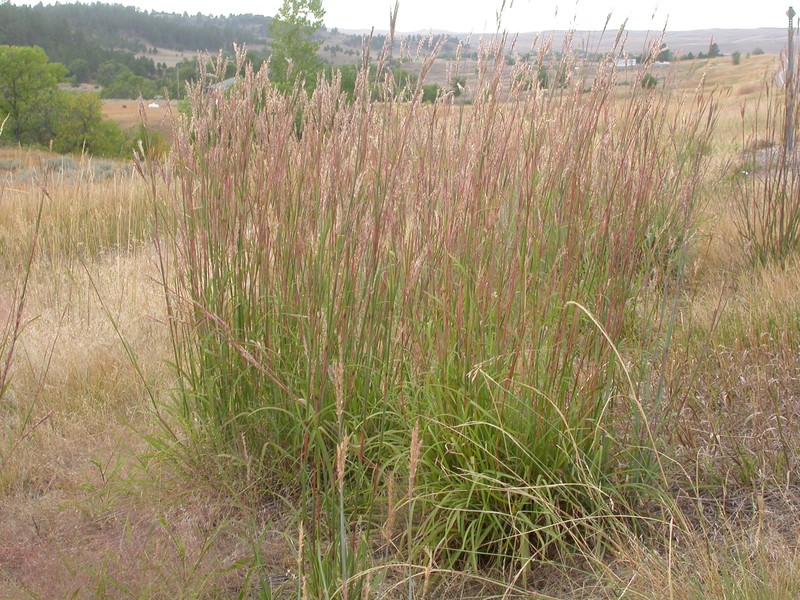
Matt Lavin from Bozeman, Montana, USA
Taxonomy
- Division:
- Magnoliophyta | - Flowering plants
- Family:
- Poaceae
- Genus:
- Andropogon
- Species:
- Andropogon gerardii
Growth Characteristics
- Life Cycle:
- Perennial
- Growth Habit:
- Graminoid
- Height:
- 8-12 ft
- Light Requirements:
- Full Sun, Part Shade
- Drought Tolerance:
- High
- Bloom Months:
- aug, sep, oct, nov
- Bloom Colors:
- Red, Blue, Brown
- Lawn Substitute:
- Yes
Native Range
United States: Alabama, Arkansas, Arizona, Colorado, Connecticut, District of Columbia, Delaware, Florida, Georgia, Iowa, Illinois, Indiana, Kansas, Kentucky, Louisiana, Massachusetts, Maryland, Maine, Michigan, Minnesota, Missouri, Mississippi, Montana, North Carolina, North Dakota, Nebraska, New Hampshire, New Jersey, New Mexico, New York, Ohio, Oklahoma, Pennsylvania, Rhode Island, South Carolina, South Dakota, Tennessee, Texas, Utah, Virginia, Vermont, Wisconsin, West Virginia, Wyoming, Canada: Manitoba, Ontario, Quebec, Saskatchewan
Keystone Species Ranking
- Caterpillar Keystone:
- ★★★★☆ Based on number of butterfly and moth species using this genus as host plant (Source: National Wildlife Federation)
Host Plant for Caterpillars
Reported Fauna Sightings
Soil Requirements
- Soil Type:
- fertile, well-drained loamy soil
- pH:
- 5.5 - 7.5 (slightly acidic to neutral)
- Drainage:
- excellent drainage required
- Moisture:
- dry to moderate
- Notes:
- Thrives in prairies and open grasslands
Germination Information
Pre-treatment: Seeds are cold moist stratified for 14 days or damp stratified by mixing with equal amounts of vermiculite and lightly dampening in a plastic bag or container, stored for 3 to 4 months in a cold room of 34-36 degrees F. Application of gibberellic acid has also been used.
Establishment: Germination and growth are affected by greenhouse temperature and amount and intensity of daytime solar. Seedlings haven't germinated well or thrived in wet, cloudy weather or when night temperatures dip below 65 F. Post-transplant seedlings have experienced slow growth and up to 20% mortality, possibly due to low light and temperatures during winter, media too moist, or root damage from transplanting or fungus gnats.
Source: npn.rngr.net