
Fringed Brome
Bromus ciliatus
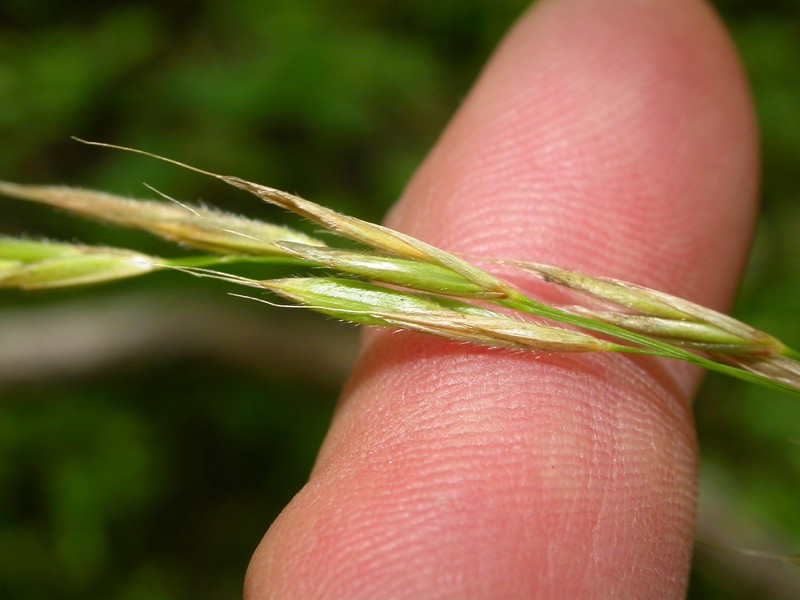
Taxonomy
- Division:
- Magnoliophyta | - Flowering plants
- Family:
- Poaceae
- Genus:
- Bromus
- Species:
- Bromus ciliatus
Growth Characteristics
- Life Cycle:
- Perennial
- Growth Habit:
- Graminoid
- Height:
- 4-6 ft
- Light Requirements:
- Full Sun, Part Shade, Shade
- Drought Tolerance:
- High
- Bloom Months:
- jul, aug
- Bloom Colors:
- Yellow
Native Range
United States: Alaska, Alabama, Arizona, California, Colorado, Connecticut, Iowa, Idaho, Illinois, Indiana, Kentucky, Massachusetts, Maryland, Maine, Michigan, Minnesota, Montana, North Carolina, North Dakota, Nebraska, New Hampshire, New Jersey, New Mexico, Nevada, New York, Ohio, Oregon, Pennsylvania, Rhode Island, South Dakota, Tennessee, Texas, Utah, Virginia, Vermont, Washington, Wisconsin, West Virginia, Wyoming, Canada: Alberta, British Columbia, Manitoba, New Brunswick, Nova Scotia, Northwest Territories, Ontario, Prince Edward Island, Quebec, Saskatchewan, Yukon
Soil Requirements
- Soil Type:
- moist, fertile, well-drained loam
- pH:
- 5.5 - 7.5 (slightly acidic to neutral)
- Drainage:
- tolerates poor drainage
- Moisture:
- consistently moist
- Notes:
- commonly found in meadows and forest edges
Germination Information
Pre-treatment: One month of moist cold stratification is required. Use a Ziploc-style bag or a small Rubbermaid-style container to mix an equal amount of seeds with either perlite or vermiculite. Add a small amount of water and place in a refrigerator or cold garage (33-42 degrees F) for at least one month. Cold store until planted (up to 3 years).
Establishment: Seeds are collected by hand from locally native plants within the eastern central Upper Peninsula. The plant flowers from June to July and seeds are harvested from July to September. The plant grows in clumps and can reach up to 2 feet in height. It is found in stream banks, thickets, moist shores, openings in cedar bogs, ditches and wet places. The second protocol mentions that germination occurs at 24 C, but does not provide any additional details.
Source: npn.rngr.net