
Bering's Tufted Hairgrass
Deschampsia cespitosa subsp. beringensis
- Native to:
- Aleutian Is., Canada, Russia, United States
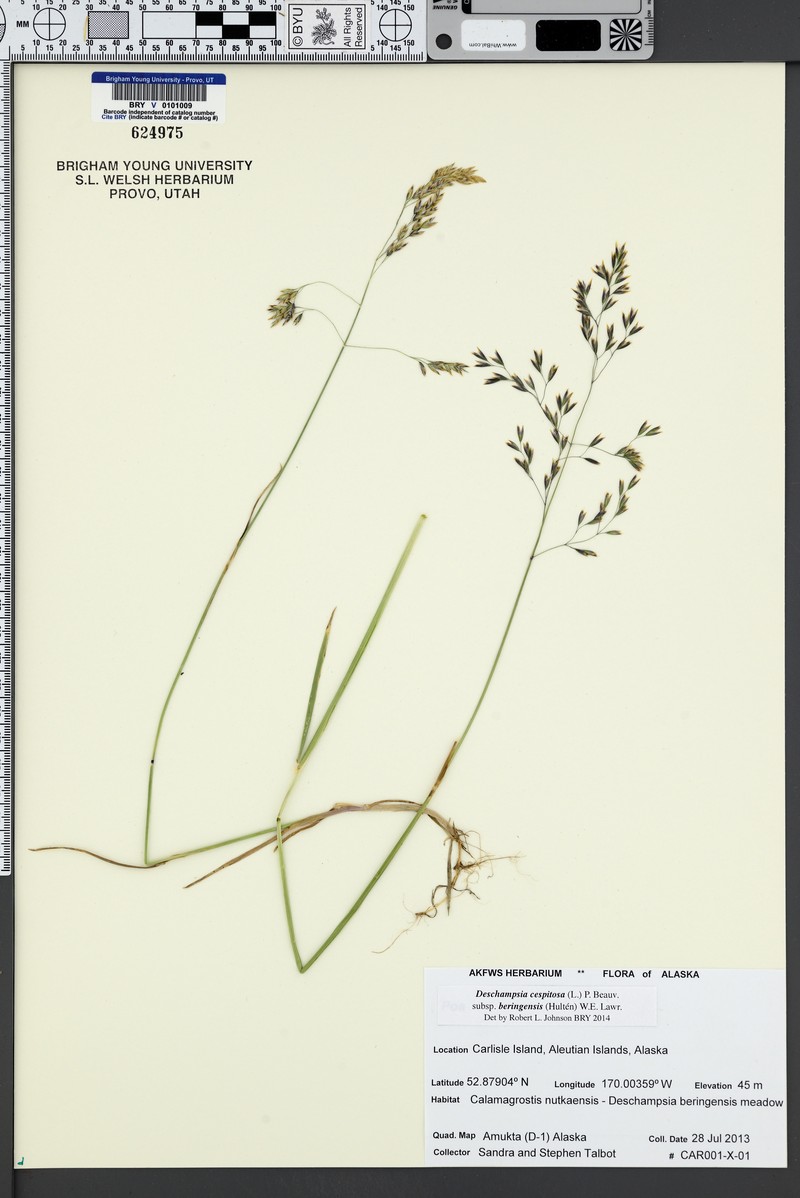
GBIF: Stephen S. Talbot; Sandra Talbot
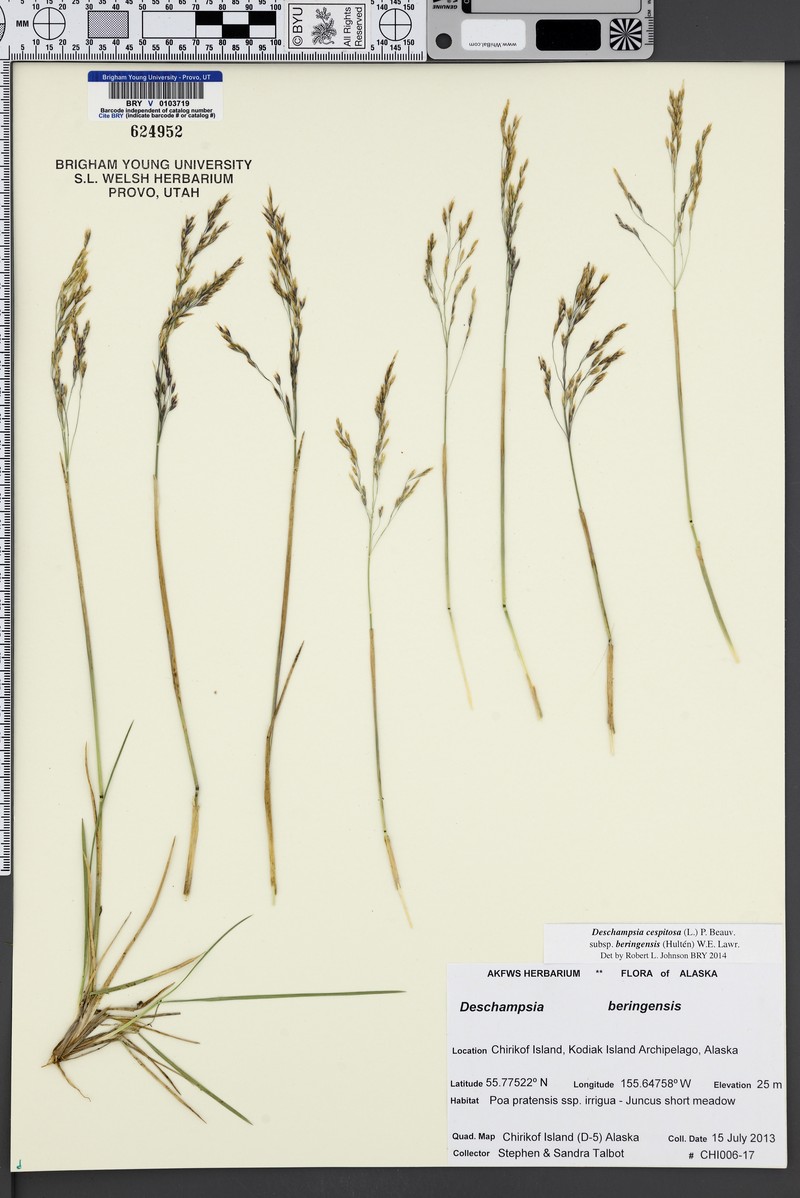
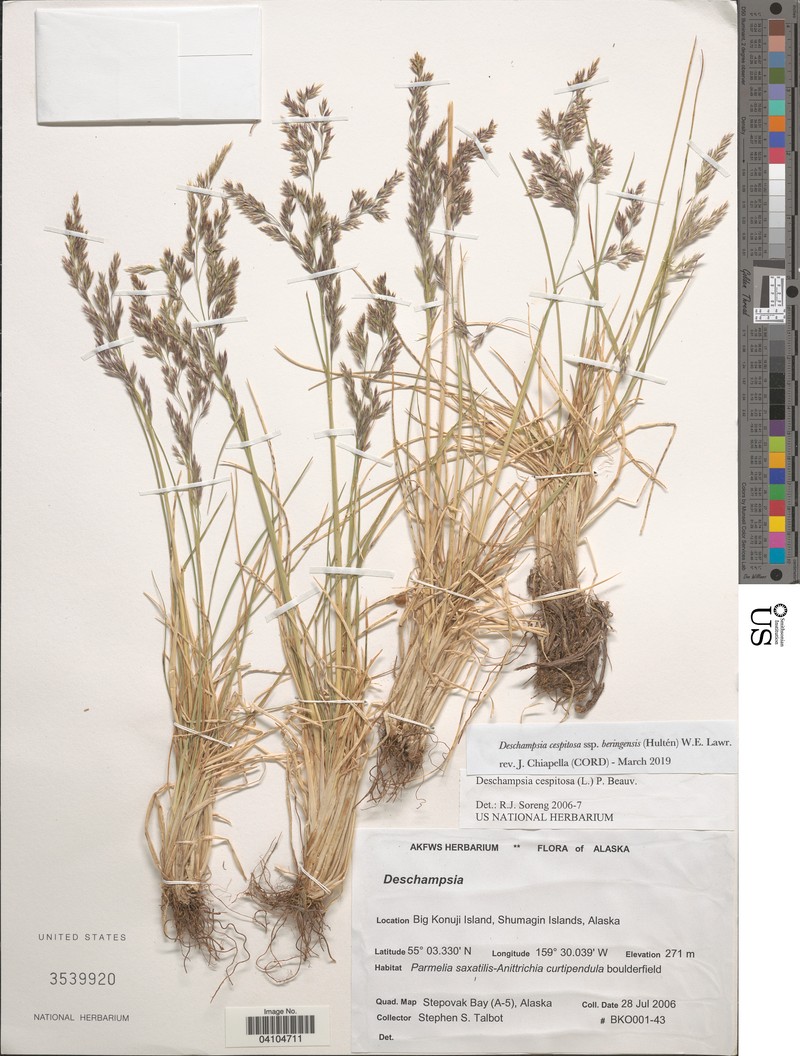
Taxonomy
- Division:
- Magnoliophyta | - Flowering plants
- Family:
- Poaceae
- Genus:
- Deschampsia
- Species:
- Deschampsia cespitosa subsp. beringensis
- USDA Symbol:
- DEBE2
Growth Characteristics
- Life Cycle:
- Perennial
- Growth Habit:
- Graminoid
- Height:
- 120 cm
- Light Requirements:
- Full Sun
- Drought Tolerance:
- Low
- Bloom Months:
- jun,jul,aug
- Bloom Colors:
- green, yellow
Host Plant for Caterpillars
black patch (Paratrytone melane)
Garden & Ecology Notes
- Wildlife Value:
- birds, small mammals
- Deer Resistant:
- Yes
- Fall Color:
- gold, tan
- Fire Ecology:
- Fire adapted — tolerates or benefits from fire
- Fire Notes:
- Resprouts from basal crown after fire; tolerates prescribed burns well.
Soil Requirements
- Soil Type:
- moist, nutrient-rich, organic soil
- pH:
- 5.5 - 7.0 (slightly acidic to neutral)
- Drainage:
- tolerates poor drainage
- Moisture:
- consistently moist
- Notes:
- Common in wet meadows and marshes
Propagation & Germination
- Stratification:
- Cold/moist stratification required — 30–60 days
- Germination Time:
- 14–28 days
- Notes:
- Seeds require light for germination. Surface sow and keep moist.
Pre-treatment: Seeds placed in 32-34°F for a 10-day cold stratification treatment and then exposed to 72-77°F. Germination also occurs at 20°C. Dormancy is sometimes encountered and may vary by ecotype. Laboratory germination is best with gibberillic acid and a 5 day prechill at 5°C. Cold storage and light may enhance germination.
Establishment: Seed from different sources may require different treatments. Some seeds require no stratification, while others germinate best with alternating temperatures without pretreatment. Light may enhance germination. Seed of the Moscow ecotype germinates well in the dark without pretreatment.
Source: npn.rngr.net
Where to Buy
Nationwide Seller
- Pizzo Native Plant Nursery (wholesale nursery)