
Variable Panicgrass
Dichanthelium commutatum
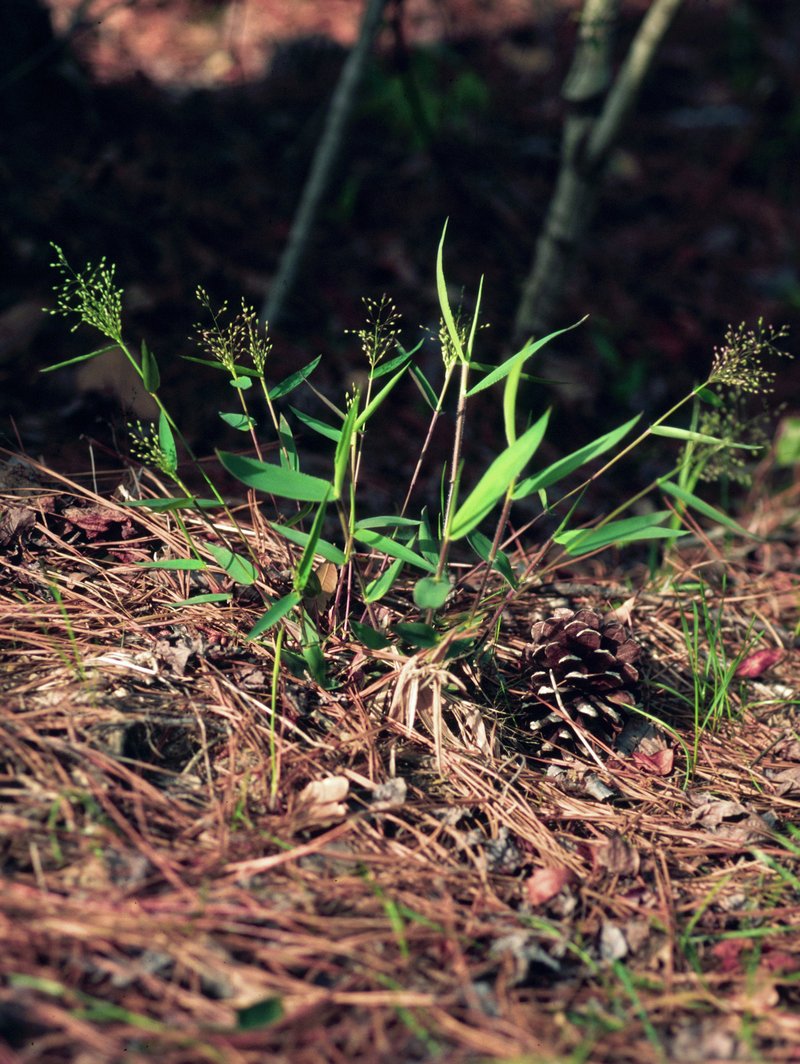
James H. Miller & Ted Bodner, Southern Weed Science Society, Bugwood.org
Taxonomy
- Division:
- Magnoliophyta | - Flowering plants
- Family:
- Poaceae
- Genus:
- Dichanthelium
- Species:
- Dichanthelium commutatum
Growth Characteristics
- Life Cycle:
- Perennial
- Growth Habit:
- Graminoid
- Height:
- 2-3 ft
- Light Requirements:
- Part Shade
- Drought Tolerance:
- High
- Bloom Months:
- may, jun, jul, aug, sep, oct
- Bloom Colors:
- Not Applicable
Native Range
United States: Alabama, Arkansas, Connecticut, District of Columbia, Delaware, Florida, Georgia, Illinois, Indiana, Kentucky, Louisiana, Massachusetts, Maryland, Maine, Michigan, Missouri, Mississippi, North Carolina, New Jersey, New York, Ohio, Oklahoma, Pennsylvania, Rhode Island, South Carolina, Tennessee, Texas, Virginia, West Virginia
Soil Requirements
- Soil Type:
- sandy, acidic, nutrient-poor soil
- pH:
- 4.5 - 6.5 (acidic to slightly acidic)
- Drainage:
- excellent drainage required
- Moisture:
- dry to moderate
- Notes:
- Commonly found in open woods and sandy areas
Germination Information
Pre-treatment: De-tufted seed is planted into round cell greenhouse flat liners with 38 cells per flat that have been filled with coarse processed bark and composted pine bark growing medium. Seed is surface sown at a rate of 3-5 seeds per cell and lightly covered with starter sized, 1/16" - 1/8" diameter, granite poultry grit to combat damping off diseases. Prepared flats are lightly hand watered to slightly moisten the growing medium.
Establishment: Germination typically occurs 7 - 10 days after placement in the greenhouse. However, 50% of total seedlings emerge in 14 days; the balance by 3 weeks after sowing according to another protocol. The plant grows in woods and thickets from Massachusetts to Michigan and Missouri, and south to Florida and Texas.
Source: npn.rngr.net