
Saltgrass
Distichlis spicata
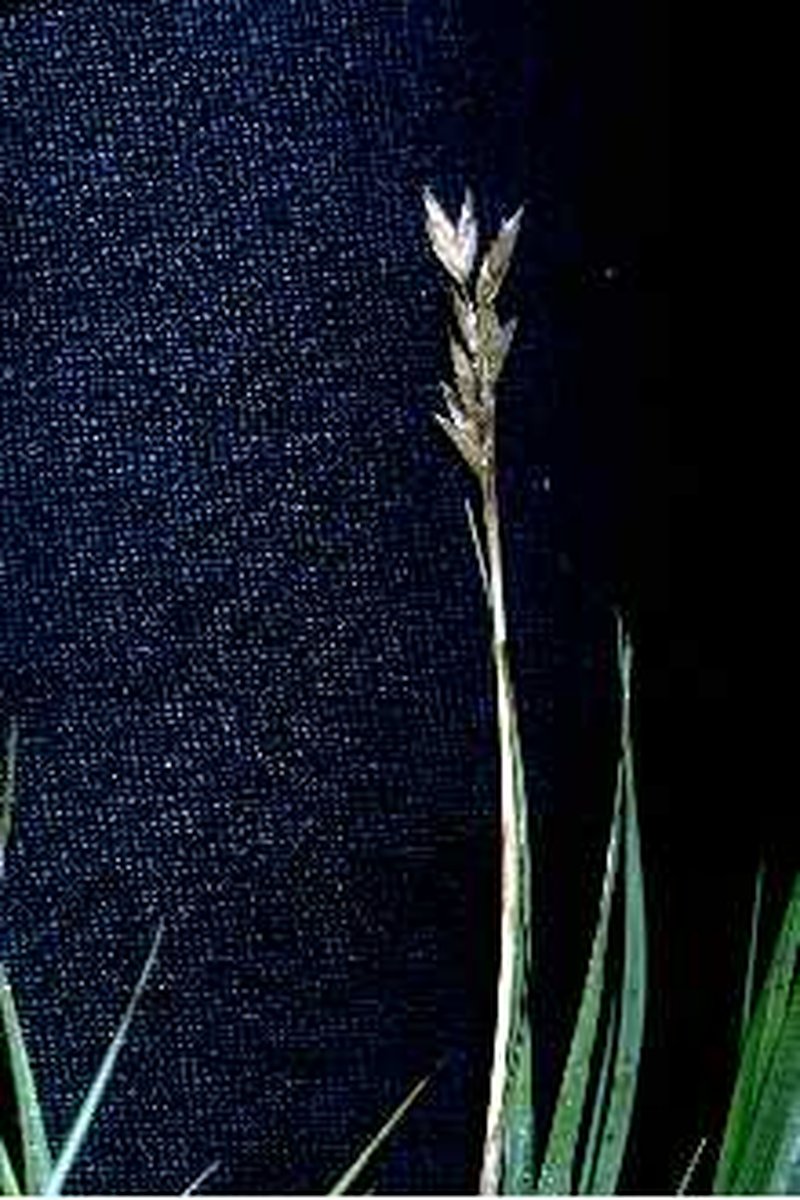
Robert H. Mohlenbrock. USDA NRCS. 1992. Western wetland flora: Field office guide to plant species. West Region, Sacramento. Courtesy of USDA NRCS Wetland Science Institute.
Taxonomy
- Division:
- Magnoliophyta | - Flowering plants
- Family:
- Poaceae
- Genus:
- Distichlis
- Species:
- Distichlis spicata
Growth Characteristics
- Life Cycle:
- Perennial
- Growth Habit:
- Graminoid
- Height:
- 3-4 ft
- Light Requirements:
- Full Sun
- Drought Tolerance:
- Medium
- Bloom Months:
- apr, may, jun, jul, aug, sep, oct
- Bloom Colors:
- Yellow
Native Range
United States: Alabama, Arizona, California, Colorado, Connecticut, Delaware, Florida, Georgia, Hawaii, Iowa, Idaho, Illinois, Kansas, Louisiana, Massachusetts, Maryland, Maine, Minnesota, Missouri, Mississippi, Montana, North Carolina, North Dakota, Nebraska, New Hampshire, New Jersey, New Mexico, Nevada, New York, Ohio, Oklahoma, Oregon, Pennsylvania, Rhode Island, South Carolina, South Dakota, Texas, Utah, Virginia, Washington, Wisconsin, Wyoming, Canada: Alberta, British Columbia, Manitoba, New Brunswick, Nova Scotia, Northwest Territories, Ontario, Prince Edward Island, Saskatchewan
Host Plant for Caterpillars
Soil Requirements
- Soil Type:
- saline, sandy, nutrient-poor soil
- pH:
- 7.5 - 9.0 (neutral to alkaline)
- Drainage:
- tolerates poor drainage
- Moisture:
- consistently moist
- Notes:
- thrives in saline conditions
Germination Information
Pre-treatment: Mechanical injury of the caryopis or covering layers or soaking seeds for 24 hours in water
Establishment: Seeds are collected between September 11th and November 4th. Mature inflorescences are panicles 2 to 8 cm long. Seed is 2 mm long and brownish grey in color at maturity. D. spicata var. stricta is found from the Great Plains region of North America to the Pacific coast; also in South America, Australia, Tasmania, and Tahiti. D. spicata is found in coastal salt marsh from Orange County, California to Oregon, and on Catalina and Santa Cruz islands.
Source: npn.rngr.net