
Western Wheatgrass
Elymus smithii
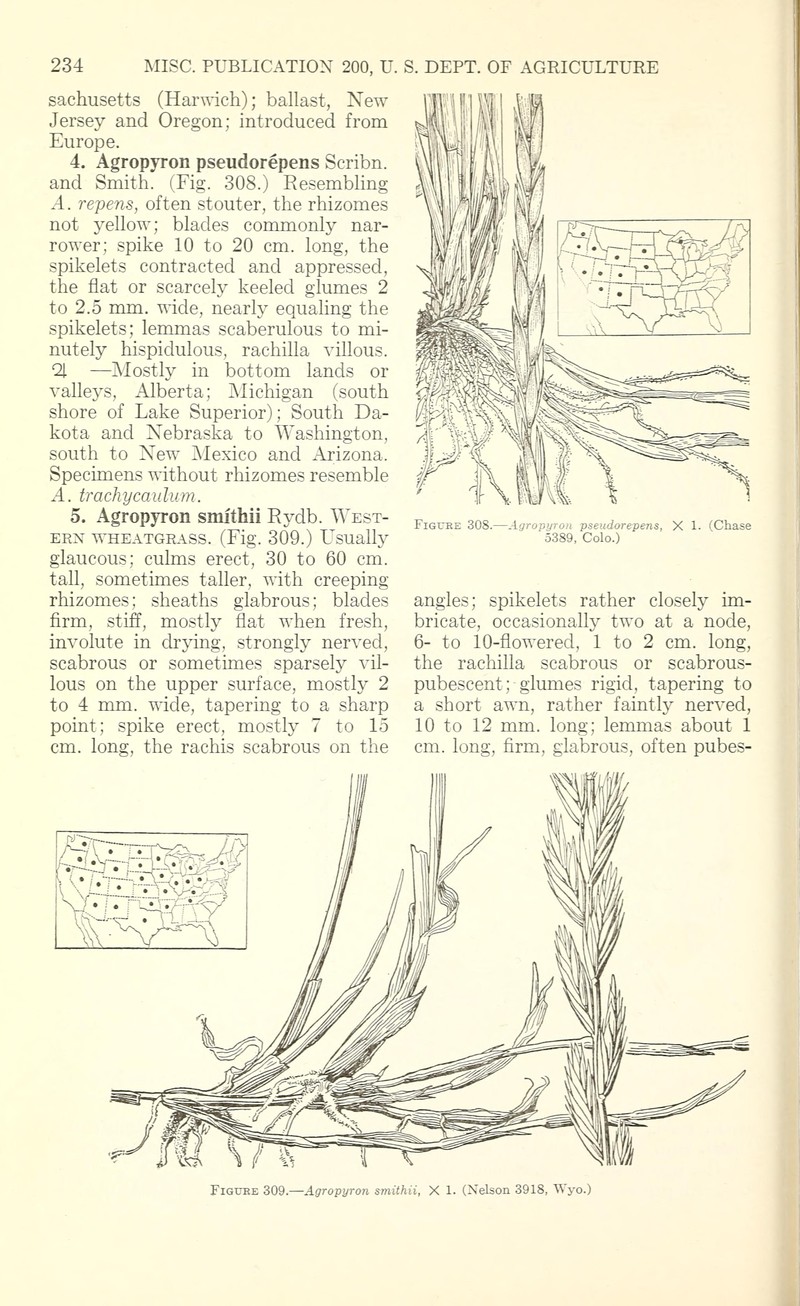
Chase, Agnes; Hitchcock, A. S.
Taxonomy
- Division:
- Magnoliophyta | - Flowering plants
- Family:
- Poaceae
- Genus:
- Elymus
- Species:
- Elymus smithii
Growth Characteristics
- Life Cycle:
- Perennial
- Growth Habit:
- Graminoid
- Height:
- 3-4 ft
- Light Requirements:
- Full Sun
- Bloom Months:
- mar, apr, may, jun, jul, aug
Native Range
United States: Alaska, Arkansas, Arizona, California, Colorado, Georgia, Iowa, Idaho, Illinois, Indiana, Kansas, Kentucky, Massachusetts, Michigan, Minnesota, Missouri, Montana, North Dakota, Nebraska, New Hampshire, New Mexico, Nevada, New York, Ohio, Oklahoma, Oregon, South Dakota, Tennessee, Texas, Utah, Washington, Wisconsin, Wyoming, Canada: Alberta, British Columbia, Manitoba, Ontario, Quebec, Saskatchewan
Host Plant for Caterpillars
Soil Requirements
- Soil Type:
- well-drained, sandy to loamy soil
- pH:
- 6.0 - 8.0 (slightly acidic to neutral)
- Drainage:
- excellent drainage required
- Moisture:
- dry to moderate
- Notes:
- commonly found in prairies and open grasslands
Germination Information
Pre-treatment: Seeds germinate well without pretreatment. However, for optimal germination, seeds can be exposed to temperature treatments representing different seed sowing times and locations in the Colorado Plateau.
Establishment: Western wheatgrass germinates more slowly than many other cool season grasses which may limit its ability to establish from seed, especially on dry sites. Germination rates were highest when seeds were exposed to 12 weeks of winter conditions or early-spring conditions without winter. Germination was less successful in mid-spring and late-spring conditions without winter.
Source: npn.rngr.net