
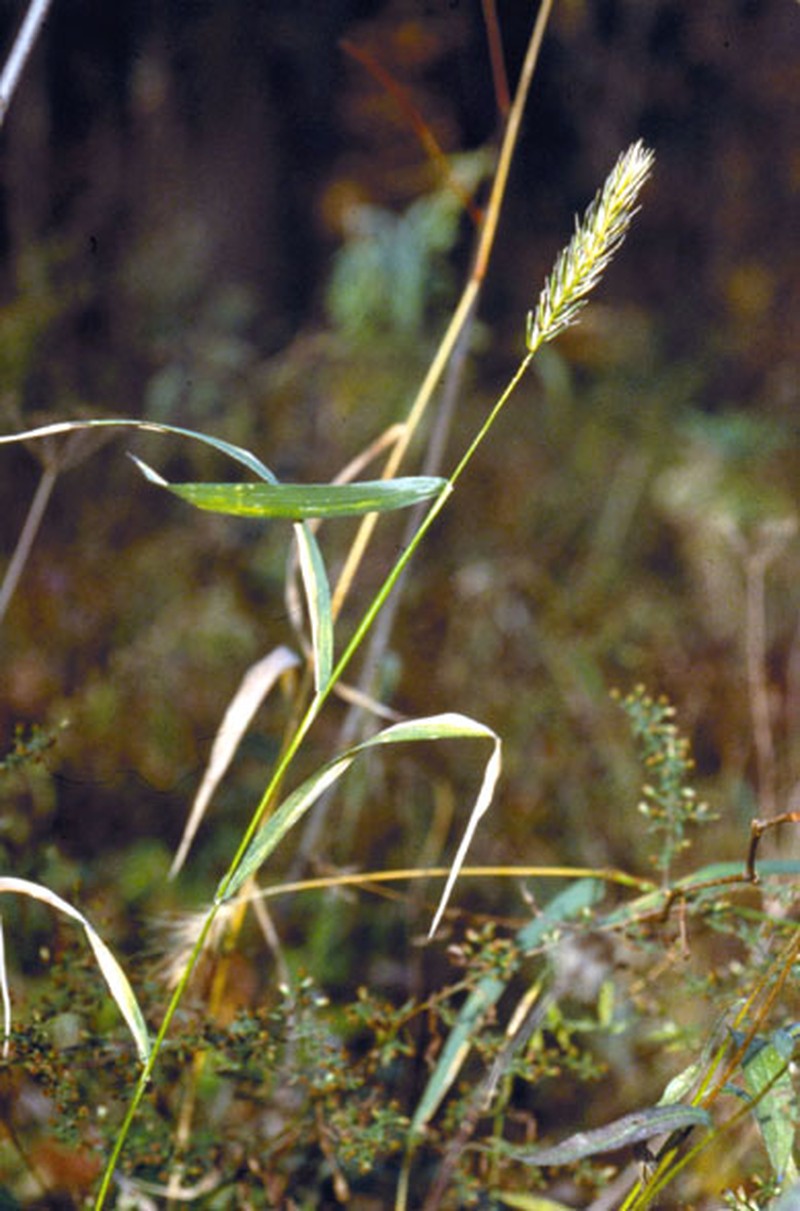
Virginia Wildrye
Elymus virginicus
Also known as: Southeastern Wildrye
Taxonomy
- Division:
- Magnoliophyta | - Flowering plants
- Family:
- Poaceae
- Genus:
- Elymus
- Species:
- Elymus virginicus
Growth Characteristics
- Life Cycle:
- Perennial
- Growth Habit:
- Graminoid
- Height:
- 4-6 ft
- Light Requirements:
- Part Shade
- Drought Tolerance:
- Medium
- Bloom Months:
- mar, apr, may
- Bloom Colors:
- Yellow
Native Range
United States: Alabama, Arkansas, Arizona, Connecticut, District of Columbia, Delaware, Florida, Georgia, Iowa, Illinois, Indiana, Kansas, Kentucky, Louisiana, Massachusetts, Maryland, Maine, Michigan, Minnesota, Missouri, Mississippi, North Carolina, North Dakota, Nebraska, New Hampshire, New Jersey, New Mexico, New York, Ohio, Oklahoma, Pennsylvania, Rhode Island, South Carolina, South Dakota, Tennessee, Texas, Virginia, Vermont, Wisconsin, West Virginia, Wyoming, Canada: Alberta, British Columbia, Manitoba, New Brunswick, Nova Scotia, Ontario, Prince Edward Island, Quebec, Saskatchewan
Host Plant for Caterpillars
Soil Requirements
- Soil Type:
- fertile, well-drained loamy soil
- pH:
- 5.5 - 7.5 (slightly acidic to neutral)
- Drainage:
- tolerates poor drainage
- Moisture:
- consistently moist
- Notes:
- Commonly found in floodplains and wet meadows
Germination Information
Pre-treatment: Mix equal amount of seeds with perlite or vermiculite in a Ziploc-style bag or small container. Add a small amount of water and store in a cold environment (33-42 degrees F) for one month. Alternatively, seeds can be surface sown at a rate of 3-5 seeds per cell and lightly covered with starter sized granite poultry grit to combat damping off diseases. Some protocols suggest no treatment is needed, but seeds may germinate more uniformly after a 2-week cold stratification.
Establishment: Seeds are collected from locally native plants. Germination occurs at moderate temperatures. There are regional variations in seed collection and some conflicting information on pre-treatment methods.
Source: npn.rngr.net