
Limp Mannagrass
Glyceria laxa
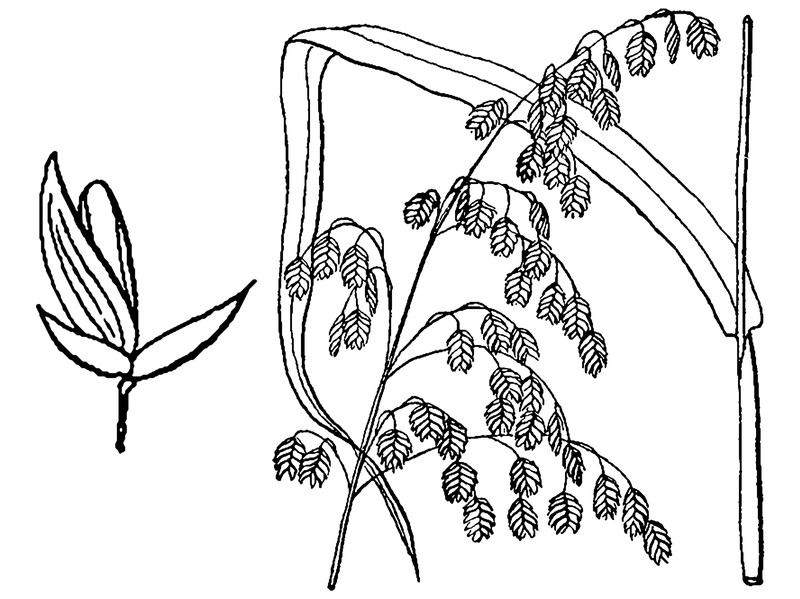
Britton, N.L., and A. Brown. 1913. An illustrated flora of the northern United States, Canada and the British Possessions. 3 vols. Charles Scribner's Sons, New York. Vol. 1: 263. Courtesy of Kentucky Native Plant Society. Scanned by Omnitek Inc.
Taxonomy
- Division:
- Magnoliophyta | - Flowering plants
- Family:
- Poaceae
- Genus:
- Glyceria
- Species:
- Glyceria laxa
Growth Characteristics
- Life Cycle:
- Perennial
- Growth Habit:
- Graminoid
- Height:
- 4-6 ft
- Light Requirements:
- Full Sun
- Drought Tolerance:
- High
- Bloom Months:
- jun, jul, aug
- Bloom Colors:
- Not Applicable
Native Range
United States: Connecticut, District of Columbia, Delaware, Massachusetts, Maryland, Maine, North Carolina, New Hampshire, New Jersey, New York, Pennsylvania, Tennessee, Virginia, Vermont, Wisconsin, West Virginia, Canada: New Brunswick, Nova Scotia, Ontario, Prince Edward Island
Host Plant for Caterpillars
Comma Leucania (Leucania commoides), Doubtful Apamea (Apamea dubitans), glassy cutworm (Apamea devastator), Leucania lapidaria, Pink-spotted Dart Moth (Pseudohermonassa bicarnea)
Soil Requirements
- Soil Type:
- wet, nutrient-rich, organic soil
- pH:
- 5.5 - 7.0 (slightly acidic to neutral)
- Drainage:
- tolerates poor drainage
- Moisture:
- consistently moist
- Notes:
- commonly found in marshes and wet meadows