
Rice
Oryza sativa
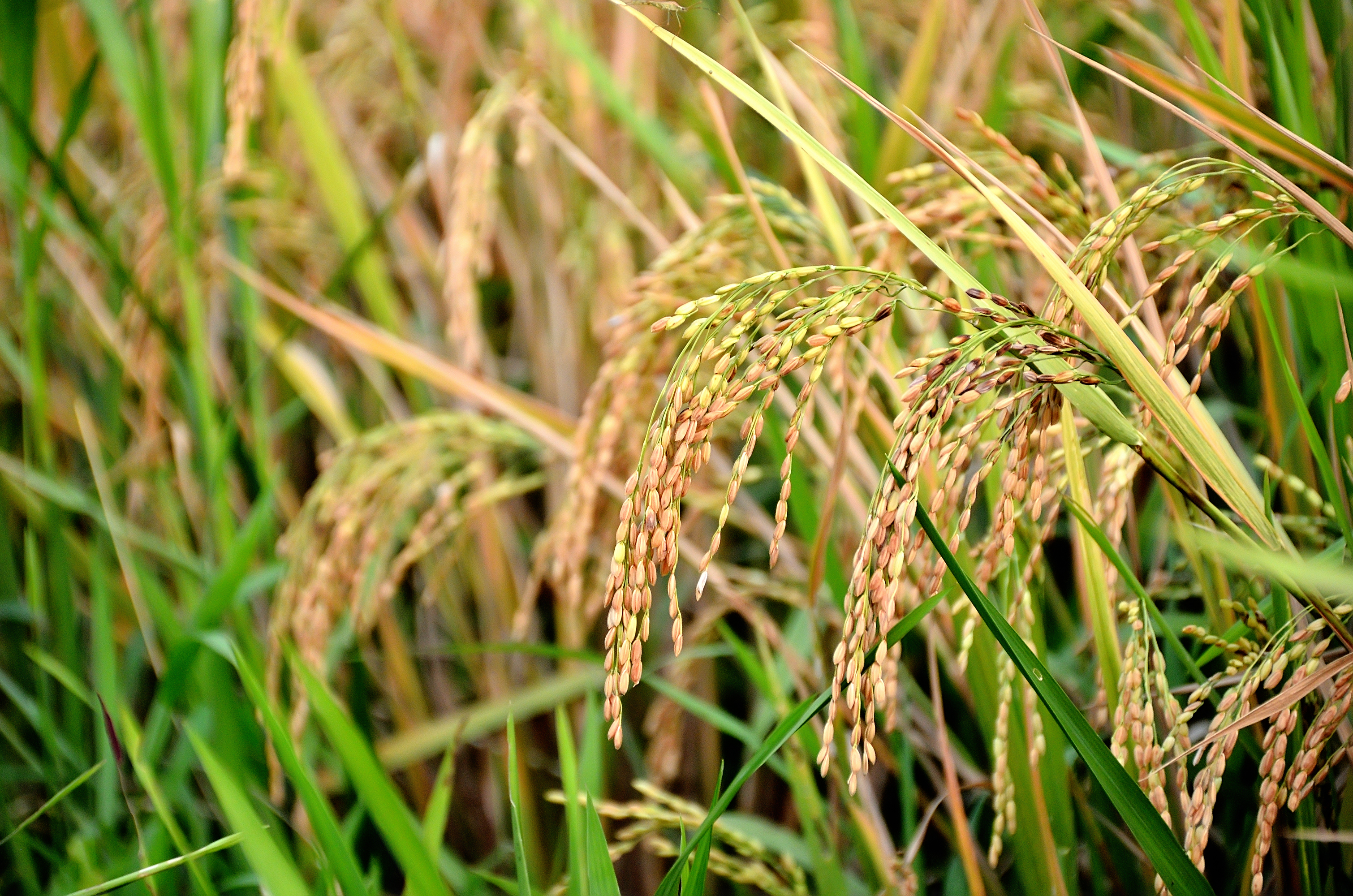
Augustus Binu : flickr :
Taxonomy
- Division:
- Magnoliophyta | - Flowering plants
- Family:
- Poaceae
- Genus:
- Oryza
- Species:
- Oryza sativa
Growth Characteristics
- Life Cycle:
- Annual
- Growth Habit:
- Graminoid
- Height:
- 4-6 ft
- Light Requirements:
- Full Sun
- Drought Tolerance:
- High
- Bloom Months:
- jun, jul, aug, sep, oct, nov
- Food Forest:
- Plant contains edible parts
Native Range
United States: Alabama, Arkansas, California, Georgia, Guam, Illinois, Louisiana, Missouri, Mississippi, North Carolina, Oklahoma, Puerto Rico, Palau, South Carolina, Tennessee, Texas, Virginia, Virgin Islands
Host Plant for Caterpillars
almond moth (Cadra cautella), Angoumois grain moth (Sitotroga cerealella), Cacao moth (Ephestia elutella), corn earworm (Helicoverpa zea), Eversmann's rustic (Actebia fennica), Fall armyworm (Spodoptera frugiperda), Faronta albilinea, Fluctuating China-mark (Parapoynx fluctuosalis), Mexican rice borer (Eoreuma loftini), rice moth (Corcyra cephalonica), Rice stalk borer (Chilo plejadellus), Small Mocis Moth (Mocis latipes), stored nut moth (Paralipsa gularis), Striped rice borer (Chilo suppressalis), Sugarcane borer (Diatraea sp.), Western yellowstriped armyworm (Spodoptera praefica), Least Skipper (Ancyloxypha numitor), Ocola Skipper (Panoquina ocola)
Reported Fauna Sightings
Bees: American bumble bee (Bombus pensylvanicus), American bumble bee (Bombus pensylvanicus), Black and gold bumble bee (Bombus auricomus), Black and gold bumble bee (Bombus auricomus), Black-tailed bumble bee (Bombus melanopygus), Black-tailed bumble bee (Bombus melanopygus), Brown-belted bumble bee (Bombus griseocollis), Brown-belted bumble bee (Bombus griseocollis), Central bumble bee (Bombus centralis), Central bumble bee (Bombus centralis), Common eastern bumble bee (Bombus impatiens), Common eastern bumble bee (Bombus impatiens), Confusing bumble bee (Bombus perplexus), Confusing bumble bee (Bombus perplexus), Forest bumble bee (Bombus sylvicola), Forest bumble bee (Bombus sylvicola), Fuzzy-horned bumble bee (Bombus mixtus), Fuzzy-horned bumble bee (Bombus mixtus), Half-black bumble bee (Bombus vagans), Half-black bumble bee (Bombus vagans), Hunt's bumble bee (Bombus huntii), Hunt's bumble bee (Bombus huntii), Indiscriminate cuckoo bumble bee (Bombus insularis), Indiscriminate cuckoo bumble bee (Bombus insularis), Nevada bumble bee (Bombus nevadensis), Nevada bumble bee (Bombus nevadensis), Northern amber bumble bee (Bombus borealis), Northern amber bumble bee (Bombus borealis), Red-belted bumble bee (Bombus rufocinctus), Red-belted bumble bee (Bombus rufocinctus), Two-form bumble bee (Bombus bifarius), Two-form bumble bee (Bombus bifarius), Western bumble bee (Bombus occidentalis), Western bumble bee (Bombus occidentalis), White-shouldered bumble bee (Bombus appositus), White-shouldered bumble bee (Bombus appositus), Yellow bumble bee (Bombus fervidus), Yellow bumble bee (Bombus fervidus), Yellow head bumble bee (Bombus flavifrons), Yellow head bumble bee (Bombus flavifrons), Yellow-faced bumble bee (Bombus vosnesenskii), Yellow-faced bumble bee (Bombus vosnesenskii) Butterflies:Dun Skipper (Euphyes vestris), Dun Skipper (Euphyes vestris), Little Wood Satyr (Megisto cymela), Little Wood Satyr (Megisto cymela), Red-spotted Admiral (Limenitis arthemis), Red-spotted Admiral (Limenitis arthemis), Southern Pearly Eye (Lethe portlandia), Southern Pearly Eye (Lethe portlandia)
Soil Requirements
- Soil Type:
- fertile, moisture-retentive clay loam
- pH:
- 5.5 - 7.0 (slightly acidic to neutral)
- Drainage:
- tolerates poor drainage
- Moisture:
- consistently moist
- Notes:
- Thrives in flooded conditions typical of paddies