
Sandberg Bluegrass
Poa secunda
- Native to:
- Argentina, Canada, Chile, Mexican Pacific Is., Mexico, United States
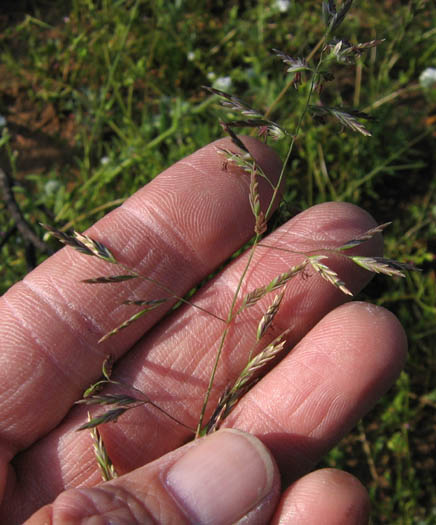
Matt Lavin (www.flickr.com) from Bozeman, Montana, USA
Taxonomy
- Division:
- Magnoliophyta | - Flowering plants
- Family:
- Poaceae
- Genus:
- Poa
- Species:
- Poa secunda
- USDA Symbol:
- POSE
Growth Characteristics
- Life Cycle:
- Perennial
- Growth Habit:
- Graminoid
- Height:
- 100 cm
- Light Requirements:
- Part Shade
- Drought Tolerance:
- High
- Bloom Months:
- apr,may,jun
- Bloom Colors:
- green, purple
- Lawn Substitute:
- Yes
Wildlife Benefits
- Caterpillars:
- ★☆☆☆☆ Recorded caterpillar host plant (HOSTS Database)
Host Plant for Caterpillars
Garden & Ecology Notes
- Wildlife Value:
- birds, small mammals
- Deer Resistant:
- Yes
- Fire Ecology:
- Fire adapted — tolerates or benefits from fire
- Fire Notes:
- Resprouts from basal crown after fire; often increases in post-fire communities.
Soil Requirements
- Soil Type:
- well-drained, sandy to loamy soil
- pH:
- 5.5 - 8.0 (slightly acidic to alkaline)
- Drainage:
- excellent drainage required
- Moisture:
- dry to moderate
- Notes:
- adapted to a wide range of soil types
Propagation & Germination
- Stratification:
- Cold/moist stratification required — 30–60 days
- Germination Time:
- 7–21 days
- Notes:
- Seeds germinate readily after cold stratification; surface sow and keep moist.
Pre-treatment: Seeds germinate well without pretreatment. However, some protocols suggest outdoor stratification for 5 months or temperature treatments simulating different seasons. Dry storage of spring germinating seeds resulted in 95% germination.
Establishment: The protocols suggest a variety of pre-treatment methods, including none at all, outdoor stratification, and temperature treatments. Germination rates and times also varied slightly between protocols. Seed collection methods and times also varied, with some suggesting collection when the inflorescence begins to dry and the seed is in the soft to hard dough stage. The general distribution of Poa secunda covers arid and semi-arid parts of the western US and Canada.
Source: npn.rngr.net
Where to Buy
Nationwide Seller
- Native Seed Group (seeds)