
Sugarcane
Saccharum officinarum
- Native to:
- Guam, New Guinea, Palau
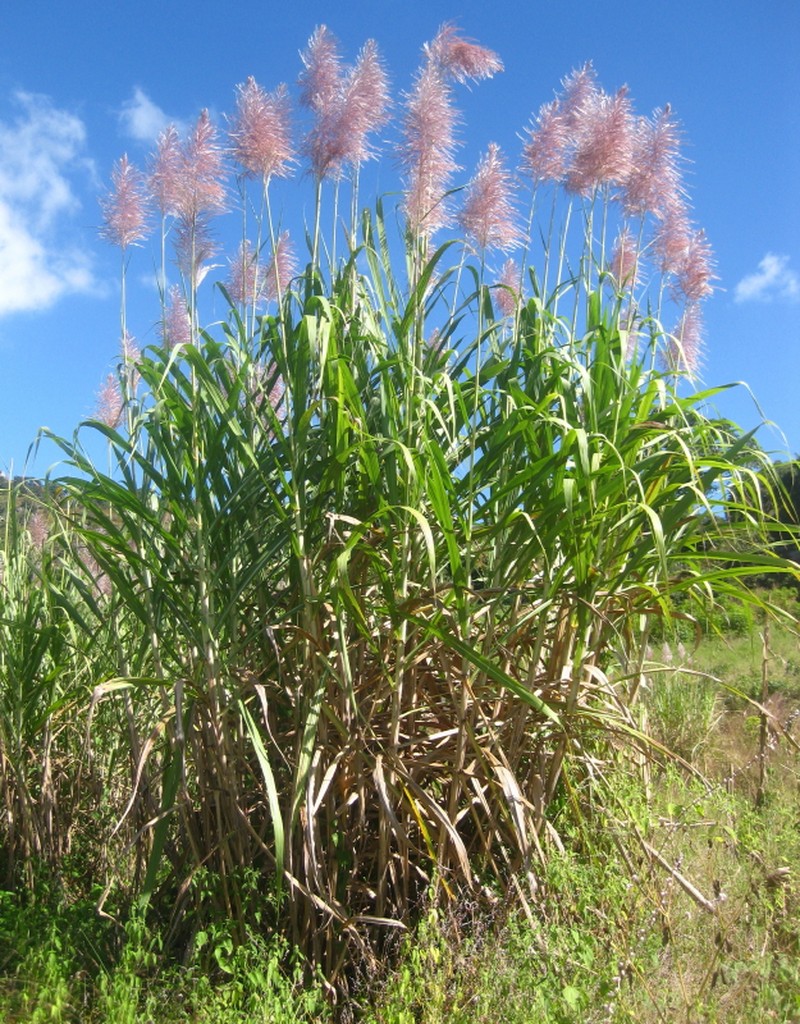
Ton Rulkens (www.flickr.com)
Taxonomy
- Division:
- Magnoliophyta | - Flowering plants
- Family:
- Poaceae
- Genus:
- Saccharum
- Species:
- Saccharum officinarum
- USDA Symbol:
- SAOF
Growth Characteristics
- Life Cycle:
- Perennial
- Growth Habit:
- Graminoid
- Height:
- 600 cm
- Light Requirements:
- Full Sun
- Drought Tolerance:
- Low
- Bloom Months:
- jan,feb,mar,apr,may,jun,jul,aug,sep,oct,nov,dec
- Bloom Colors:
- silver, purple
Wildlife Benefits
- Butterflies & Moths:
- ★★★☆☆ Documented Lepidoptera association (GBIF)
- Caterpillars:
- ★★★★☆ Recorded caterpillar host plant (HOSTS Database)
Host Plant for Caterpillars
Armyworm moth (Pseudaletia unipuncta), banana moth (Opogona sacchari), Black cutworm (Agrotis ipsilon), chalcedony midget (Elaphria chalcedonia), corn earworm (Helicoverpa zea), Diamondback moth (Plutella xylostella), Fall armyworm (Spodoptera frugiperda), Festive Midget (Elaphria festivoides), Fig moth (Cadra figulilella), lesser cornstalk borer (Elasmopalpus lignosellus), Leucania latiuscula, Leucania multilinea, Meropleon cosmion, Mexican rice borer (Eoreuma loftini), rascal dart moth (Agrotis malefida), Small Mocis Moth (Mocis latipes), Striped rice borer (Chilo suppressalis), Sugarcane borer (Diatraea sp.), Sugarcane borer (Diatraea saccharalis), Sugarcane Midget (Elaphria nucicolora), tea leafroller (Tetramoera schistaceana), white-dotted wainscot (Leucania subpunctata), yellow mocis moth (Mocis disseverans), Fiery Skipper (Hylephila phyleus)
Reported Fauna Sightings
Butterflies:Purple-washed Skipper (Panoquina lucas)
Soil Requirements
- Soil Type:
- rich, well-drained loamy soil
- pH:
- 5.0 - 8.0 (slightly acidic to neutral)
- Drainage:
- excellent drainage required
- Moisture:
- consistently moist
- Notes:
- Thrives in tropical climates with high rainfall
Propagation & Germination
- Notes:
- Propagated commercially by stem cuttings (setts); seed propagation is rare and unreliable.