
Japanese Bristlegrass
Setaria faberi
- Native to:
- China, Japan, Korea, Nansei-shoto, Taiwan
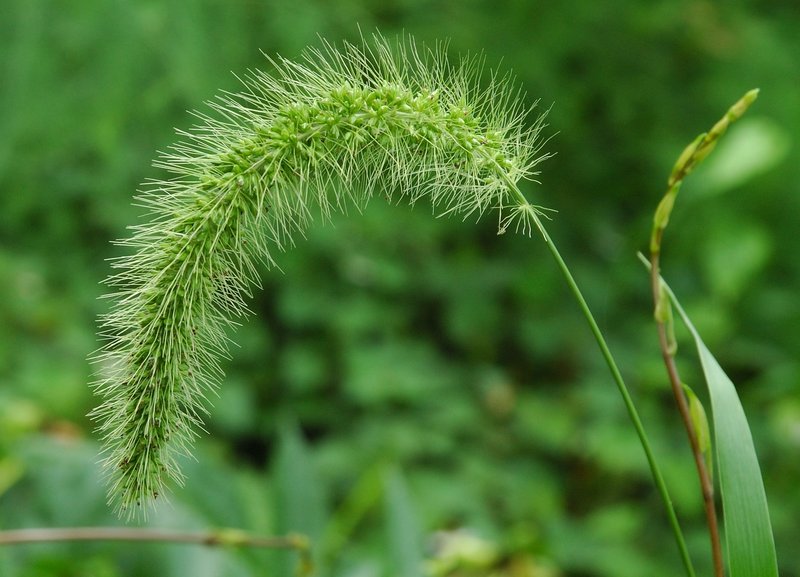
Sphl (ja.wikipedia.org),Kropsoq,Kropsoq,Ayotte, Gilles, 1948-,Ayotte, Gilles, 1948-,Bruce Ackley, The Ohio State University, Bugwood.org,Bruce Ackley, The Ohio State University, Bugwood.org,Bruce Ackley, The Ohio State University, Bugwood.org,Bruce Ackley, The Ohio State University, Bugwood.org,Robert H. Mohlenbrock. USDA SCS. 1989. Midwest wetland flora: Field office illustrated guide to plant species. Midwest National Technical Center, Lincoln. Courtesy of USDA NRCS Wetland Science Institute.,Ayotte, Gilles, 1948-,John D. Byrd, Mississippi State University, Bugwood.org

Taxonomy
- Division:
- Magnoliophyta | - Flowering plants
- Family:
- Poaceae
- Genus:
- Setaria
- Species:
- Setaria faberi
- USDA Symbol:
- SEFA
Growth Characteristics
- Life Cycle:
- Annual
- Growth Habit:
- Graminoid
- Height:
- 150 cm
- Light Requirements:
- Full Sun
- Drought Tolerance:
- Medium
- Bloom Months:
- jul,aug,sep
- Bloom Colors:
- green, purple
Host Plant for Caterpillars
American wainscot (Hydraecia immanis)
Garden & Ecology Notes
- Wildlife Value:
- birds, small mammals
Soil Requirements
- Soil Type:
- fertile, well-drained loamy soil
- pH:
- 5.5 - 7.5 (slightly acidic to neutral)
- Drainage:
- tolerates poor drainage
- Moisture:
- dry to moderate
- Notes:
- prefers disturbed soils in native habitats