
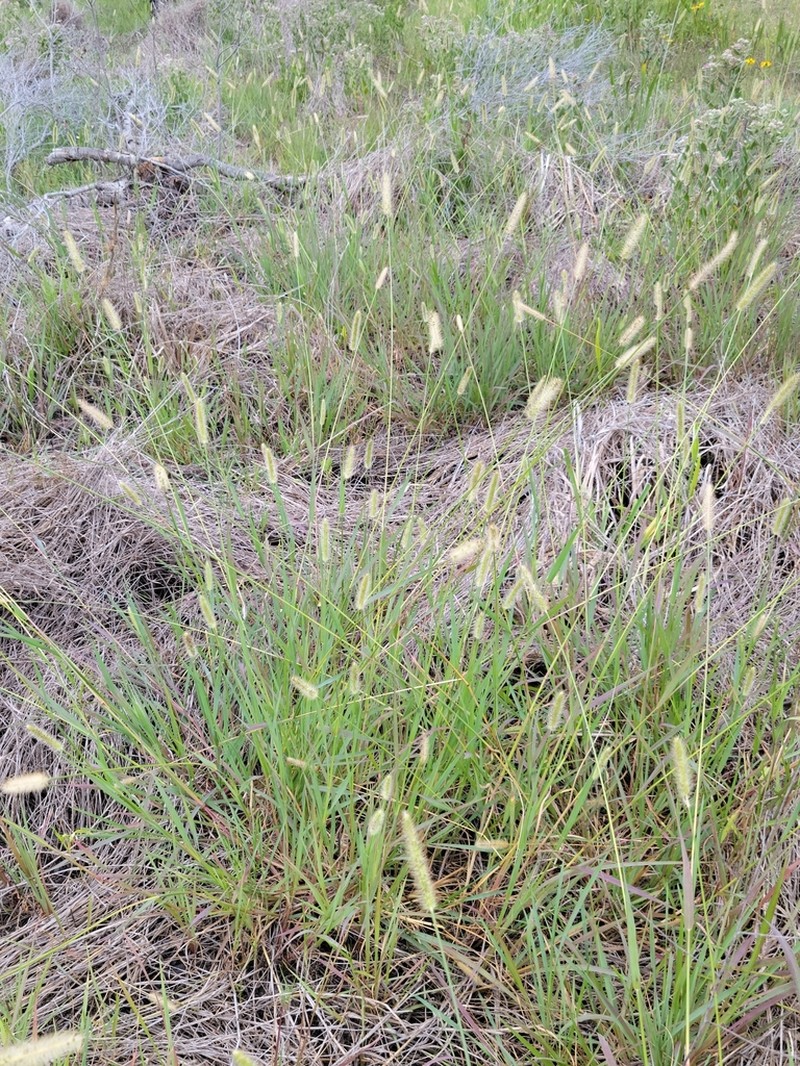
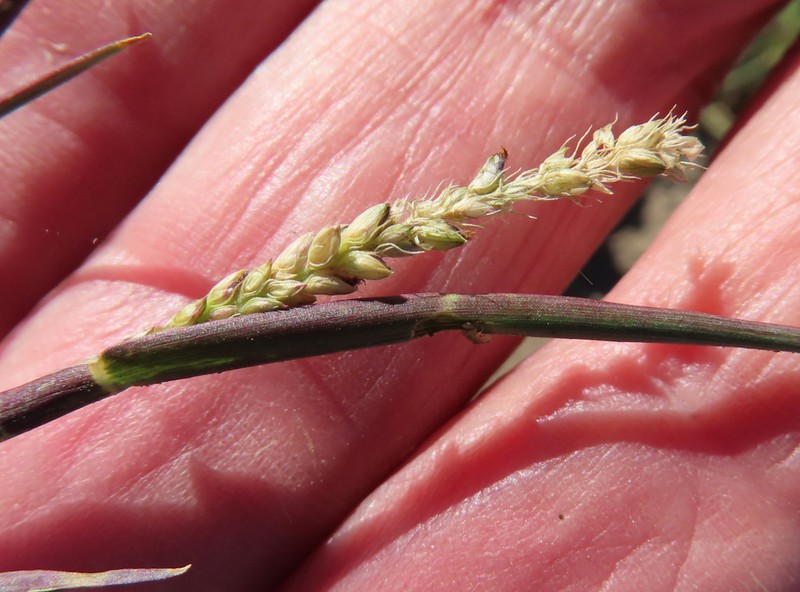
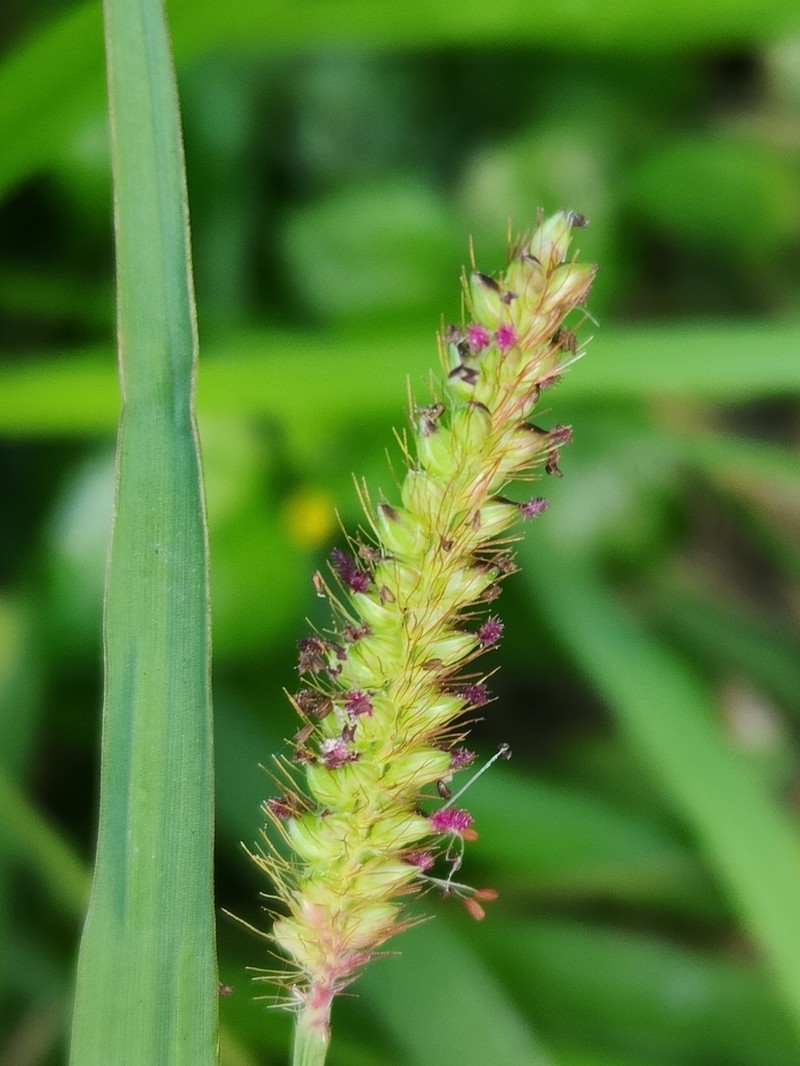
Marsh Bristlegrass
Setaria parviflora
Also known as: Mission Grass
- Native to:
- Argentina, Bahamas, Belize, Bermuda, Bolivia, Brazil, Cayman Is., Central American Pacific Is., Chile, Colombia, Costa Rica, Cuba, Desventurados Is., Dominican Republic, Ecuador, El Salvador, French Guiana, Galápagos, Guam, Guatemala, Guyana, Haiti, Honduras, Jamaica, Juan Fernández Is., Leeward Is., Mexican Pacific Is., Mexico, Nicaragua, Panamá, Paraguay, Peru, Puerto Rico, Suriname, Trinidad-Tobago, Turks-Caicos Is., United States, Uruguay, Venezuela, Venezuelan Antilles, Virgin Islands, Windward Is.
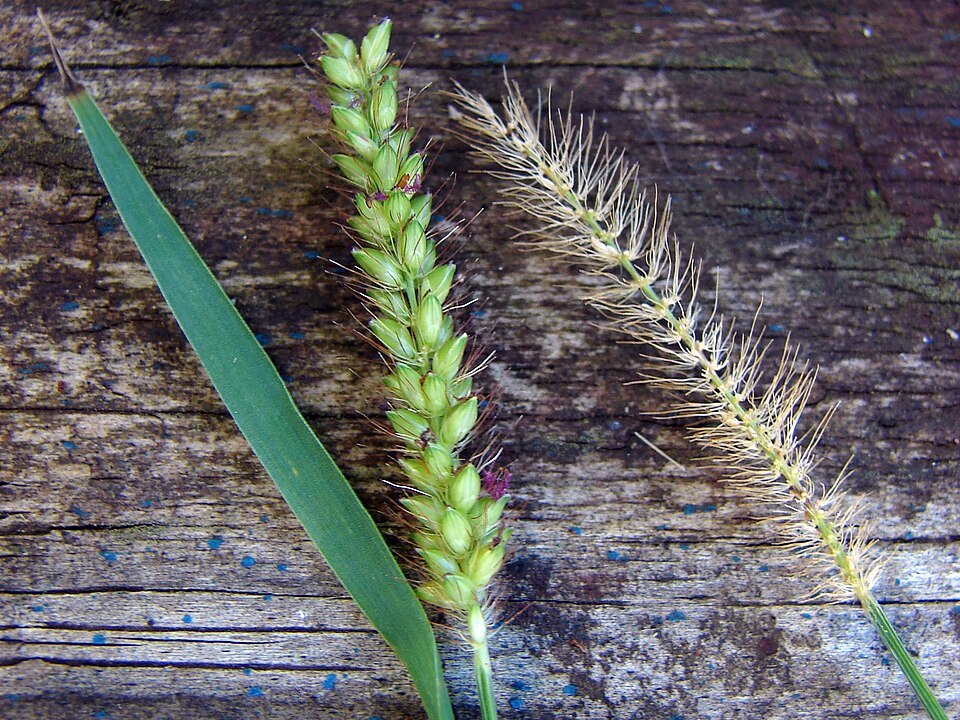
Forest & Kim Starr (www.hear.org)
Taxonomy
- Division:
- Magnoliophyta | - Flowering plants
- Family:
- Poaceae
- Genus:
- Setaria
- Species:
- Setaria parviflora
- USDA Symbol:
- SEPA10
Growth Characteristics
- Life Cycle:
- Perennial
- Growth Habit:
- Graminoid
- Height:
- 100 cm
- Light Requirements:
- Part Shade
- Drought Tolerance:
- Medium
- Bloom Months:
- jun,jul,aug,sep
- Bloom Colors:
- green, purple
Wildlife Benefits
- Butterflies & Moths:
- ★★☆☆☆ Documented Lepidoptera association (GBIF)
Garden & Ecology Notes
- Wildlife Value:
- birds, small mammals
- Salt Tolerant:
- Yes
- Fire Ecology:
- Fire adapted — tolerates or benefits from fire
- Fire Notes:
- Resprouts from rhizomes after fire; often increases in abundance post-fire.
Soil Requirements
- Soil Type:
- sandy, well-drained, nutrient-poor soil
- pH:
- 5.5 - 7.5 (slightly acidic to neutral)
- Drainage:
- excellent drainage required
- Moisture:
- dry to moderate
- Notes:
- commonly found in disturbed areas and open grasslands