
Sand Dropseed
Sporobolus cryptandrus
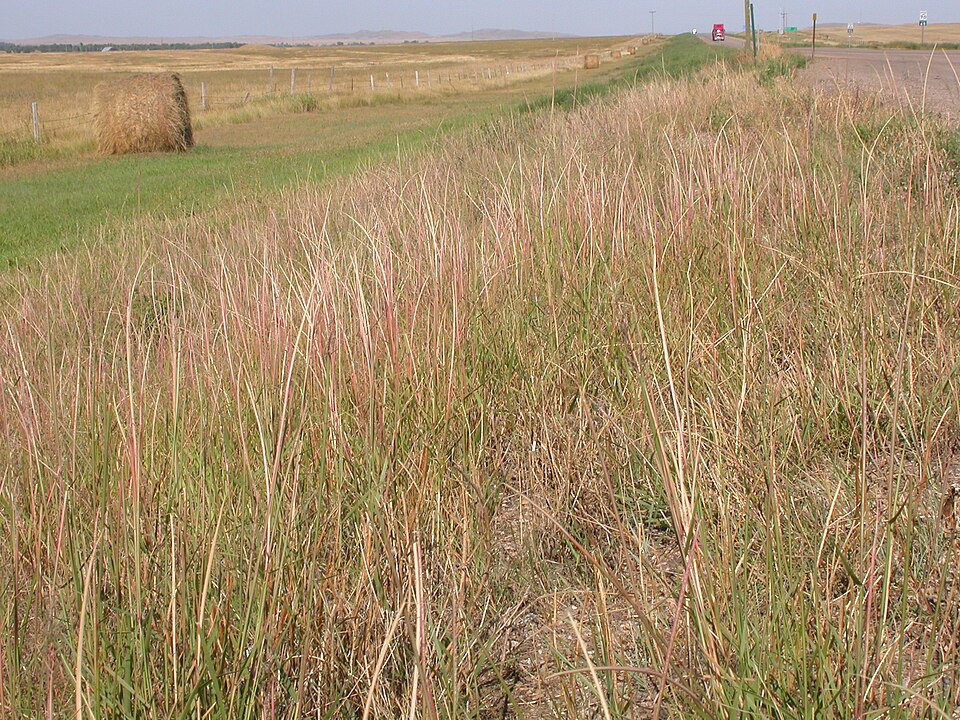
Taxonomy
- Division:
- Magnoliophyta | - Flowering plants
- Family:
- Poaceae
- Genus:
- Sporobolus
- Species:
- Sporobolus cryptandrus
Growth Characteristics
- Life Cycle:
- Perennial
- Growth Habit:
- Graminoid
- Height:
- 3-4 ft
- Light Requirements:
- Full Sun, Part Shade
- Drought Tolerance:
- High
- Bloom Months:
- may, jun, jul, aug, sep, oct, nov
- Bloom Colors:
- Yellow
Native Range
United States: Arkansas, Arizona, California, Colorado, Connecticut, Georgia, Iowa, Idaho, Illinois, Indiana, Kansas, Kentucky, Louisiana, Massachusetts, Maine, Michigan, Minnesota, Missouri, Mississippi, Montana, North Carolina, North Dakota, Nebraska, New Hampshire, New Jersey, New Mexico, Nevada, New York, Ohio, Oklahoma, Oregon, Pennsylvania, Rhode Island, South Carolina, South Dakota, Tennessee, Texas, Utah, Virginia, Vermont, Washington, Wisconsin, West Virginia, Wyoming, Canada: Alberta, British Columbia, Manitoba, Ontario, Quebec, Saskatchewan
Soil Requirements
- Soil Type:
- sandy, well-drained, nutrient-poor soil
- pH:
- 6.0 - 8.0 (neutral to slightly alkaline)
- Drainage:
- excellent drainage required
- Moisture:
- dry to moderate
- Notes:
- thrives in arid and semi-arid regions
Germination Information
Pre-treatment: Scarification by rubbing seeds between two pieces of sandpaper approximately 15 times. Cold moist stratification for 28 days. Alternatively, warm stratification can be accomplished by subjecting seeds to 45°C/15°C conditions for 8 and 16 hours respectively for 15 days.
Establishment: Germination rates of untreated seed are extremely low - under 3%. Warm stratification should not exceed 15 days as this results in significant decreases in viability. Germination rates of scarified seeds are strongly correlated with the temperature at which planted seeds are kept. In some cases, stratification alone improved germination over the control, but in other cases it resulted in lower germination due to fungal growth.
Source: npn.rngr.net