
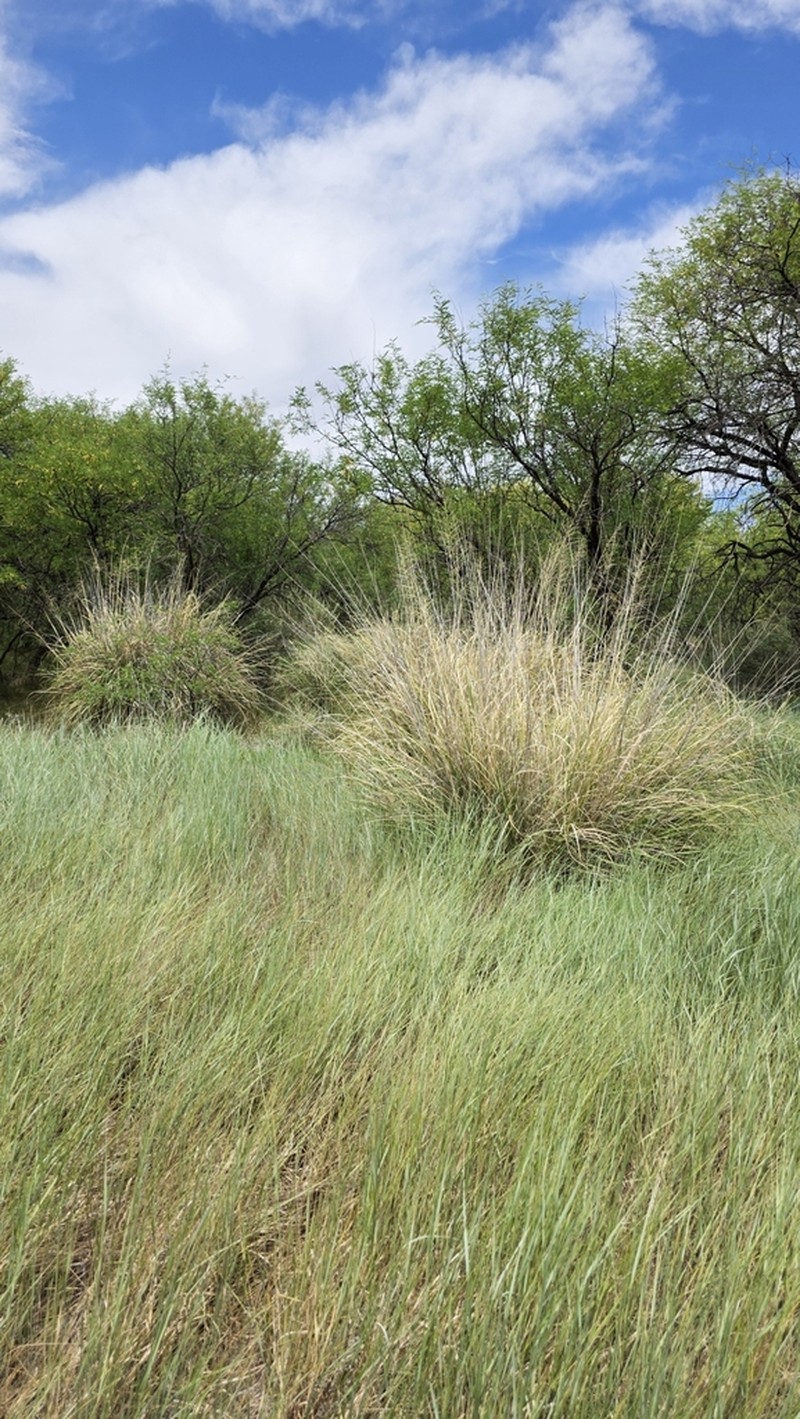
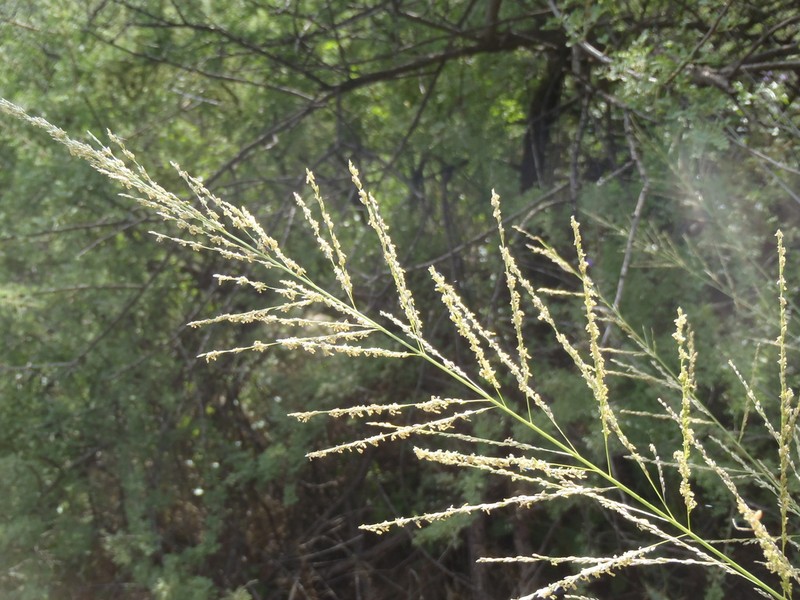
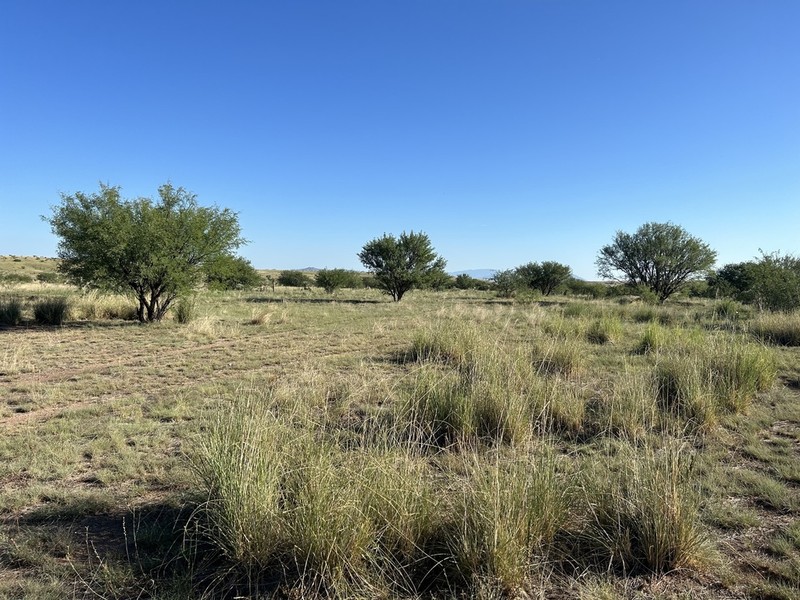
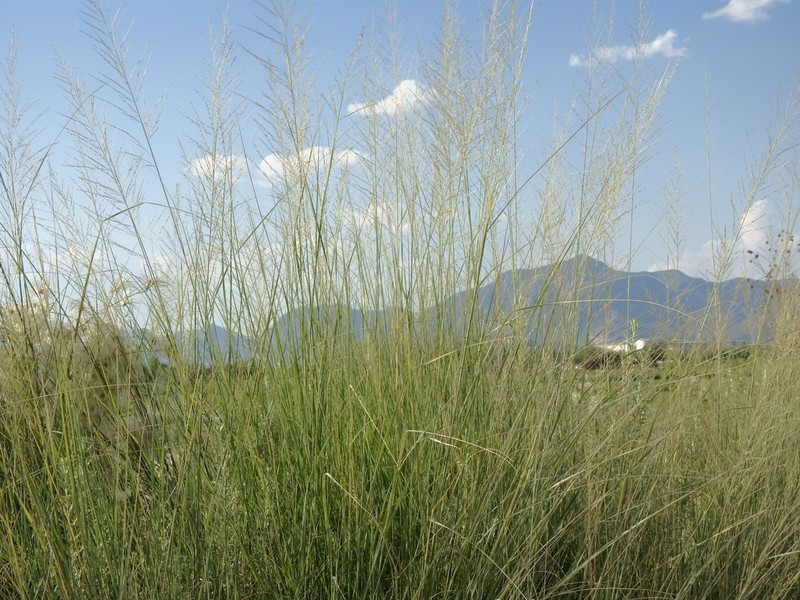
Big Sacaton
Sporobolus wrightii
- Native to:
- Mexico, United States
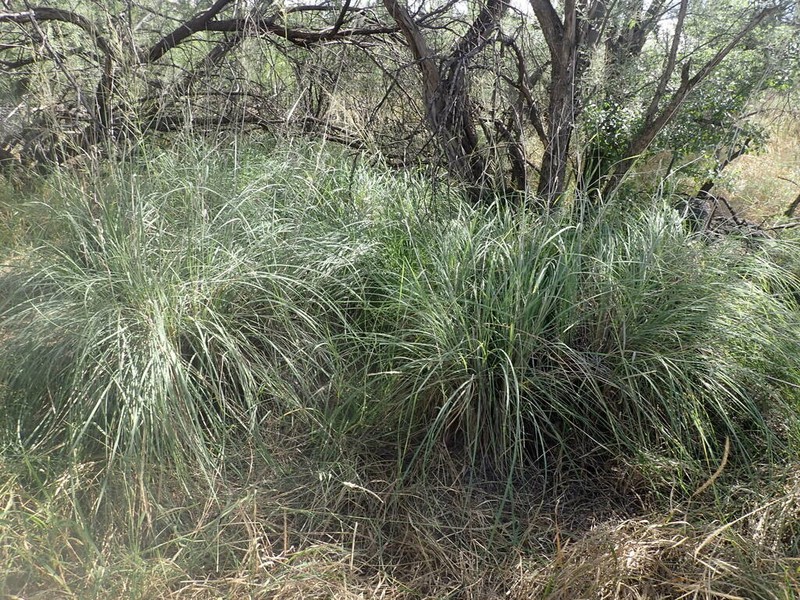
iNaturalist: © ethan-k (iNaturalist #140909590)
Taxonomy
- Division:
- Magnoliophyta | - Flowering plants
- Family:
- Poaceae
- Genus:
- Sporobolus
- Species:
- Sporobolus wrightii
- USDA Symbol:
- SPWR2
Growth Characteristics
- Life Cycle:
- Perennial
- Growth Habit:
- Graminoid
- Height:
- 150 cm
- Light Requirements:
- Full Sun
- Drought Tolerance:
- High
- Bloom Months:
- aug,sep,oct
Wildlife Benefits
- Butterflies & Moths:
- ★★★★☆ Documented Lepidoptera association (GBIF)
- Caterpillars:
- ★☆☆☆☆ Recorded caterpillar host plant (HOSTS Database)
Host Plant for Caterpillars
Bucculatrix sporobolella, Olivia's buckmoth (Hemileuca oliviae)
Garden & Ecology Notes
- Wildlife Value:
- birds, small mammals
- Deer Resistant:
- Yes
- Salt Tolerant:
- Yes
- Fire Ecology:
- Fire adapted — tolerates or benefits from fire
- Fire Notes:
- Resprouts from basal crown after fire; fire can reduce thatch and promote vigor.
Soil Requirements
- Soil Type:
- sandy, well-drained, nutrient-poor soil
- pH:
- 6.0 - 8.0 (neutral to slightly alkaline)
- Drainage:
- excellent drainage required
- Moisture:
- dry to moderate
- Notes:
- native to arid and semi-arid regions
Propagation & Germination
Pre-treatment: Inoculating soil with mycorrhizal fungi, especially when sites are highly degraded and unlikely to have extant mycorrhizal populations
Establishment: This species was previously classified as a variety of alkali sacaton (Sporobolus airoides). It is found from 2,000-5,000 feet along river banks and dry, sandy, open sites. Its range has significantly declined over the past century--it now occurs in less than 5% of its original range.
Source: npn.rngr.net
Where to Buy
Nationwide Seller
- Native Seed Group (seeds)
- Native Plants Nursery (nursery)