
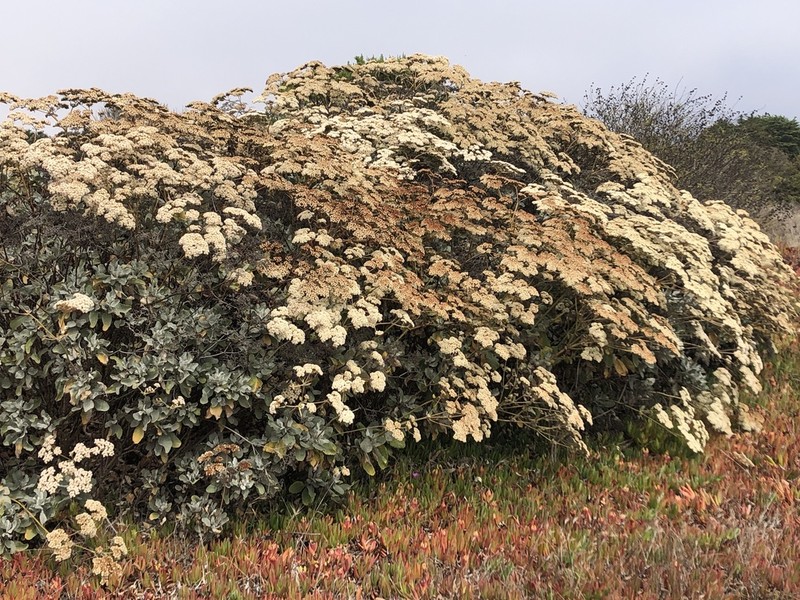
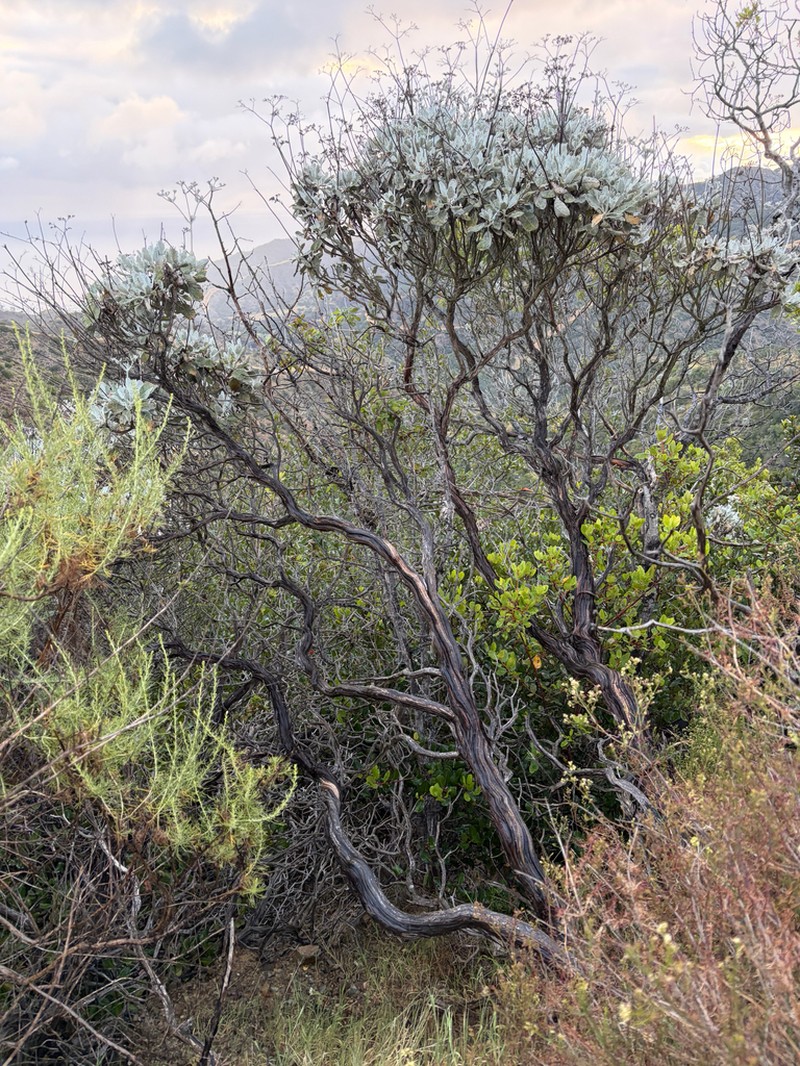
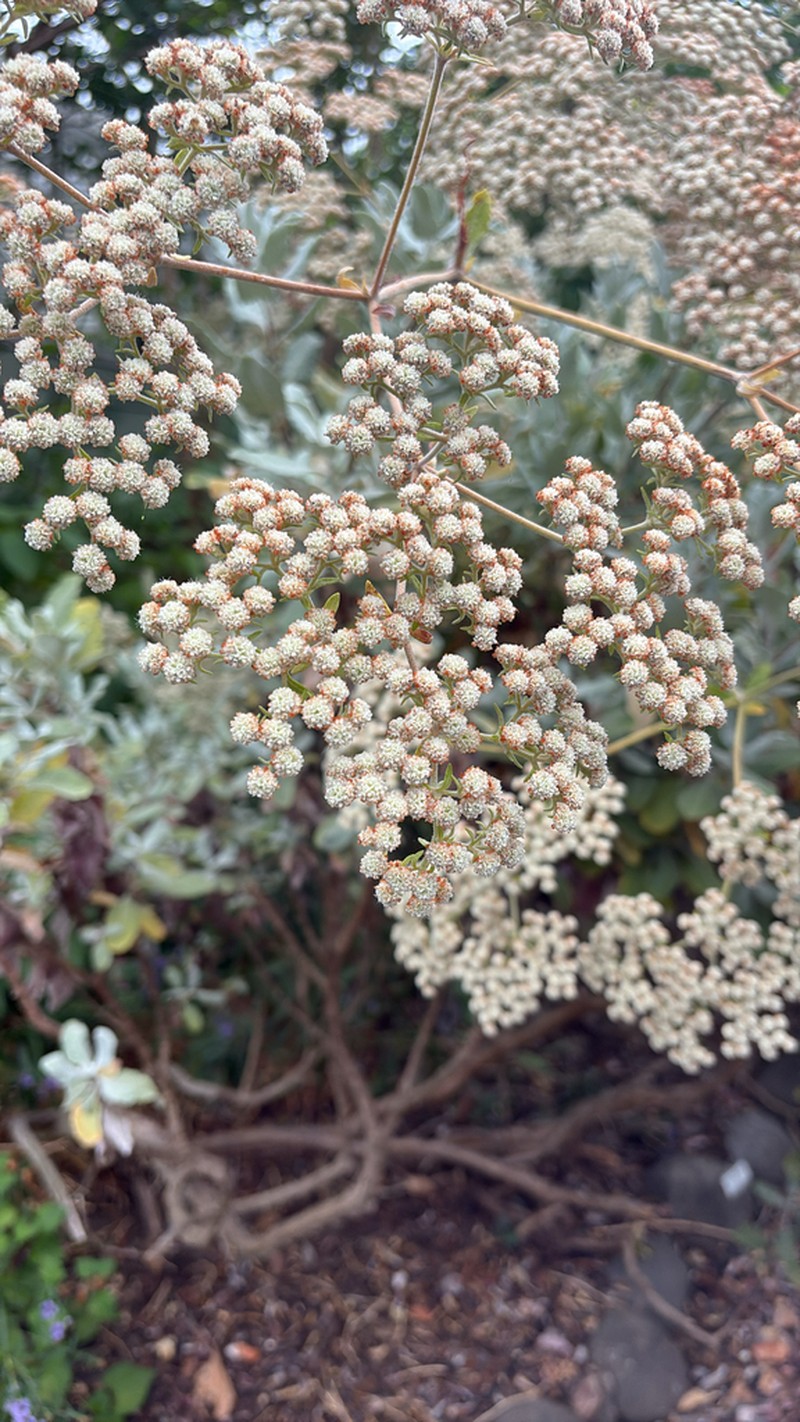
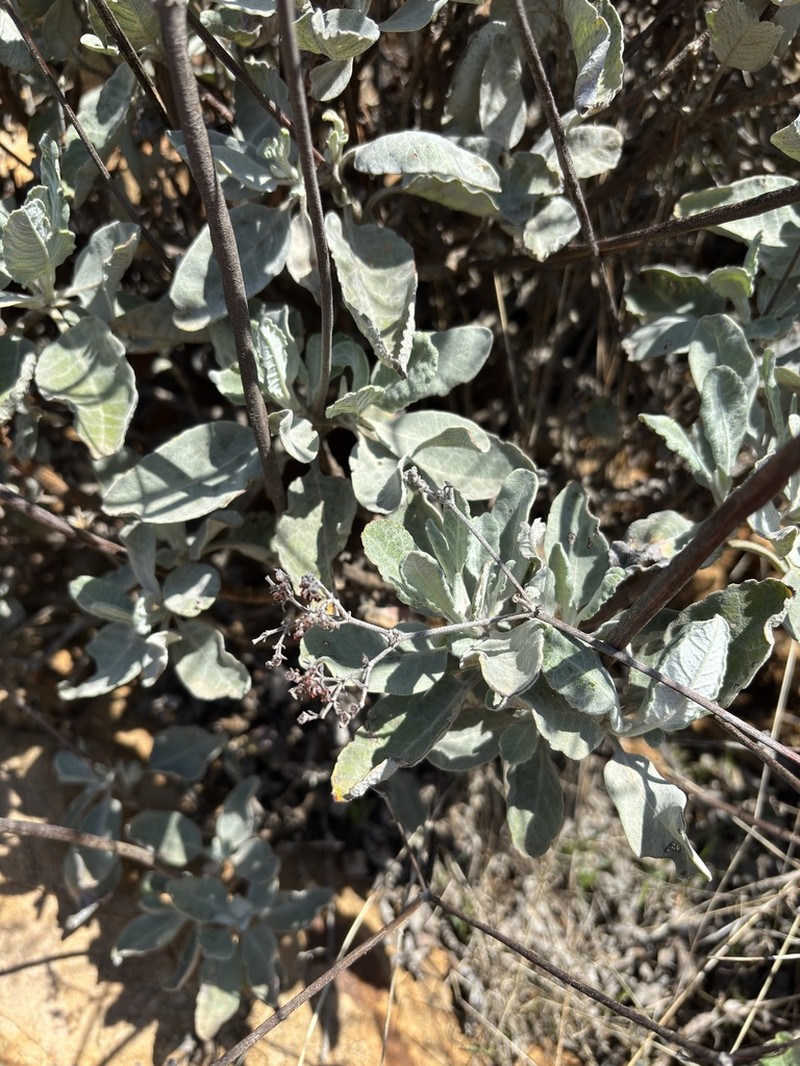
St. Catherine's Lace
Eriogonum giganteum
- Native to:
- United States
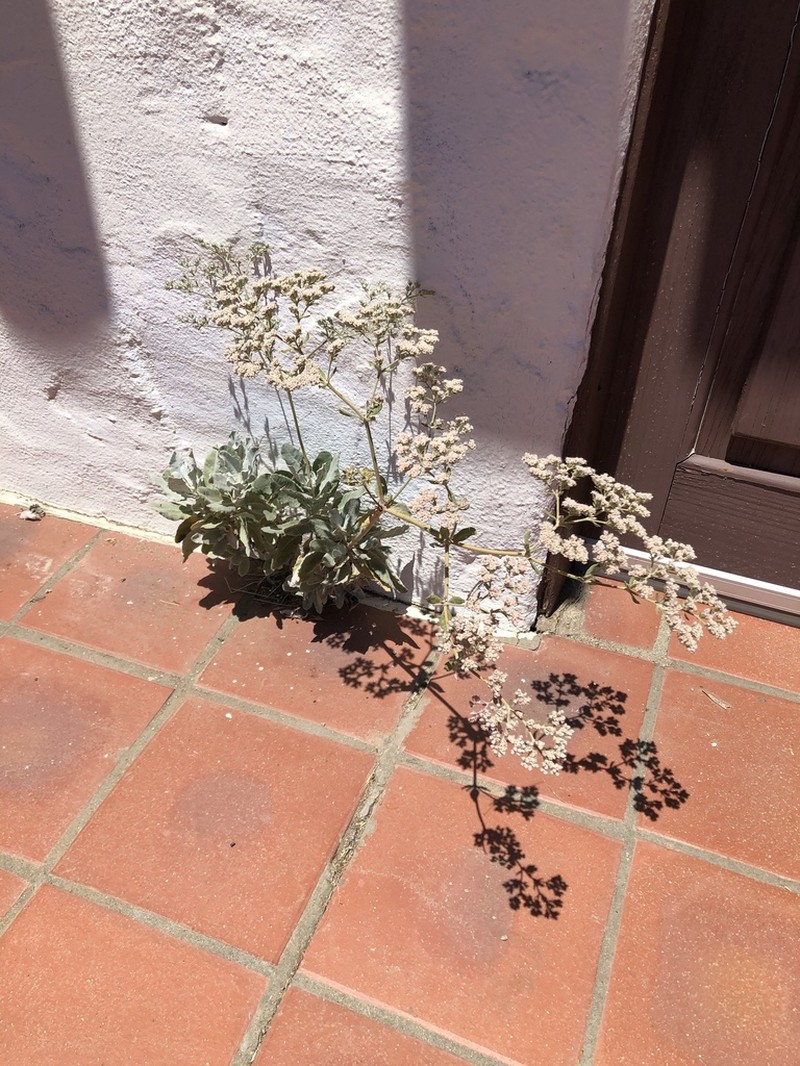
iNaturalist: © nickstein (iNaturalist #51849198)
Taxonomy
- Division:
- Magnoliophyta | - Flowering plants
- Family:
- Polygonaceae
- Genus:
- Eriogonum
- Species:
- Eriogonum giganteum
- USDA Symbol:
- ERGI2
Growth Characteristics
- Life Cycle:
- Perennial
- Growth Habit:
- Shrub , Subshrub
- Height:
- 300 cm
- Light Requirements:
- Part Shade
- Drought Tolerance:
- High
- Bloom Months:
- jun,jul,aug,sep
- Bloom Colors:
- white, pink
- Evergreen Shrub:
- Yes
- Landscaping Shrub:
- Yes
Wildlife Benefits
- Bees:
- ★☆☆☆☆ Documented bee visitation (GBIF)
- Butterflies & Moths:
- ★☆☆☆☆ Documented Lepidoptera association (GBIF)
- Caterpillars:
- ★☆☆☆☆ Recorded caterpillar host plant (HOSTS Database)
- Hummingbirds:
- ★☆☆☆☆ Documented hummingbird visits (GBIF)
Keystone Species Ranking
- Pollen Specialist Bee Keystone:
- ★★★★☆ Native pollen specialist bee species supported by this genus (NWF)
Host Plant for Caterpillars
Electra buckmoth (Hemileuca electra), Avalona hairstreak (Strymon avalona)
Reported Fauna Sightings
Bees: ⚠️Western honey bee (Apis mellifera) Hummingbirds: Costa's Hummingbird (Calypte costae)
Garden & Ecology Notes
- Wildlife Value:
- bees, butterflies, birds
- Deer Resistant:
- Yes
- Salt Tolerant:
- Yes
Soil Requirements
- Soil Type:
- sandy, well-drained, nutrient-poor soil
- pH:
- 6.0 - 8.0 (neutral to slightly alkaline)
- Drainage:
- excellent drainage required
- Moisture:
- dry to moderate
- Notes:
- native to coastal scrub and chaparral areas