
Polygonum equisetiforme
Polygonum equisetiforme
- Native to:
- Algeria, Azores, Bulgaria, Canary Is., Cyprus, East Aegean Is., Egypt, Greece, Kazakhstan, Kriti, Lebanon-Syria, Libya, Morocco, Palestine, Portugal, Sicilia, Sinai, Spain, Tadzhikistan, Tunisia, Türkiye, Türkiye-in-Europe, Turkmenistan, Uzbekistan, Western Sahara
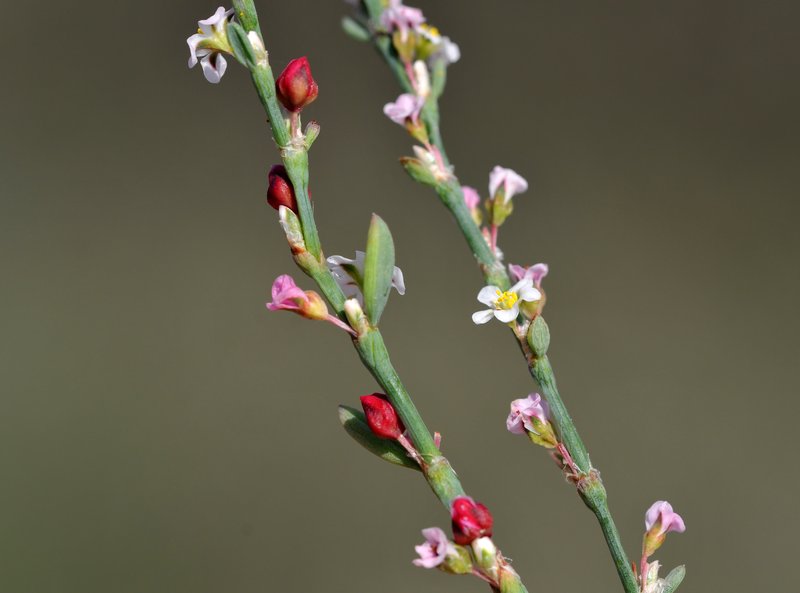
Zeynel Cebeci,Krzysztof Ziarnek, Kenraiz,Krzysztof Ziarnek, Kenraiz,Eitan Ferman,Krzysztof Ziarnek, Kenraiz,Krzysztof Ziarnek, Kenraiz,Krzysztof Ziarnek, Kenraiz,Krzysztof Ziarnek, Kenraiz,Krzysztof Ziarnek, Kenraiz,Krzysztof Ziarnek, Kenraiz,Krzysztof Ziarnek, Kenraiz,Krzysztof Ziarnek, Kenraiz

Taxonomy
- Division:
- Magnoliophyta | - Flowering plants
- Family:
- Polygonaceae
- Genus:
- Polygonum
- Species:
- Polygonum equisetiforme
- USDA Symbol:
- POEQ2
Growth Characteristics
- Height:
- 100 cm
- Light Requirements:
- Full Sun,Part Shade
- Drought Tolerance:
- High
- Bloom Months:
- jun,jul,aug,sep
- Bloom Colors:
- white, pink
Garden & Ecology Notes
- Wildlife Value:
- birds, butterflies
- Salt Tolerant:
- Yes
Soil Requirements
- Soil Type:
- sandy, well-drained, nutrient-poor soil
- pH:
- 6.0 - 8.0 (neutral to slightly alkaline)
- Drainage:
- excellent drainage required
- Moisture:
- dry to moderate
- Notes:
- commonly found in arid and semi-arid regions