
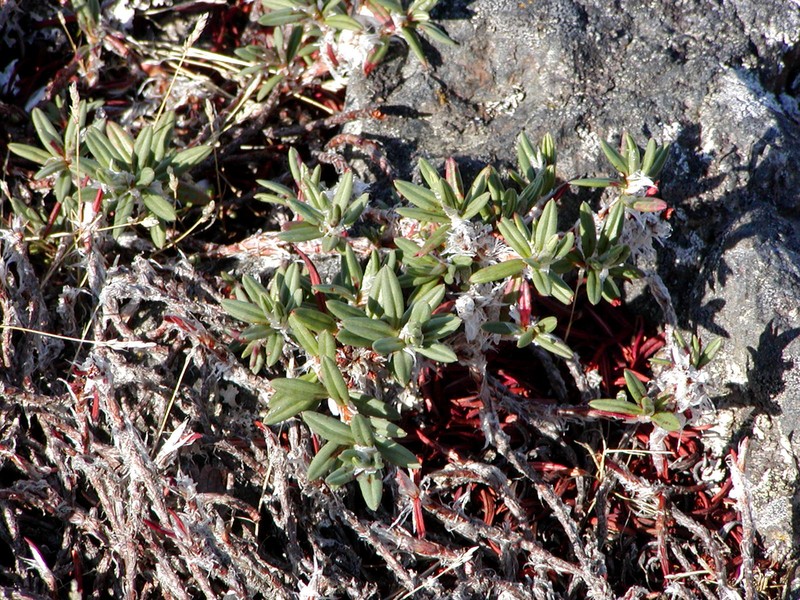
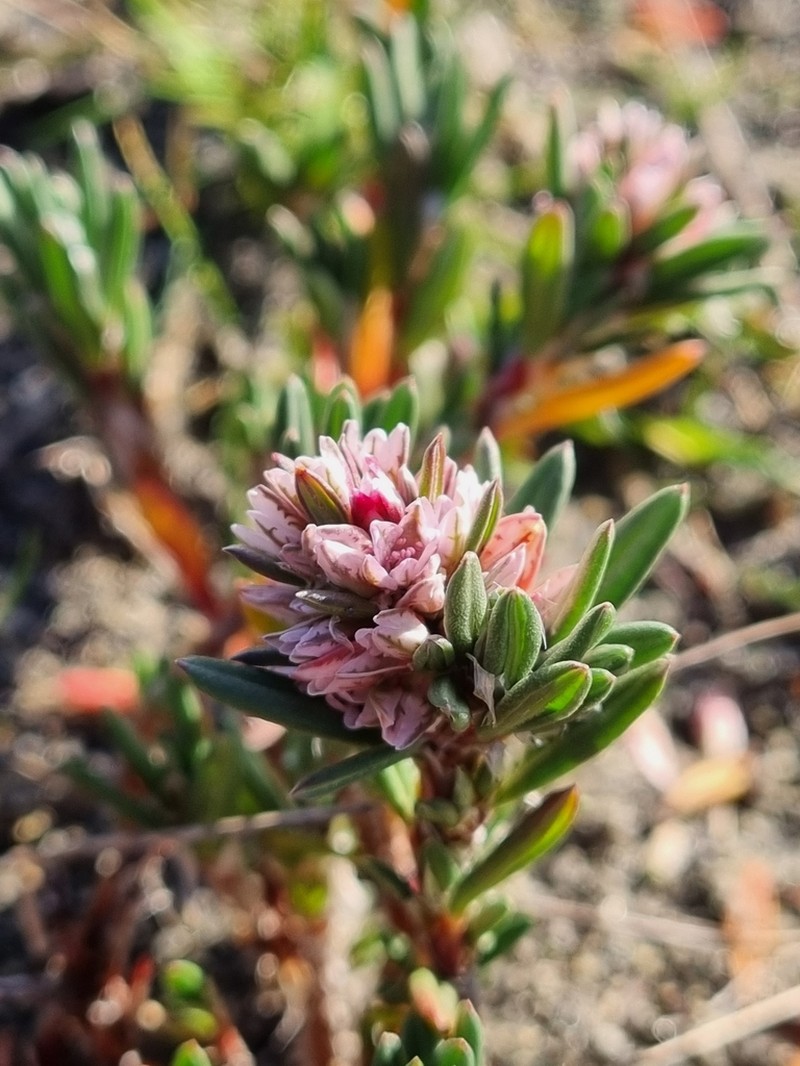
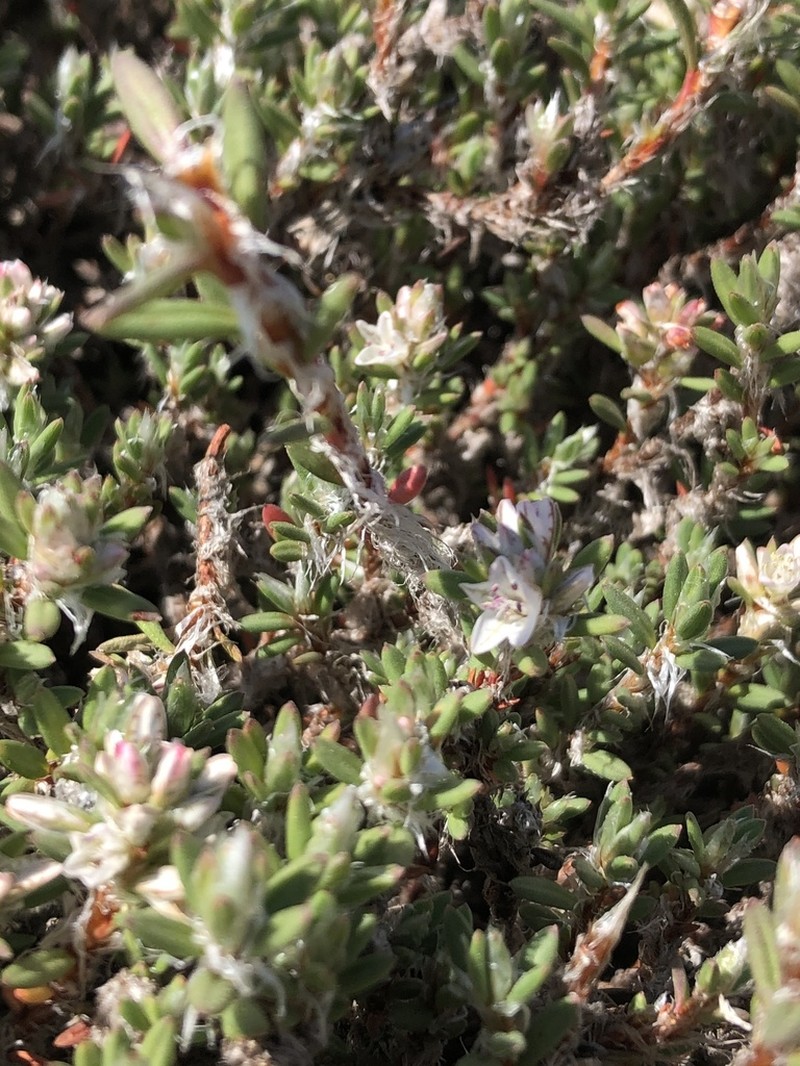
Beach Knotweed
Polygonum paronychia
- Native to:
- Canada, United States
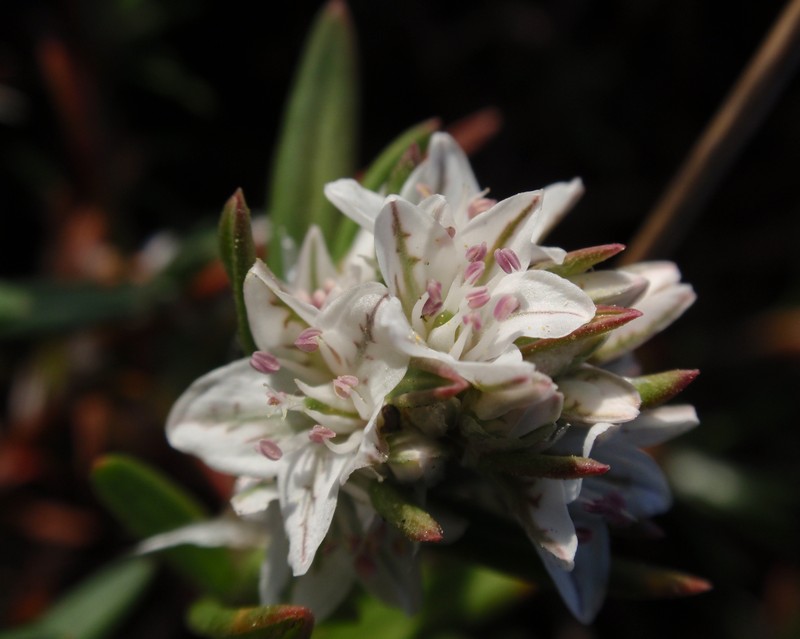
Tom Hilton (www.flickr.com)
Taxonomy
- Division:
- Magnoliophyta | - Flowering plants
- Family:
- Polygonaceae
- Genus:
- Polygonum
- Species:
- Polygonum paronychia
- USDA Symbol:
- POPA7
Growth Characteristics
- Life Cycle:
- Perennial
- Growth Habit:
- Subshrub
- Height:
- 30 cm
- Light Requirements:
- Full Sun
- Drought Tolerance:
- High
- Bloom Months:
- jun,jul,aug,sep
- Bloom Colors:
- white, pink
- Ground Cover:
- Yes
- Lawn Substitute:
- Yes
Wildlife Benefits
- Bees:
- ★☆☆☆☆ Documented bee visitation (GBIF)
- Butterflies & Moths:
- ★☆☆☆☆ Documented Lepidoptera association (GBIF)
- Caterpillars:
- ★☆☆☆☆ Recorded caterpillar host plant (HOSTS Database)
Host Plant for Caterpillars
Lasionycta arietis, Lasionycta wyatti, Synanthedon polygoni
Garden & Ecology Notes
- Wildlife Value:
- birds, butterflies
- Deer Resistant:
- Yes
- Salt Tolerant:
- Yes
Soil Requirements
- Soil Type:
- sandy, well-drained, nutrient-poor soil
- pH:
- 6.0 - 7.5 (slightly acidic to neutral)
- Drainage:
- excellent drainage required
- Moisture:
- dry to moderate
- Notes:
- Commonly found in coastal or sandy habitats
Propagation & Germination
- Stratification:
- Cold/moist stratification required — 30–60 days
- Germination Time:
- 14–30 days
- Notes:
- Seeds germinate readily after cold stratification; surface sow on moist sand.
Pre-treatment: Seeds require 8 weeks of cold-moist stratification. Scarification can be done but did not significantly improve germination in controlled tests.
Establishment: This species is slower to emerge and grow than many other coastal dune species. There are conflicting protocols regarding the need for scarification. Seeds are collected between May and October. Found in sandy coastal habitats including dunes and scrub.
Source: npn.rngr.net