
Native Yellow Purslane
Portulaca lutea
- Native to:
- American Samoa, Cook Is., Fiji, Gilbert Is., Guam, Hawaii, Howland-Baker Is., Line Is., Marcus I., Marianas, Marquesas, Marshall Is., Marshall Islands, New Caledonia, Niue, Northern Mariana Islands, Phoenix Is., Pitcairn Is., Samoa, Society Is., Tokelau-Manihiki, Tonga, Tuamotu, Tubuai Is., Tuvalu, U.S. Minor Outlying Islands, United States, Wake I.
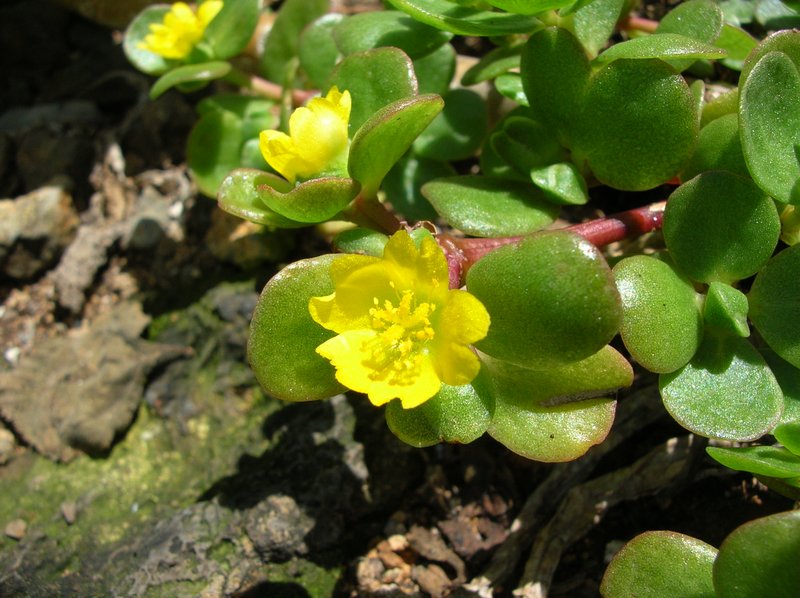
Forest & Kim Starr (www.hear.org)
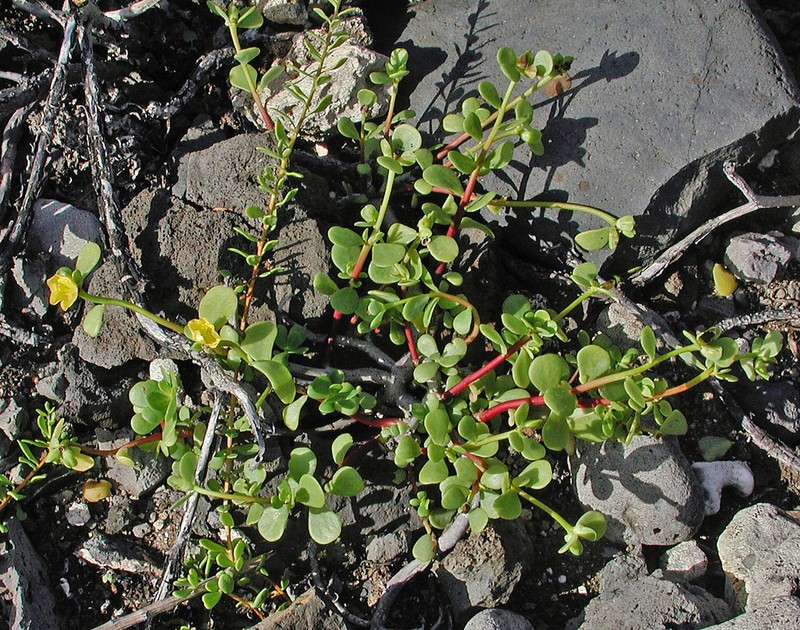
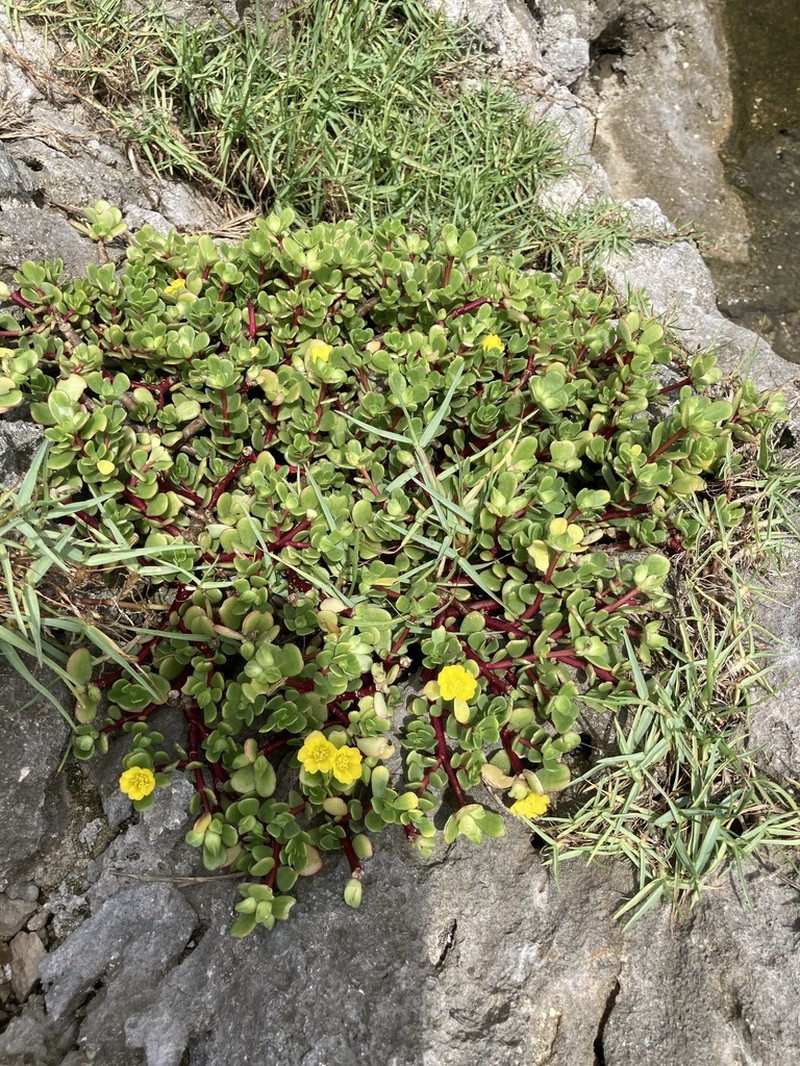
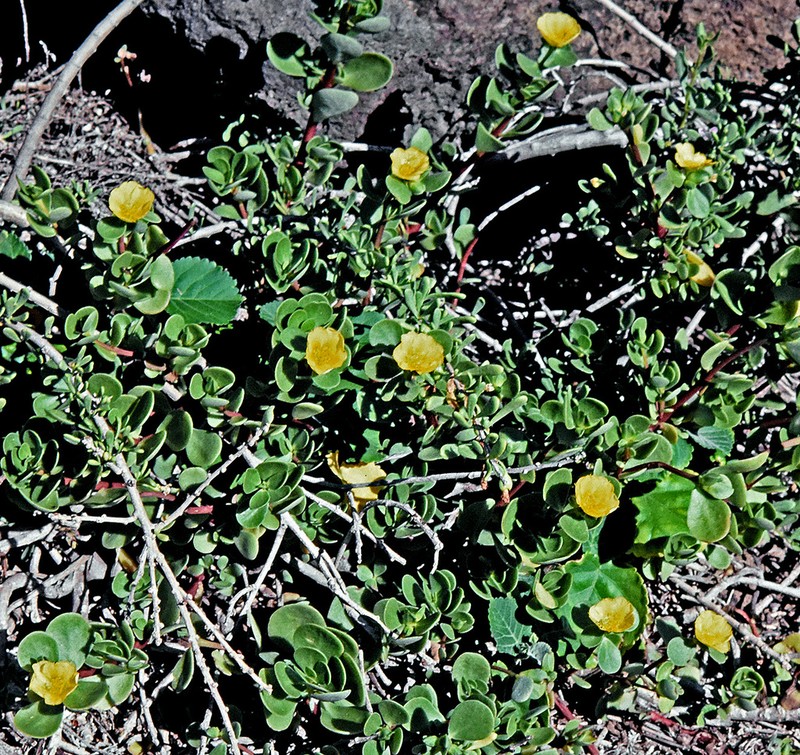
Taxonomy
- Division:
- Magnoliophyta | - Flowering plants
- Family:
- Portulacaceae
- Genus:
- Portulaca
- Species:
- Portulaca lutea
- USDA Symbol:
- POLU2
Growth Characteristics
- Life Cycle:
- Perennial
- Growth Habit:
- Forb/herb
- Height:
- 30 cm
- Light Requirements:
- Full Sun
- Drought Tolerance:
- High
- Bloom Months:
- mar,apr,may,jun,jul,aug,sep,oct
- Bloom Colors:
- yellow
- Ground Cover:
- Yes
Wildlife Benefits
- Bees:
- ★☆☆☆☆ Documented bee visitation (GBIF)
- Butterflies & Moths:
- ★☆☆☆☆ Documented Lepidoptera association (GBIF)
Garden & Ecology Notes
- Wildlife Value:
- bees, butterflies
- Deer Resistant:
- Yes
- Salt Tolerant:
- Yes
Soil Requirements
- Soil Type:
- sandy, well-drained, nutrient-poor soil
- pH:
- 6.0 - 7.5 (slightly acidic to neutral)
- Drainage:
- excellent drainage required
- Moisture:
- dry to moderate
- Notes:
- Adapted to coastal environments with saline conditions
Propagation & Germination
- Germination Time:
- 7–21 days
- Notes:
- Seeds germinate readily in warm, moist soil without pretreatment.
Pre-treatment: Cut plants into 6-8 inch lengths with at least 3 nodes per strand. Place about 3 strands in each pot filled 1/3 with well-drained potting mix. Rooting hormone may be used for certain species. Fill the rest of the pot with potting mix. Water daily and keep in a moist humid environment.
Establishment: Plants should only be propagated by cuttings due to the presence of the alien species and the hybridization of it with this species. Propagation by seeds cannot be done because of the hybridization problem. The plant is indigenous to Hawai'i and widespread in the Pacific.
Source: npn.rngr.net