
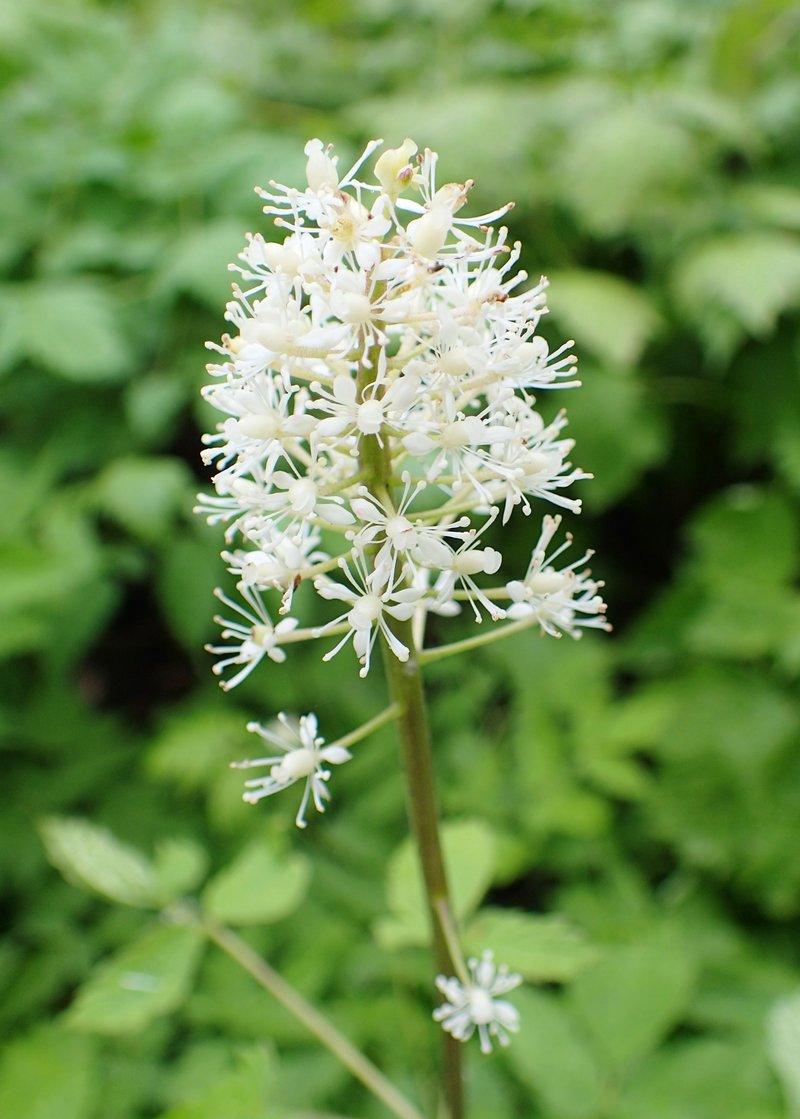
Red Baneberry
Actaea rubra
Taxonomy
- Division:
- Magnoliophyta | - Flowering plants
- Family:
- Ranunculaceae
- Genus:
- Actaea
- Species:
- Actaea rubra
Growth Characteristics
- Life Cycle:
- Perennial
- Growth Habit:
- Forb/herb
- Height:
- 3-4 ft
- Light Requirements:
- Full Sun, Part Shade, Shade
- Drought Tolerance:
- High
- Bloom Months:
- apr, may, jun
- Bloom Colors:
- White
Native Range
United States: Alaska, Arizona, California, Colorado, Connecticut, Iowa, Idaho, Illinois, Indiana, Kansas, Massachusetts, Maine, Michigan, Minnesota, Montana, North Dakota, Nebraska, New Hampshire, New Jersey, New Mexico, Nevada, New York, Ohio, Oregon, Pennsylvania, Rhode Island, South Dakota, Utah, Vermont, Washington, Wisconsin, Wyoming, Canada: Alberta, British Columbia, Manitoba, New Brunswick, Nova Scotia, Northwest Territories, Ontario, Prince Edward Island, Quebec, Saskatchewan, Yukon
Keystone Species Ranking
- Caterpillar Keystone:
- ★★★★★ Based on number of butterfly and moth species using this genus as host plant (Source: National Wildlife Federation)
Host Plant for Caterpillars
Reported Fauna Sightings
Soil Requirements
- Soil Type:
- rich, well-drained loamy soil
- pH:
- 5.0 - 6.5 (acidic to slightly acidic)
- Drainage:
- good drainage required
- Moisture:
- consistently moist
- Notes:
- Prefers shaded woodland areas
Germination Information
Pre-treatment: Seeds are mixed with equal amount of perlite or vermiculite and a small amount of water in a Ziploc-style bag or a small Rubbermaid-style container. The mixture is placed in cold moist stratification (33-42 degree F) for at least five months, or up to 112 days.
Establishment: Seeds are collected by hand from locally native plants within the eastern central Upper Peninsula. Berries on individual plants do not ripen simultaneously. Berries are harvested in August. The fruit is a red, or rarely white, berry and is reputed to be poisonous. The plant is found in rich mixed and coniferous forests and swamps with aspen, oak, cedar, spruce, fir, hemlock or tamarack with average moisture. It prefers rich, well drained loam (ph 5-6) and light to medium shade.
Source: npn.rngr.net