
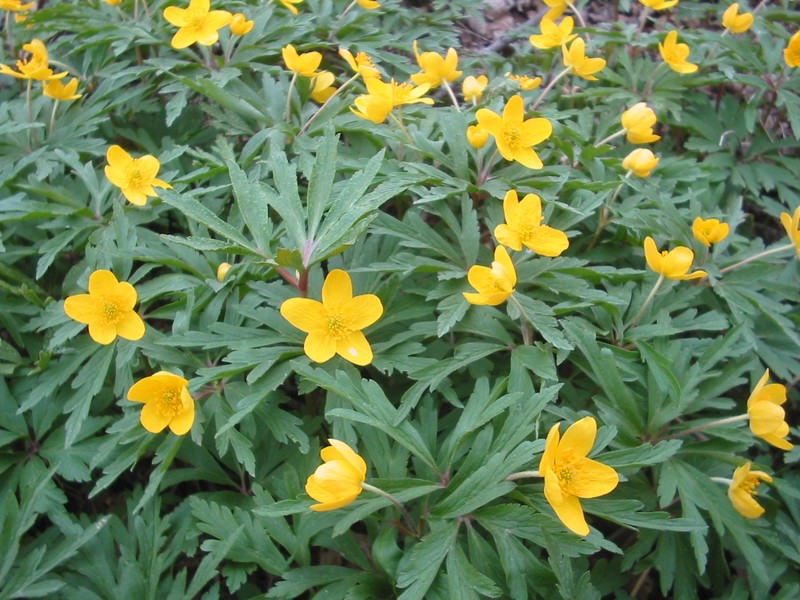
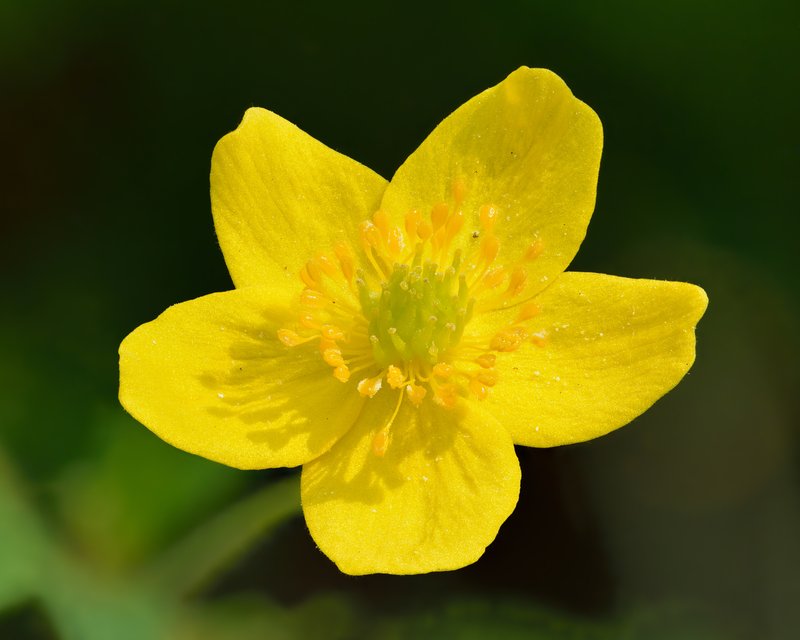
Yellow Woodland Anemone
Anemone ranunculoides
- Native to:
- Albania, Austria, Baltic States, Belarus, Belgium, Bulgaria, Czechia-Slovakia, Denmark, Finland, France, Germany, Greece, Hungary, Italy, Krym, Netherlands, North Caucasus, Norway, NW. Balkan Pen., Poland, Romania, Russia, Spain, Sweden, Switzerland, Transcaucasus, Türkiye, Türkiye-in-Europe, Ukraine
Ivar Leidus
Taxonomy
- Division:
- Magnoliophyta | - Flowering plants
- Family:
- Ranunculaceae
- Genus:
- Anemone
- Species:
- Anemone ranunculoides
- USDA Symbol:
- ANRA2
Growth Characteristics
- Life Cycle:
- Perennial
- Growth Habit:
- Forb/herb
- Height:
- 30 cm
- Light Requirements:
- Part Shade
- Drought Tolerance:
- Low
- Bloom Months:
- mar,apr,may
- Bloom Colors:
- yellow
Keystone Species Ranking
- Caterpillar Keystone:
- ★☆☆☆☆ Butterfly & moth species supported by this genus (NWF)
Garden & Ecology Notes
- Wildlife Value:
- bees, butterflies
Soil Requirements
- Soil Type:
- rich, well-drained loamy soil
- pH:
- 5.5 - 7.0 (slightly acidic to neutral)
- Drainage:
- good drainage required
- Moisture:
- consistently moist
- Notes:
- Prefers woodland settings with organic matter
Propagation & Germination
- Stratification:
- Cold/moist stratification required — 60–90 days
- Germination Time:
- 30–60 days
- Notes:
- Seeds require cold stratification for 2-3 months to break dormancy; germination occurs in spring.
ORGHPS Germination Guide: Sow immediately, Either the viability of these seeds is short or the species propagates best with fresh seed. Stored seed might be coaxed into germination with temperature cycling and patience. Use repeated cycles of 20°C, then 4°C for 3 months each. Germination is very prolonged. * radicle develops at 4°C, leaf at 20°C