
Red Columbine
Aquilegia canadensis
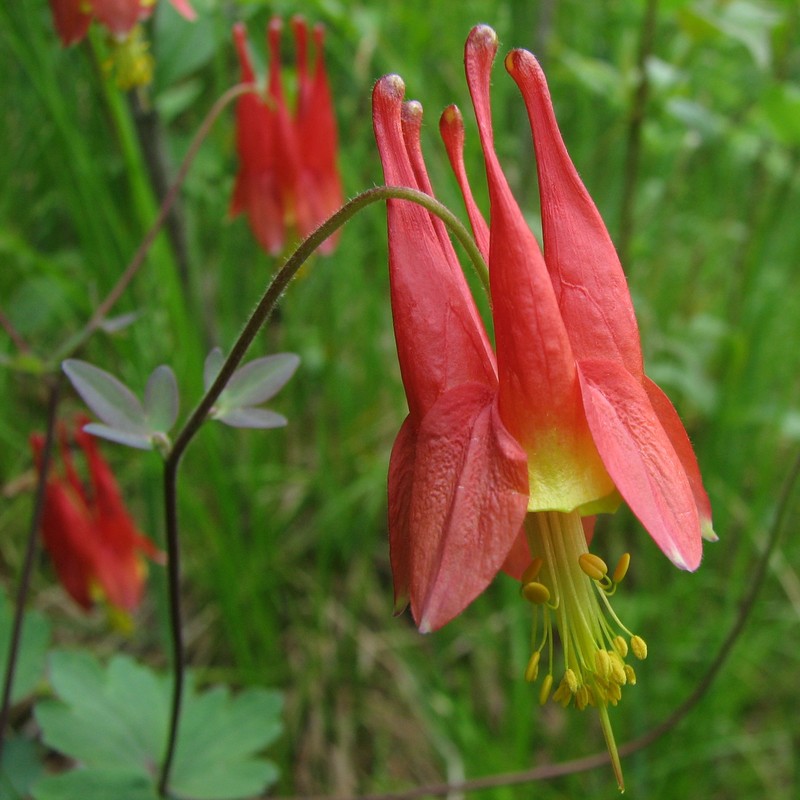
Taxonomy
- Division:
- Magnoliophyta | - Flowering plants
- Family:
- Ranunculaceae
- Genus:
- Aquilegia
- Species:
- Aquilegia canadensis
Growth Characteristics
- Life Cycle:
- Perennial
- Growth Habit:
- Forb/herb
- Height:
- 3-4 ft
- Light Requirements:
- Part Shade, Shade
- Drought Tolerance:
- High
- Bloom Months:
- mar, apr, may, jun, jul, aug
- Bloom Colors:
- Red, Pink, Yellow
Native Range
United States: Alabama, Arkansas, Connecticut, District of Columbia, Delaware, Florida, Georgia, Iowa, Illinois, Indiana, Kansas, Kentucky, Massachusetts, Maryland, Maine, Michigan, Minnesota, Missouri, Mississippi, North Carolina, North Dakota, Nebraska, New Hampshire, New Jersey, New York, Ohio, Oklahoma, Pennsylvania, Rhode Island, South Carolina, South Dakota, Tennessee, Texas, Virginia, Vermont, Wisconsin, West Virginia, Canada: Manitoba, New Brunswick, Ontario, Quebec, Saskatchewan
Keystone Species Ranking
- Caterpillar Keystone:
- ★★★★☆ Based on number of butterfly and moth species using this genus as host plant (Source: National Wildlife Federation)
Host Plant for Caterpillars
Reported Fauna Sightings
Soil Requirements
- Soil Type:
- rich, well-drained loamy soil
- pH:
- 5.5 - 7.0 (slightly acidic to neutral)
- Drainage:
- excellent drainage required
- Moisture:
- consistently moist
- Notes:
- prefers woodland and rocky slopes
Germination Information
Pre-treatment: Surface sowing and a 3-4 week chilling period as a precaution is suggested, although adequate germination has been achieved without this protocol.
Establishment: Seeds ripen at various times within the flower and can be collected over several days. Seed collection is done by hand from locally native plants. Some sources indicate that seeds need a chilling period and light to germinate, however, adequate germination has been achieved without chilling or surface-sowing.
Source: npn.rngr.net