
Jones' Columbine
Aquilegia jonesii
Also known as: blue limestone columbine
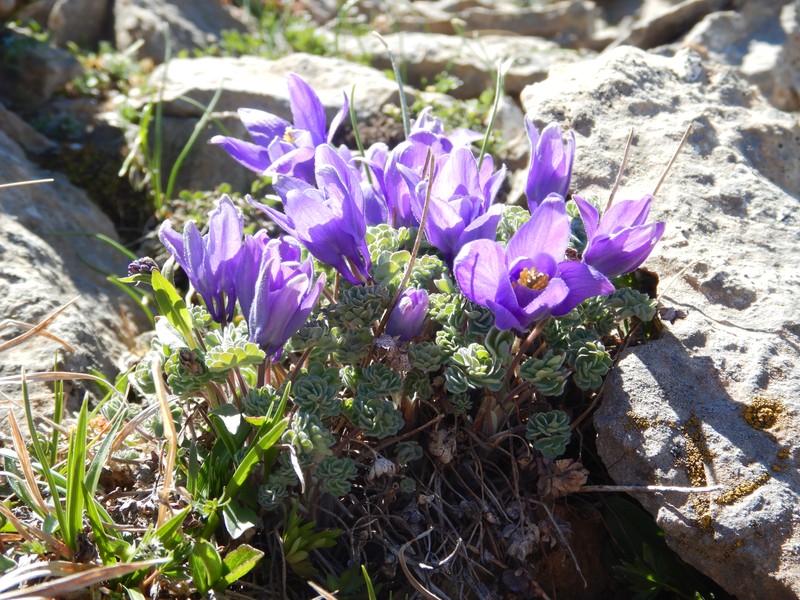
Matt Lavin from Bozeman, Montana, USA
Taxonomy
- Division:
- Magnoliophyta | - Flowering plants
- Family:
- Ranunculaceae
- Genus:
- Aquilegia
- Species:
- Aquilegia jonesii
Growth Characteristics
- Life Cycle:
- Perennial
- Growth Habit:
- Forb/herb
- Height:
- 6 in - 1 ft
- Light Requirements:
- Part Shade
- Drought Tolerance:
- Medium
- Bloom Months:
- jun, jul, aug
- Bloom Colors:
- Blue, Purple
Native Range
United States: Montana, Wyoming, Canada: Alberta
Keystone Species Ranking
- Caterpillar Keystone:
- ★★★★☆ Based on number of butterfly and moth species using this genus as host plant (Source: National Wildlife Federation)
Soil Requirements
- Soil Type:
- rocky, well-drained, nutrient-poor soil
- pH:
- 6.0 - 7.5 (slightly acidic to neutral)
- Drainage:
- excellent drainage required
- Moisture:
- dry to moderate
- Notes:
- native to alpine regions, prefers cool conditions
Germination Information
Pre-treatment: Fresh seeds are treated with 500 to 1000 ppm gibberellic acid for 24 hours, then rinsed with running water. Seeds are surface sown for light requirement and undergo a prolonged, 5 month cold, moist stratification in the outdoor nursery during fall or in the refrigerator at 1 C. After 120 days, refrigerator temperature is raised to 3 C and seeds are exposed to light 12 hrs per day. Seeds begin to germinate and are planted as germinants, with the radicle covered with moist medium but leaving the top of the seed exposed on the surface of the medium. Seeds continue to germinate at 3 C for another 4 to 5 weeks.
Establishment: A. jonesii flowers in late June to mid-July after snowmelt. Follicles mature from early to late August. Follicles are collected when they become woody and tan in color and just as they begin to split open. Seeds are black at maturity. Seeds are hand collected in paper bags and kept in a drying shed. A. jonesii inhabits stony calcareous soils in exposed alpine ridges and slopes. It is associated with open, limestone scree slopes and rock crevices, or in alpine cushion plant communities. It is endemic from southwest Alberta to northwest Wyoming, east of the Continental Divide.
Source: npn.rngr.net