
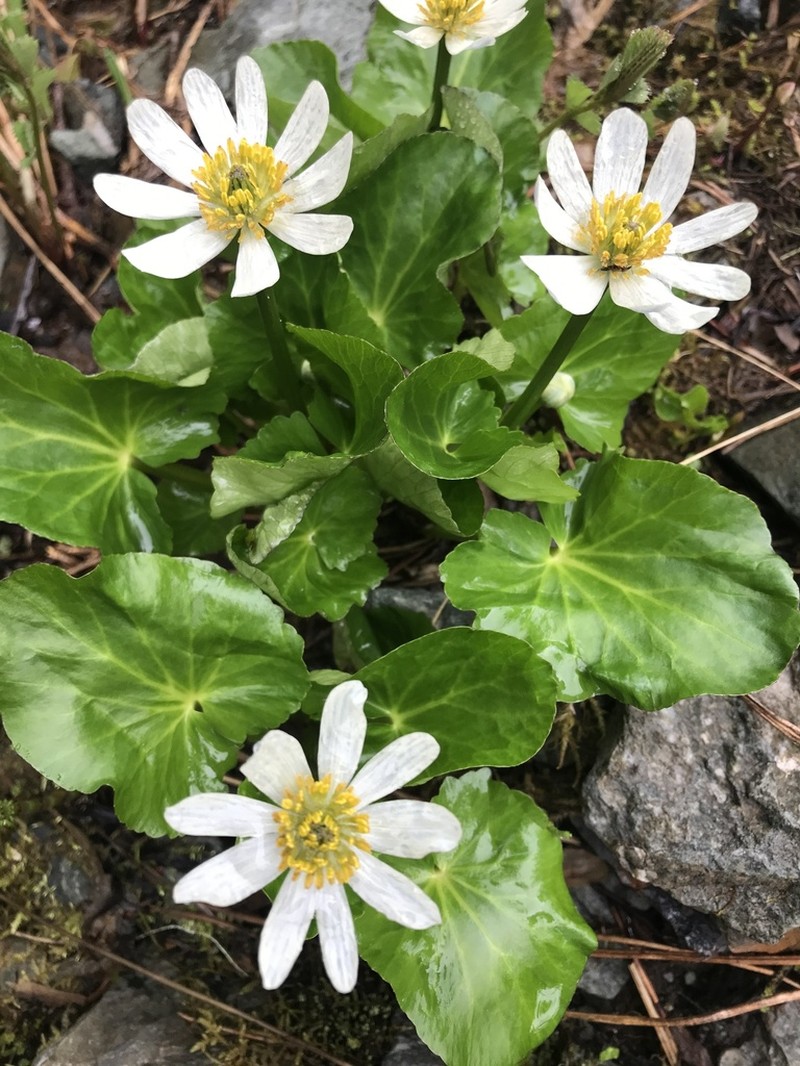
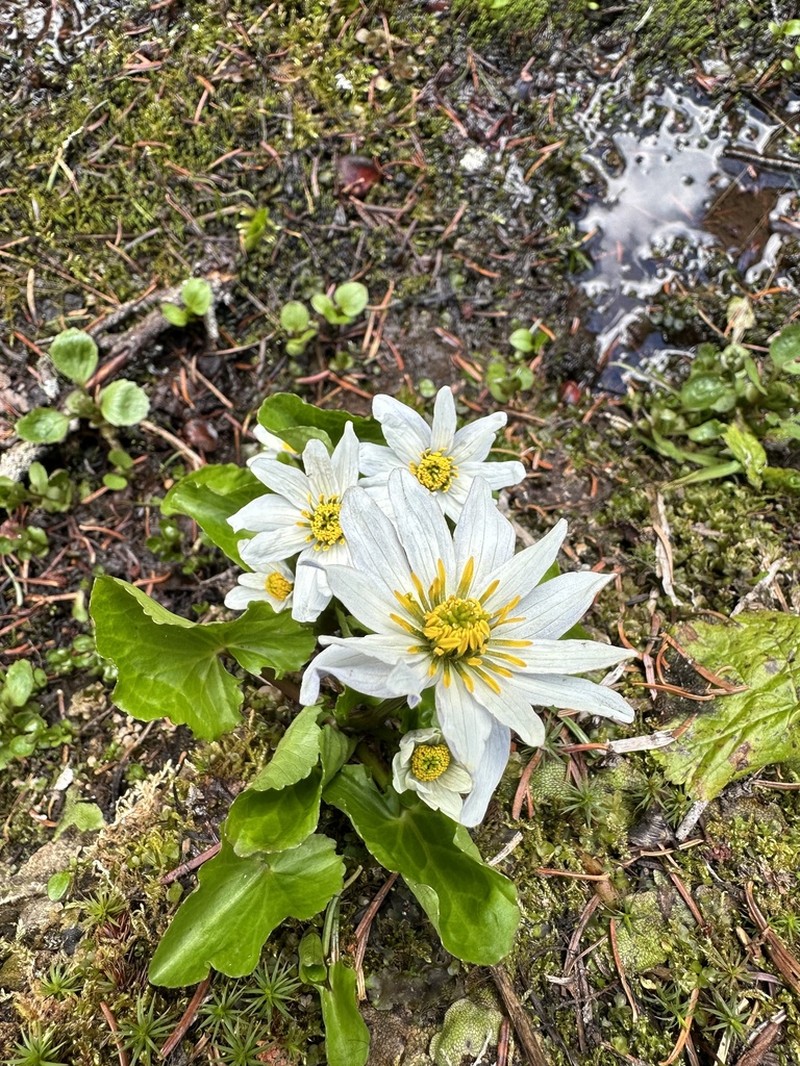
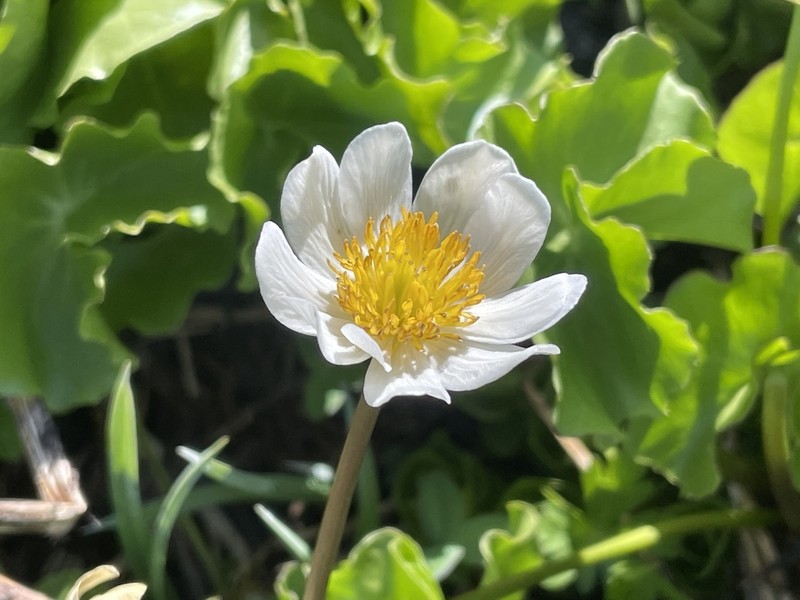
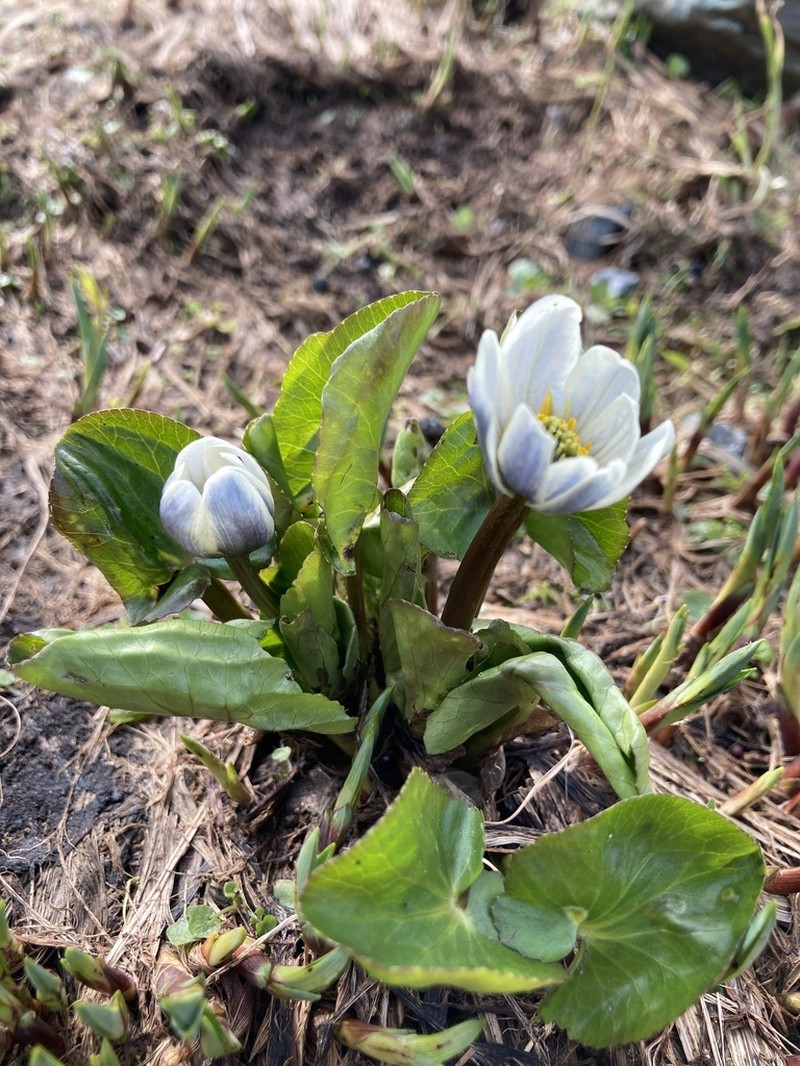
White Marsh Marigold
Caltha leptosepala
- Native to:
- Canada, United States
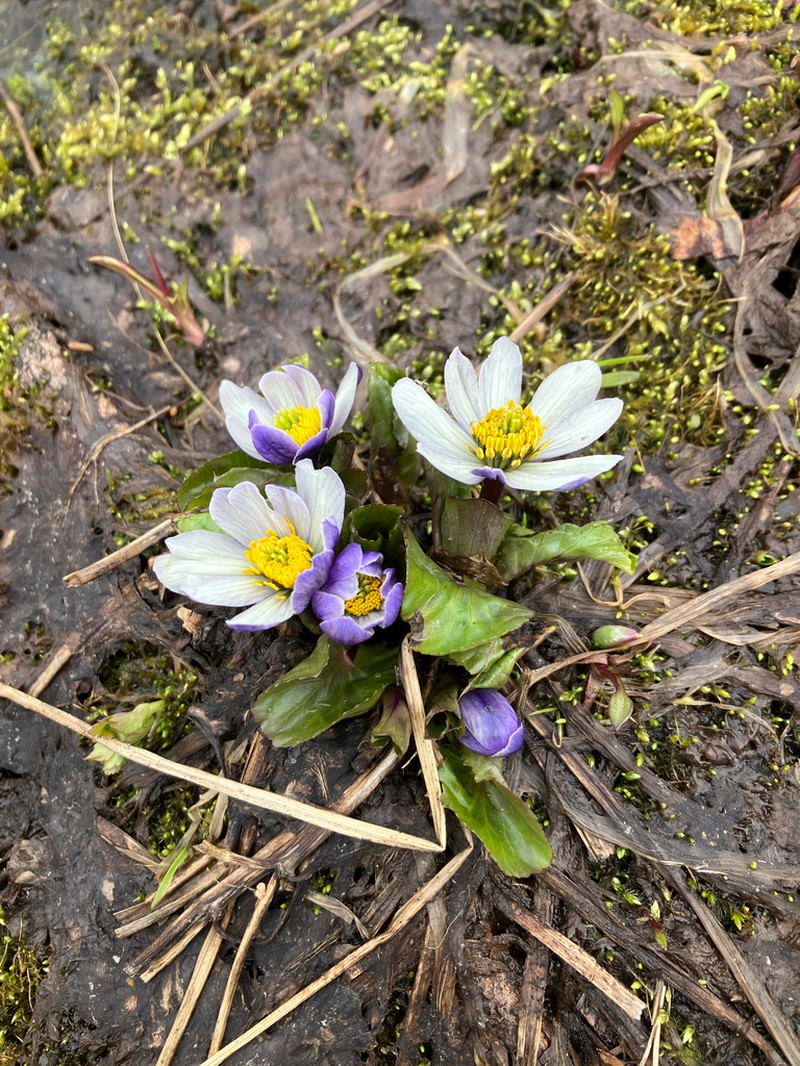
iNaturalist: © harley_s (iNaturalist #339188176)
Taxonomy
- Division:
- Magnoliophyta | - Flowering plants
- Family:
- Ranunculaceae
- Genus:
- Caltha
- Species:
- Caltha leptosepala
- USDA Symbol:
- CALE4
Growth Characteristics
- Life Cycle:
- Perennial
- Growth Habit:
- Forb/herb
- Height:
- 30 cm
- Light Requirements:
- Part Shade
- Drought Tolerance:
- Low
- Bloom Months:
- may,jun,jul
- Bloom Colors:
- white
Wildlife Benefits
- Bees:
- ★☆☆☆☆ Documented bee visitation (GBIF)
- Butterflies & Moths:
- ★☆☆☆☆ Documented Lepidoptera association (GBIF)
- Caterpillars:
- ★☆☆☆☆ Recorded caterpillar host plant (HOSTS Database)
Host Plant for Caterpillars
⚠️Bog Fritillary (Clossiana eunomia)
Garden & Ecology Notes
- Wildlife Value:
- bees, butterflies
Soil Requirements
- Soil Type:
- rich, moisture-retentive loamy soil
- pH:
- 5.5 - 7.5 (slightly acidic to neutral)
- Drainage:
- tolerates poor drainage
- Moisture:
- consistently moist
- Notes:
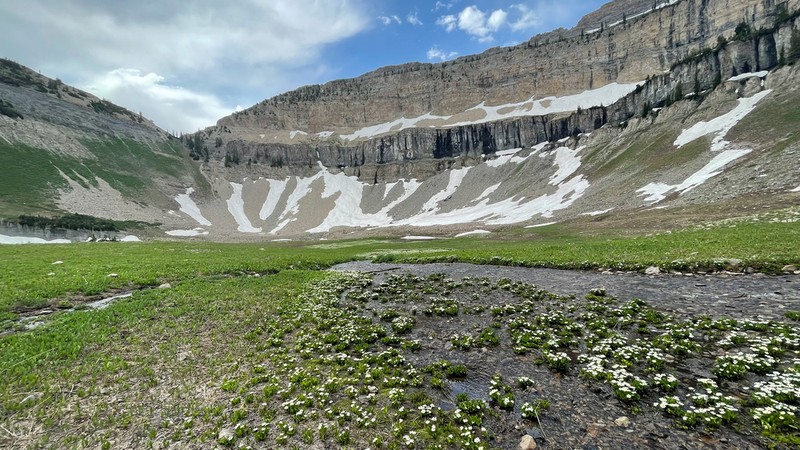
- Commonly found in wet meadows and along streams.
Propagation & Germination
- Stratification:
- Cold/moist stratification required — 60–90 days
- Germination Time:
- 30–60 days
- Notes:
- Seeds require cold stratification for 60-90 days; sow in fall or after cold treatment.
Pre-treatment: Seeds need a warm-cold-warm cycle in order to germinate.
Establishment: This plant may be found in the Western US and Canada in sub-alpine and wetland or meadow areas. Also found from Alaska south through the Rocky Mountains to Colorado.
Source: npn.rngr.net
ORGHPS Germination Guide: Sow immediately, Either the viability of these seeds is short or the species propagates best with fresh seed. Stored seed might be coaxed into germination with temperature cycling and patience. Sow @ 20°C. Seed germinates within 3 months * bog plant; stand pot in 3 cm water; raise temperature very slowly after germination