
New Jersey Tea
Ceanothus americanus
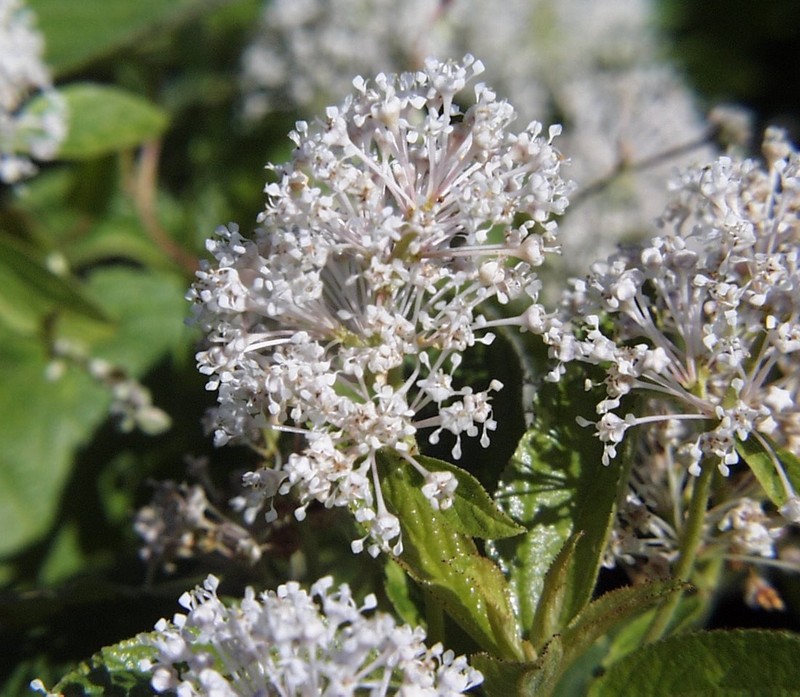
unknown author, USFWS
Taxonomy
- Division:
- Magnoliophyta | - Flowering plants
- Family:
- Rhamnaceae
- Genus:
- Ceanothus
- Species:
- Ceanothus americanus
Growth Characteristics
- Life Cycle:
- Perennial
- Growth Habit:
- Shrub , Subshrub
- Height:
- 3-4 ft
- Light Requirements:
- Full Sun, Part Shade
- Drought Tolerance:
- High
- Bloom Months:
- mar, apr, may, jun, jul, aug
- Bloom Colors:
- White
- Evergreen Shrub:
- Yes
- Landscaping Shrub:
- Yes
Native Range
United States: Alabama, Arkansas, Connecticut, District of Columbia, Delaware, Florida, Georgia, Iowa, Illinois, Indiana, Kansas, Kentucky, Louisiana, Massachusetts, Maryland, Maine, Michigan, Minnesota, Missouri, Mississippi, North Carolina, Nebraska, New Hampshire, New Jersey, New York, Ohio, Oklahoma, Pennsylvania, Rhode Island, South Carolina, Tennessee, Texas, Virginia, Vermont, Wisconsin, West Virginia, Canada: Ontario, Quebec
Keystone Species Ranking
- Caterpillar Keystone:
- ★★☆☆☆ Based on number of butterfly and moth species using this genus as host plant (Source: National Wildlife Federation)
Host Plant for Caterpillars
Reported Fauna Sightings
Soil Requirements
- Soil Type:
- sandy, acidic, nutrient-poor soil
- pH:
- 4.5 - 6.5 (acidic to slightly acidic)
- Drainage:
- excellent drainage required
- Moisture:
- dry to moderate
- Notes:
- prefers open, sunny locations
Germination Information
Pre-treatment: Cuttings: Trim to about 6" with sterile shears leaving one pair of leaves at the top. Dip cut ends in a 1:10 solution of rooting hormone and stick in perlite-filled plastic flats with drainage holes. Place flats under mist in the greenhouse until rooting occurs. Seeds: Save 8 ounces of seed to sow one bench in either 64 flats of the Multipot #6, or 24 flats of the Multipot #3 or #4. Damp stratify by mixing it with equal amounts of vermiculite and lightly dampening in a plastic bag or container. Store this seed for 3-4 months in a cold room of 34-36 degrees F. If unable to plant in the fall due to weather, store the seed dry in cold storage at 34-36 degrees F.
Establishment: The plant flowers from approx. June 19 to July 1. Seed is harvested about August 18. The protocols vary based on whether the propagation source is a seed or a cutting. The seed protocol also varies based on whether the seed is field grown or not.
Source: npn.rngr.net