
Redberry Buckthorn
Rhamnus crocea
- Native to:
- Mexican Pacific Is., Mexico, United States
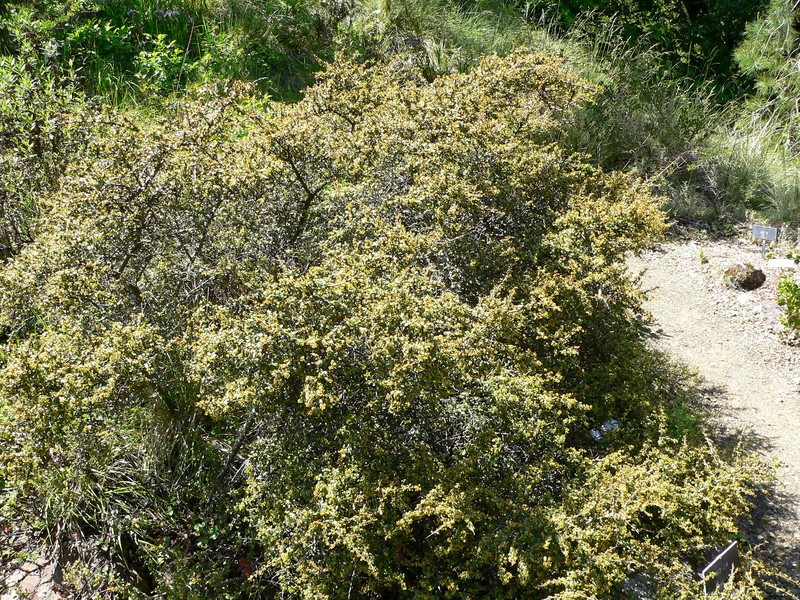
Stan Shebs
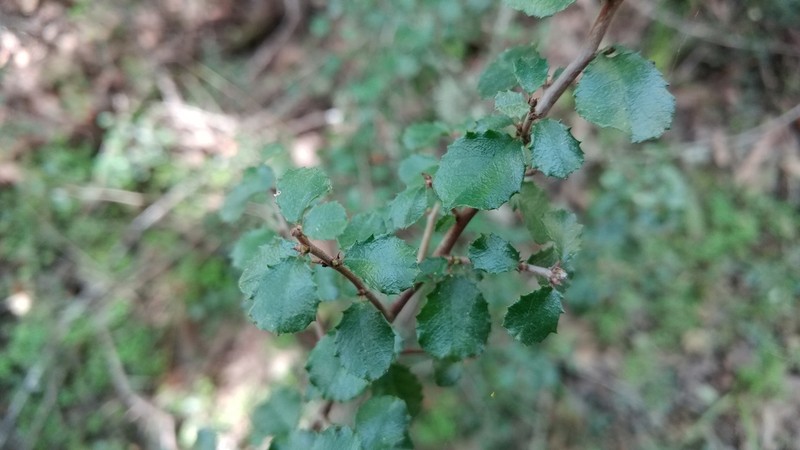
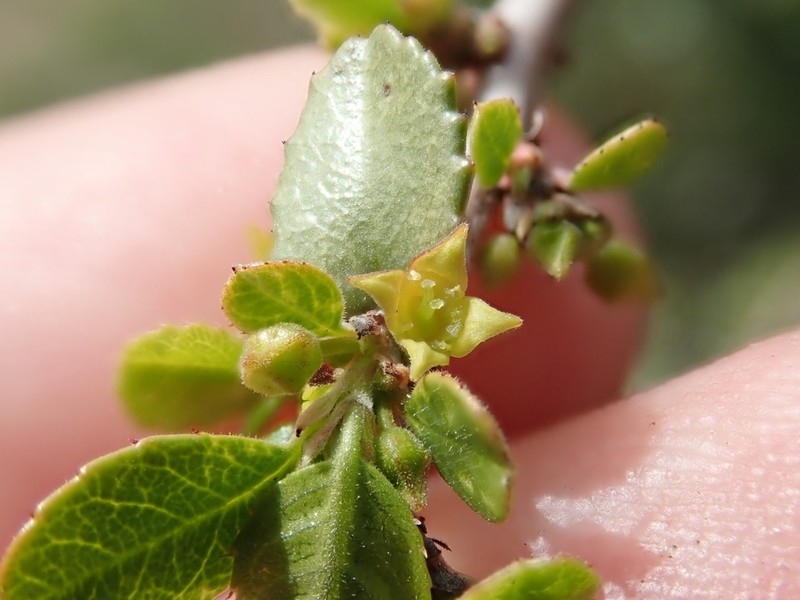
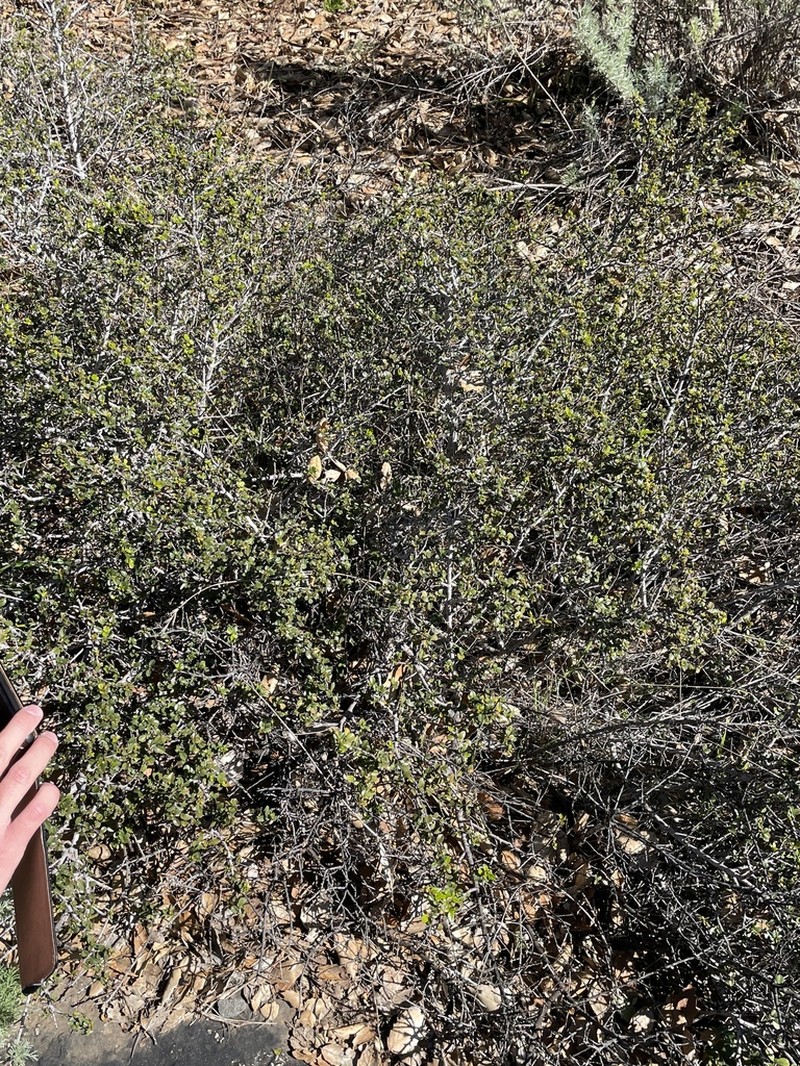
Taxonomy
- Division:
- Magnoliophyta | - Flowering plants
- Family:
- Rhamnaceae
- Genus:
- Rhamnus
- Species:
- Rhamnus crocea
- USDA Symbol:
- RHCR
Growth Characteristics
- Life Cycle:
- Perennial
- Growth Habit:
- Shrub , Tree
- Height:
- 300 cm
- Light Requirements:
- Full Sun,Part Shade,Shade
- Drought Tolerance:
- High
- Bloom Months:
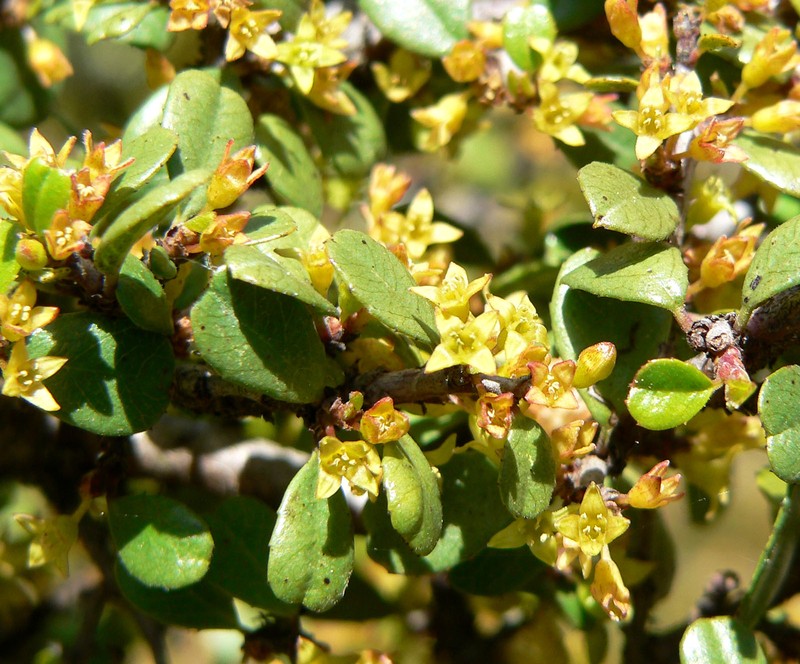
- mar,apr,may
- Bloom Colors:
- greenish-yellow
- Evergreen Shrub:
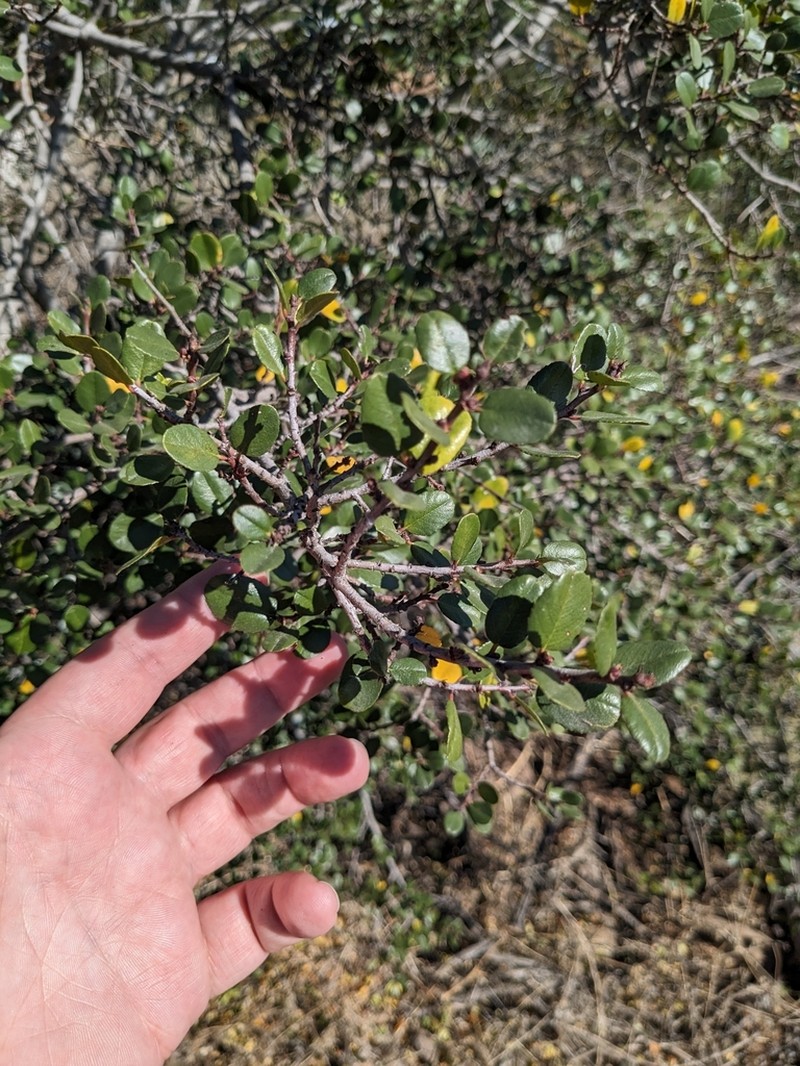
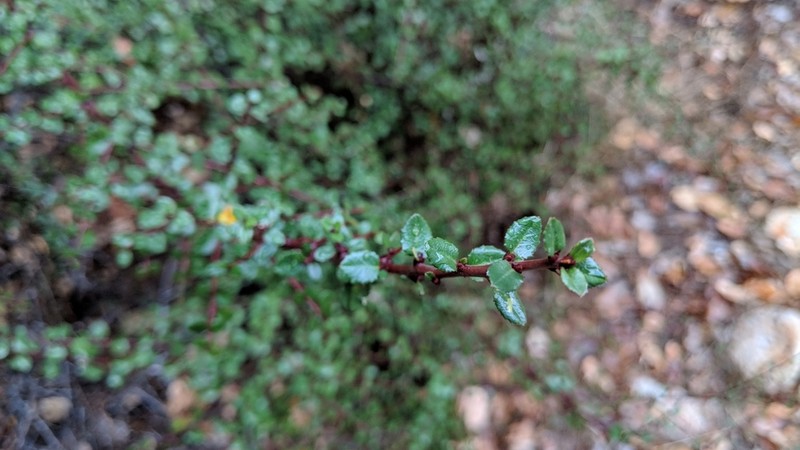
- Yes
- Landscaping Shrub:
- Yes
Wildlife Benefits
- Bees:
- ★☆☆☆☆ Documented bee visitation (GBIF)
- Butterflies & Moths:
- ★★☆☆☆ Documented Lepidoptera association (GBIF)
- Caterpillars:
- ★★☆☆☆ Recorded caterpillar host plant (HOSTS Database)
Host Plant for Caterpillars
Ceanothus Silkmoth (Hyalophora euryalus), Itame guenearia, Nola minna, Nola nr. minna, Pero macdunnoughi, Spilosoma vestalis, Stigmella sp. D, Triphosa californiata, Hermelycaena hermes, Pale Swallowtail (Papilio eurymedon), Western Tiger Swallowtail (Papilio rutulus)
Garden & Ecology Notes
- Wildlife Value:
- birds, small mammals
- Deer Resistant:
- Yes
- Fire Ecology:
- Fire adapted — tolerates or benefits from fire
- Fire Notes:
- Resprouts from root crown after fire; common in fire-prone chaparral.
Soil Requirements
- Soil Type:
- sandy, well-drained, nutrient-poor soil
- pH:
- 6.0 - 7.5 (slightly acidic to neutral)
- Drainage:
- excellent drainage required
- Moisture:
- dry to moderate
- Notes:
- Commonly found in chaparral and coastal sage scrub habitats.
Propagation & Germination
- Stratification:
- Cold/moist stratification required — 60–90 days
- Germination Time:
- 30–60 days
- Notes:
- Seeds benefit from cold stratification for 2-3 months to break dormancy.
Pre-treatment: Soak seeds overnight in cool water. Place seeds in a plastic freezer bag with an equal amount of barely moistened perlite. Cold stratify in refrigerator for 60 to 75 days. Seeds can also be fall sown and stratified outdoors in November.
Establishment: Seeds are collected between June 1st and October 1st. Mature fruits are red. Each berry contains 2 seeds. Found within mattoral vegetation association of California and in dry washes and canyons, below 3,000 feet elevation; from Lake County to Lower California in the Coast range.
Source: npn.rngr.net