
Utah serviceberry
Amelanchier utahensis
Also known as: Utah serviceberry
- Native to:
- Mexico, United States
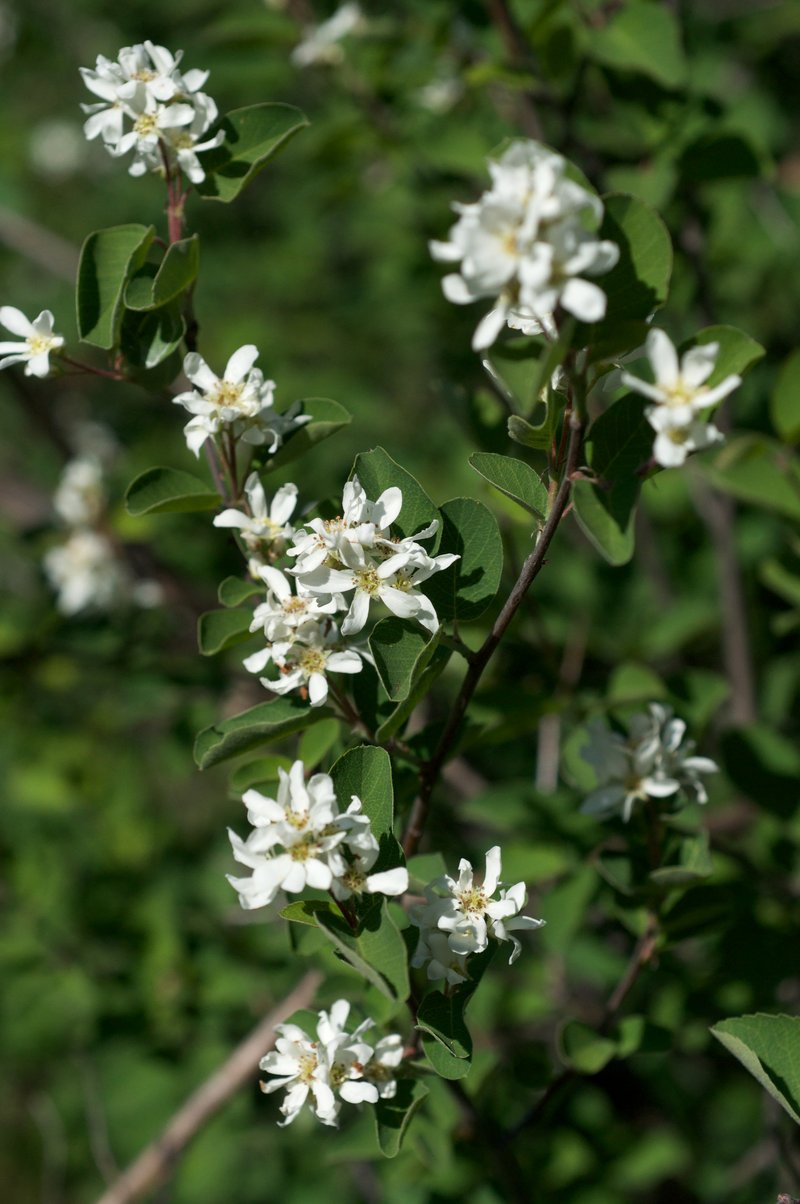
Eric Hunt
Taxonomy
- Division:
- Magnoliophyta | - Flowering plants
- Family:
- Rosaceae
- Genus:
- Amelanchier
- Species:
- Amelanchier utahensis
- USDA Symbol:
- AMUT
Growth Characteristics
- Life Cycle:
- Perennial
- Growth Habit:
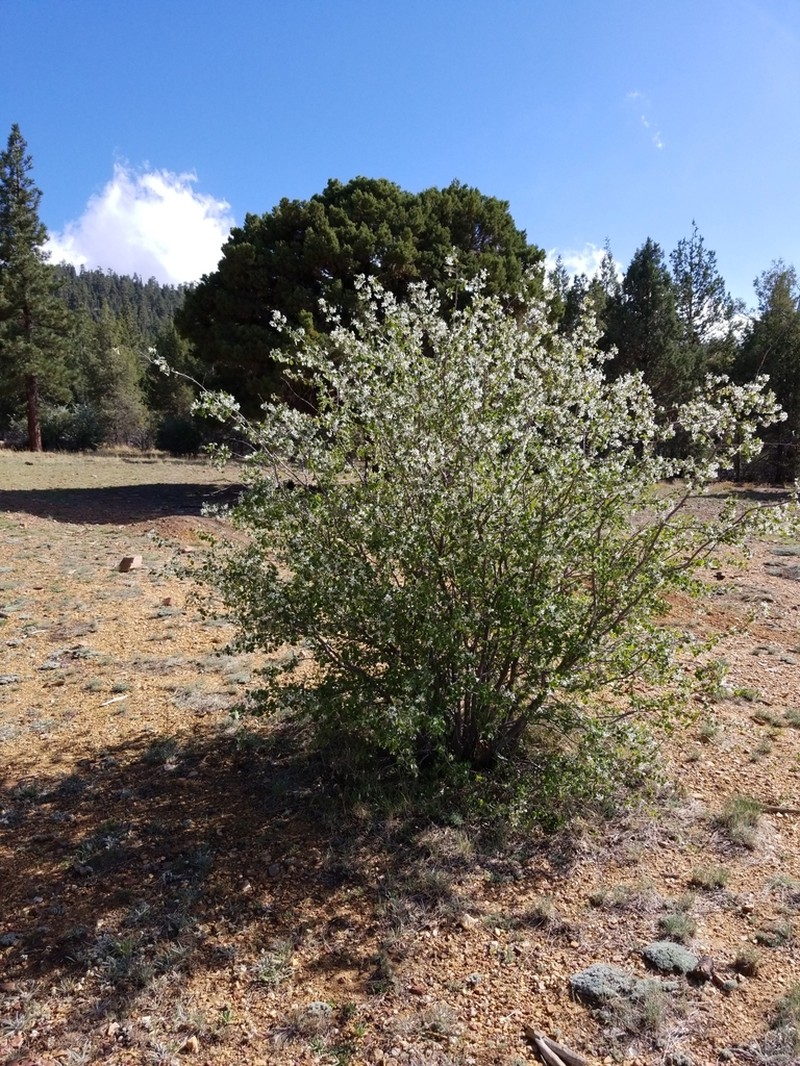
- Shrub , Tree
- Height:
- 600 cm
- Light Requirements:
- Part Shade
- Drought Tolerance:
- High
- Bloom Months:
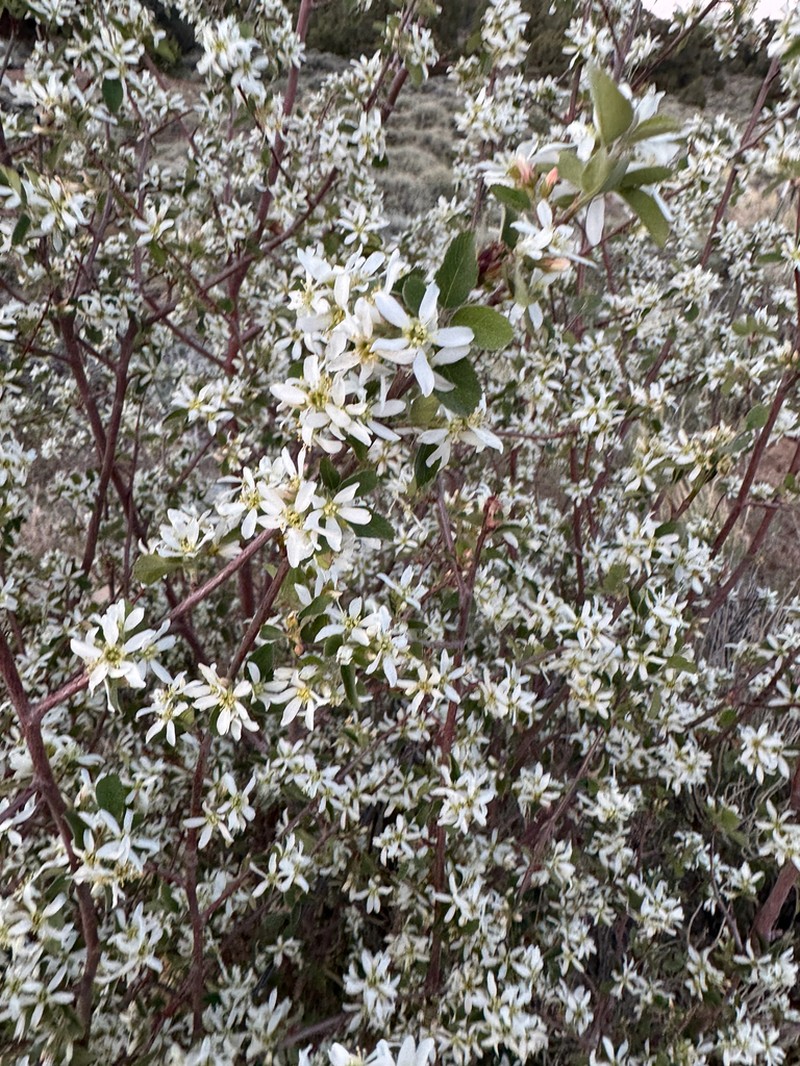
- apr,may
- Bloom Colors:
- white
- Landscaping Shrub:
- Yes
Wildlife Benefits
- Bees:
- ★☆☆☆☆ Documented bee visitation (GBIF)
- Butterflies & Moths:
- ★★☆☆☆ Documented Lepidoptera association (GBIF)
- Caterpillars:
- ★☆☆☆☆ Recorded caterpillar host plant (HOSTS Database)
Keystone Species Ranking
- Caterpillar Keystone:
- ★★★★☆ Butterfly & moth species supported by this genus (NWF)
Host Plant for Caterpillars
Garden & Ecology Notes
- Wildlife Value:
- birds, butterflies, small mammals
- Fall Color:
- yellow, orange, red
- Fire Ecology:
- Fire adapted — tolerates or benefits from fire
- Fire Notes:
- Resprouts from root crown after fire; benefits from periodic fire to reduce competition.
Soil Requirements
- Soil Type:
- rocky, well-drained, nutrient-poor soil
- pH:
- 6.0 - 8.0 (slightly acidic to neutral)
- Drainage:
- excellent drainage required
- Moisture:
- dry to moderate
- Notes:
- thrives in mountainous and arid regions
Propagation & Germination
- Stratification:
- Cold/moist stratification required — 60–90 days
- Germination Time:
- 30–60 days
- Notes:
- Seeds require cold stratification for 60-90 days to break dormancy.
Pre-treatment: Seeds are placed in cold moist stratification for 45 days or naturally stratified by planting them in the fall in a thin layer of sand on mulched field beds. Some species may benefit from a rigorous imbibition treatment and/or leaching of germination inhibitors.
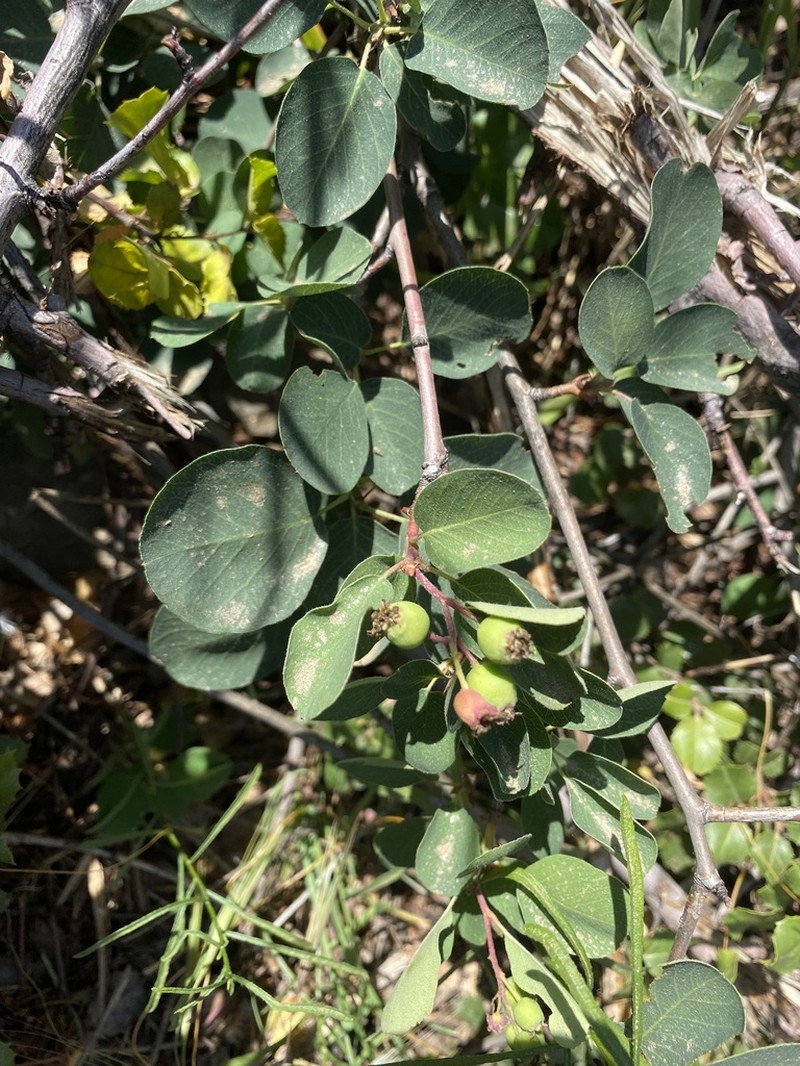
Establishment: Seeds are wild collected during fall months and are kept separated according to site, elevation and source. Mature fruit is a blue fleshy berry containing several seeds. Pre-soaking or wet tumbling results in mucilaginous mass that makes sowing difficult. Thinning of seedlings down to one per container occurs during this phase, usually when the seedlings are 2 to 4 cm tall. Seedling growth is rapid during the establishment phase.
Source: npn.rngr.net