
Desert Sweet
Chamaebatiaria millefolium
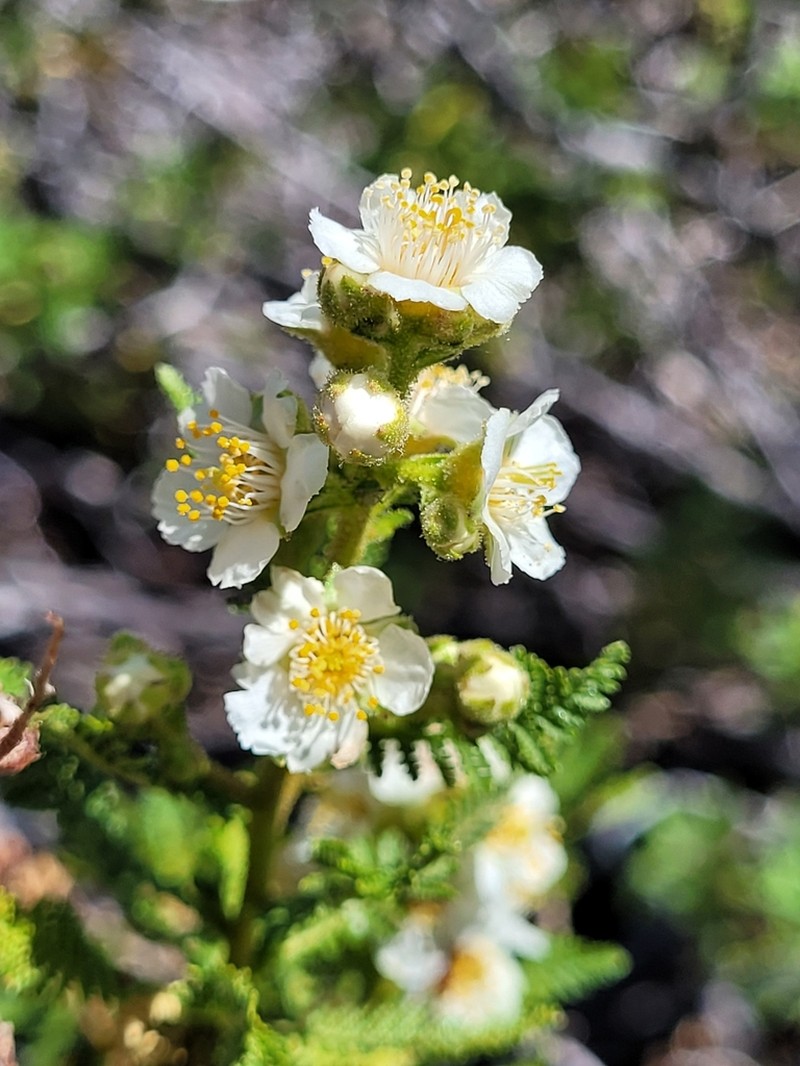
iNaturalist: © kathawk (iNaturalist #123304975)
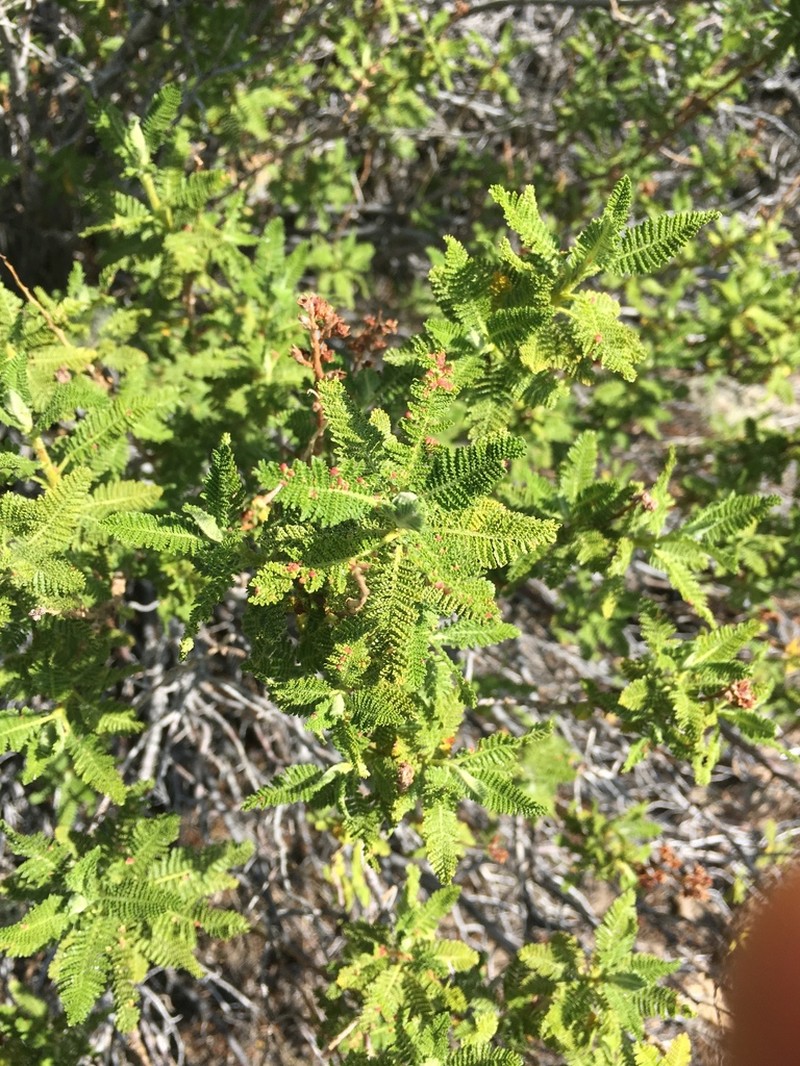
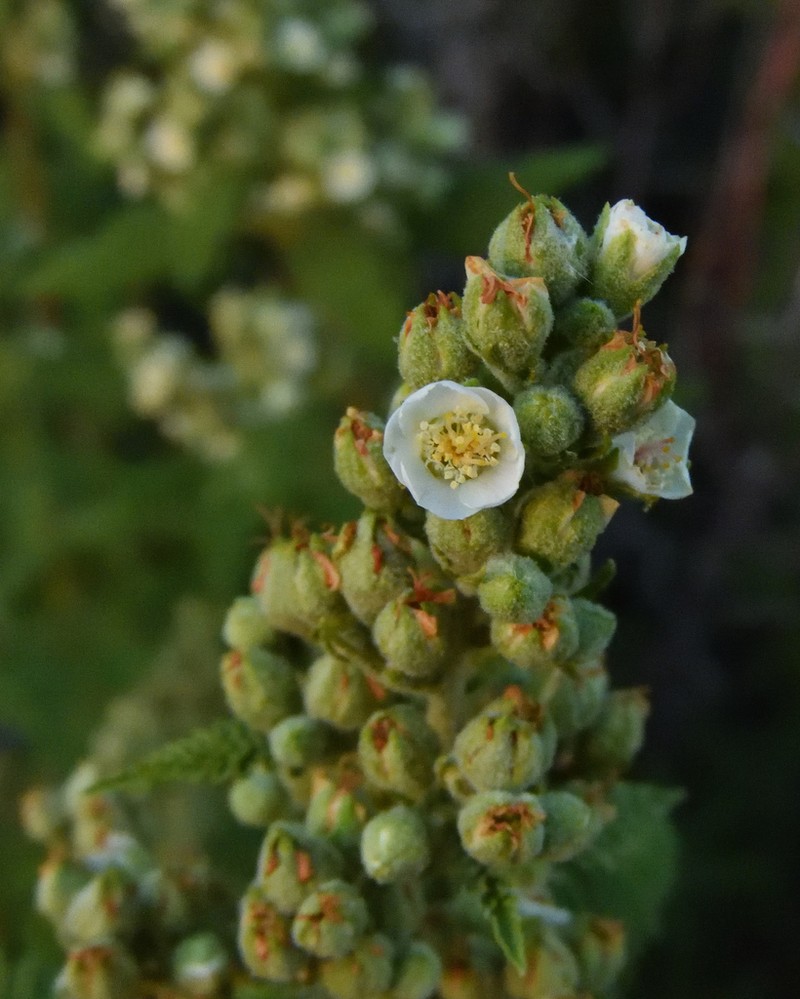
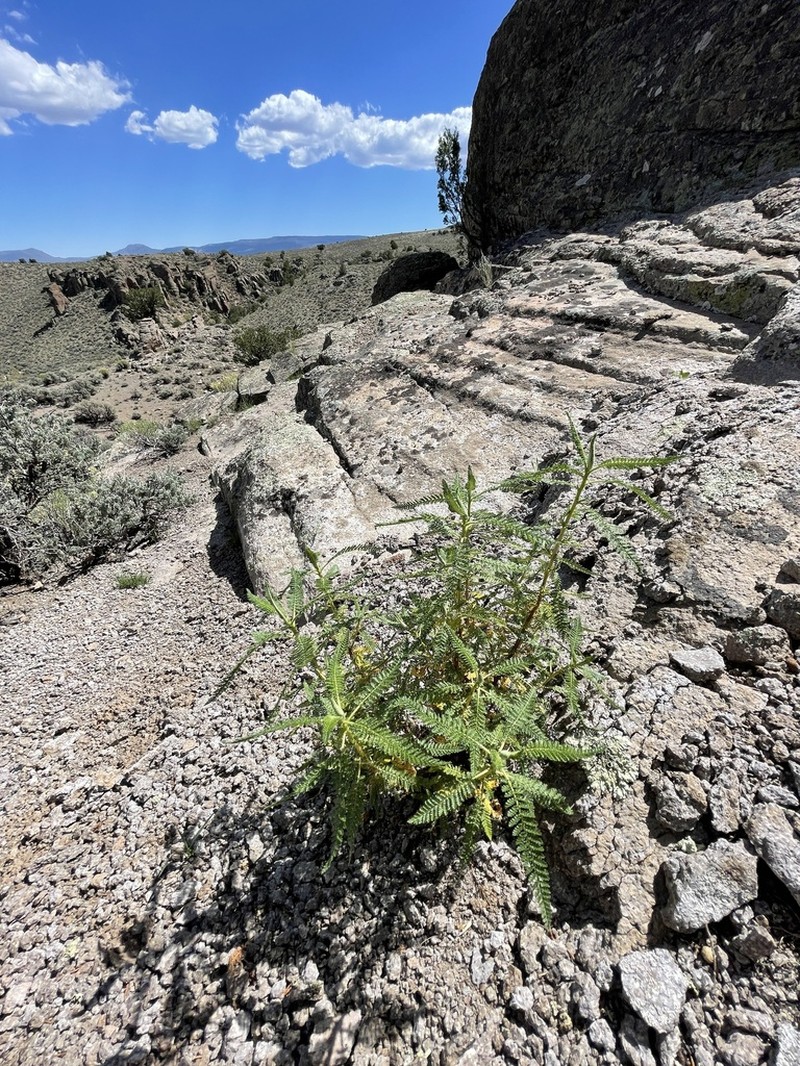
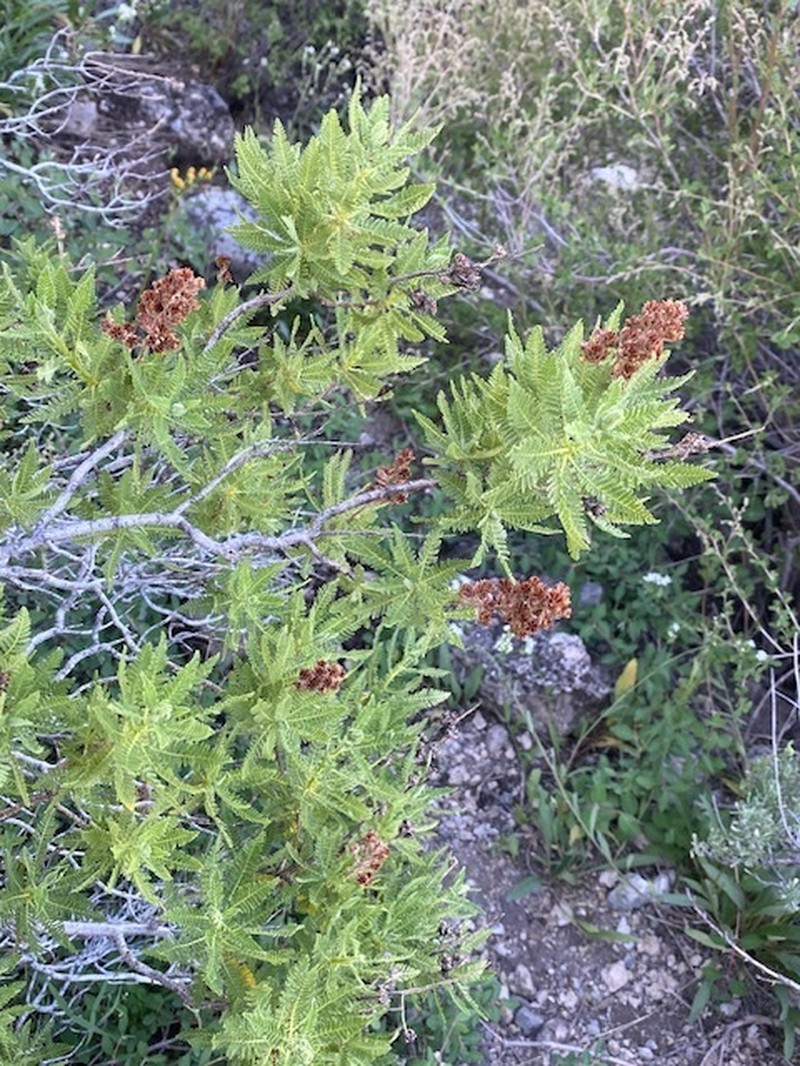
Taxonomy
- Division:
- Magnoliophyta | - Flowering plants
- Family:
- Rosaceae
- Genus:
- Chamaebatiaria
- Species:
- Chamaebatiaria millefolium
Growth Characteristics
- Life Cycle:
- Perennial
- Growth Habit:
- Shrub
- Height:
- 200 cm
- Light Requirements:
- Part Shade
- Drought Tolerance:
- High
- Bloom Months:
- jun,jul,aug
- Bloom Colors:
- white
- Landscaping Shrub:
- Yes
Native Range
United States
Wildlife Benefits
- Bees:
- ★☆☆☆☆ Documented bee visitation (GBIF)
- Butterflies & Moths:
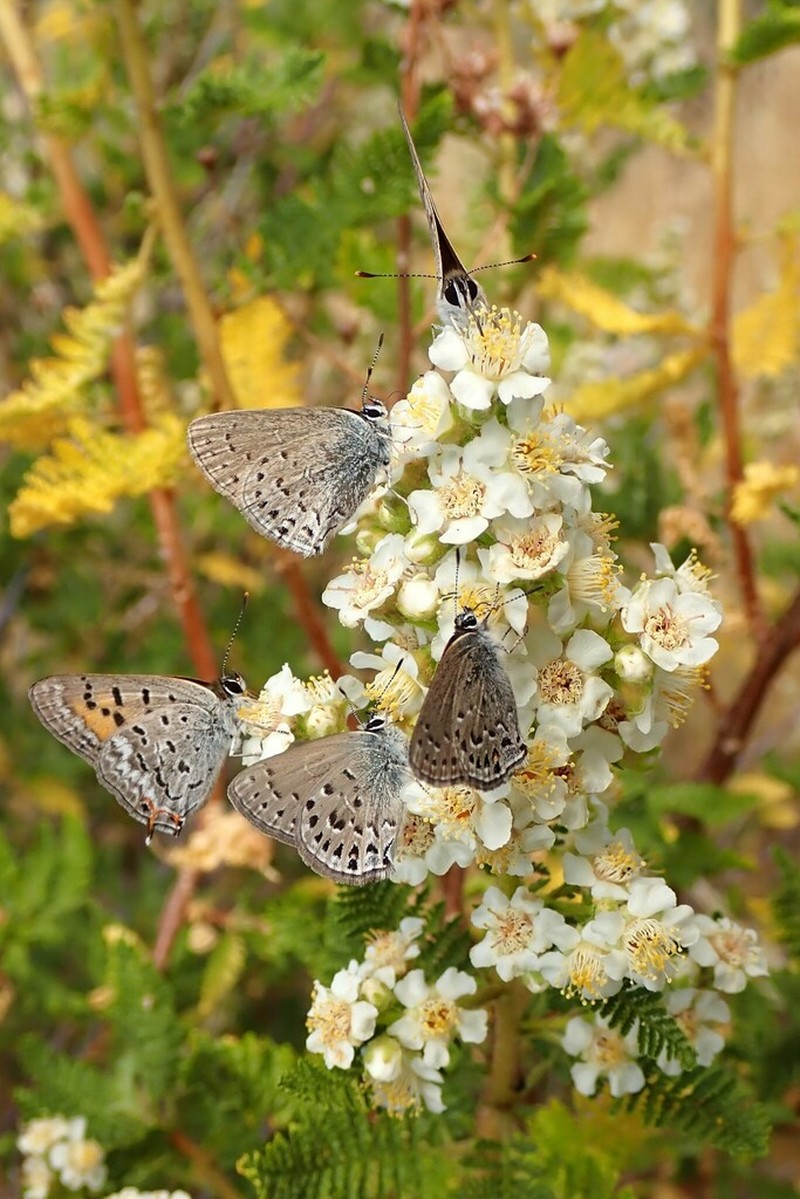
- ★☆☆☆☆ Documented Lepidoptera association (GBIF)
- Caterpillars:
- ★☆☆☆☆ Recorded caterpillar host plant (HOSTS Database)
Host Plant for Caterpillars
Nuttall's buckmoth (Hemileuca nuttalli), Holly Blue (Celastrina argiolus)
Reported Fauna Sightings
Bees: Central bumble bee (Bombus centralis), Hunt's bumble bee (Bombus huntii), ⚠️Western honey bee (Apis mellifera) Hummingbirds: Anna's Hummingbird (Calypte anna)
Garden & Ecology Notes
- Wildlife Value:
- bees, butterflies
- Deer Resistant:
- Yes
- Fragrant:
- Yes
- Fire Ecology:
- Fire adapted — tolerates or benefits from fire
- Fire Notes:
- Resprouts from root crown after fire; found in fire-prone montane habitats.
Soil Requirements
- Soil Type:
- rocky, well-drained, nutrient-poor soil
- pH:
- 6.0 - 8.0 (slightly acidic to neutral)
- Drainage:
- excellent drainage required
- Moisture:
- dry to moderate
- Notes:
- adapted to arid, mountainous regions
Propagation & Germination
- Stratification:
- Cold/moist stratification required — 30–90 days
- Germination Time:
- 14–42 days
- Notes:
- Seeds germinate best with cold stratification; light may enhance germination.
Propagation data sourced from Claude AI
Pre-treatment: Stratification for 2 to 4 weeks. Cold stratification involves sowing in plug trays, ensuring media is moist, covering with an inverted flat, stacking, and placing in a walk-in cooler at 40°F. Check periodically for germination or need for moisture.
Establishment: Collected in Grand Canyon National Park, Arizona. Fertilizer used is Peters Peat Lite Special 20-10-20 at a rate of 200-mg/l nitrogen.
Source: npn.rngr.net
ORGHPS Germination Guide: Sow @ 20C. If no germination in 3 months, try 4C 1-2 months, then 20C again.