
Cotoneaster turbinatus
Cotoneaster turbinatus
- Native to:
- China
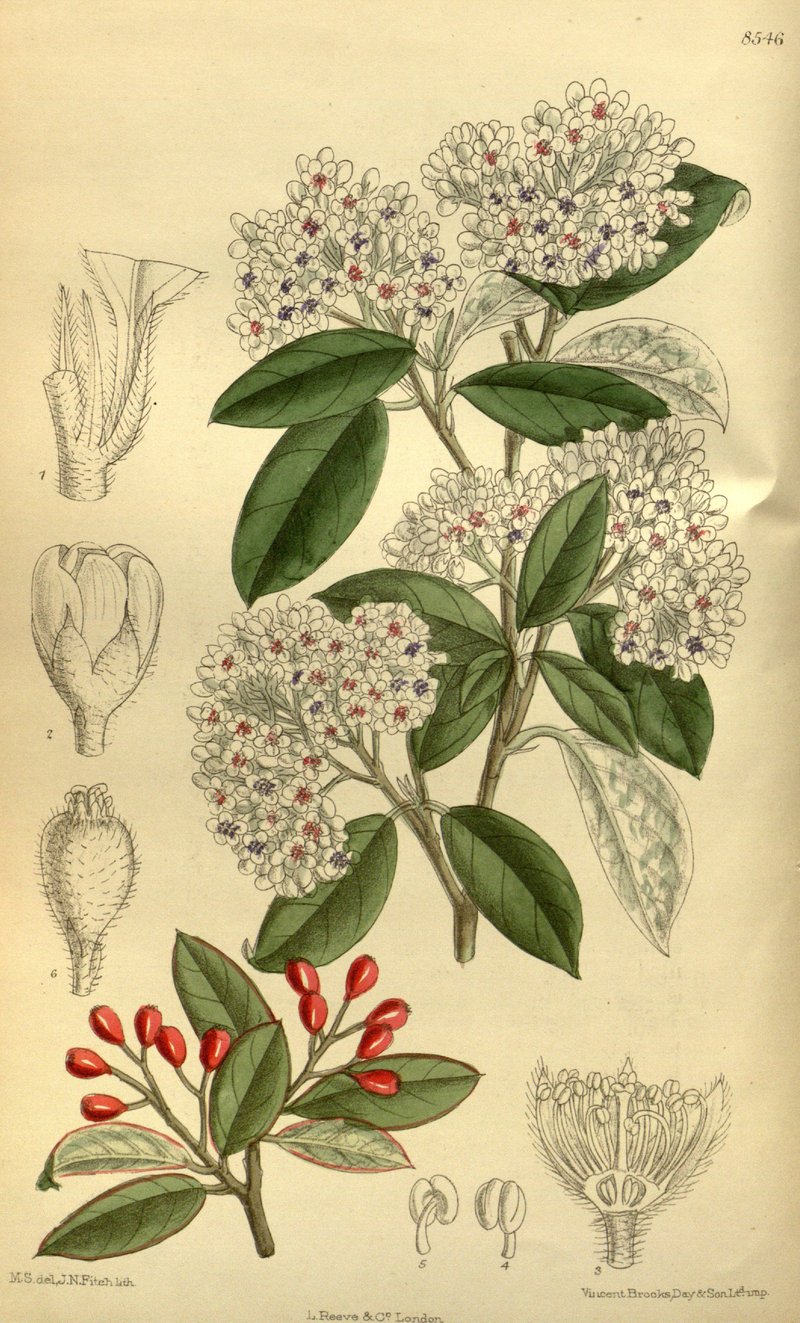
M.S. (en.wikipedia.org) del., J.N.Fitch (en.wikipedia.org) lith.,Dymock, William, Hooper, David, Warden, C. J. H.,Dymock, William, 1834-1892 Worden, C. J. H Hooper, David, 1858-1947,Mr John Lindley,Edwards, Sydenham, 1769?-1819 Lindley, John, 1799-1865,Dymock, William, 1834-1892 Warden, Charles James Hislop Hooper, David, 1858-1947 King's College London,Report, F Word,Hooper, David, 1858-1947 Warden, C. J. H. (Charles James Hislop), 1851-1900 Dymock, William, 1834-1892 Royal College of Physicians of Edinburgh,Hagenbach, C. F. (Carl Friedrich), 1771-1849,Lindley, John, Ridgway, James

Taxonomy
- Division:
- Magnoliophyta | - Flowering plants
- Family:
- Rosaceae
- Genus:
- Cotoneaster
- Species:
- Cotoneaster turbinatus
- USDA Symbol:
- COTU7
Growth Characteristics
- Height:
- 600 cm
- Light Requirements:
- Full Sun
- Drought Tolerance:
- Medium
- Bloom Months:
- may,jun
- Bloom Colors:
- white, pink
- Landscaping Shrub:
- Yes
Garden & Ecology Notes
- Wildlife Value:
- birds, bees
- Fall Color:
- red, orange
Soil Requirements
- Soil Type:
- well-drained, loamy to sandy soil
- pH:
- 6.0 - 7.5 (slightly acidic to neutral)
- Drainage:
- excellent drainage required
- Moisture:
- dry to moderate
- Notes:
- native to rocky slopes and open woodlands
Propagation & Germination
- Stratification:
- Cold/moist stratification required — 60–90 days
- Germination Time:
- 30–90 days
- Notes:
- Seeds benefit from cold stratification for 60-90 days to break dormancy.