
Indian Plum
Oemleria cerasiformis
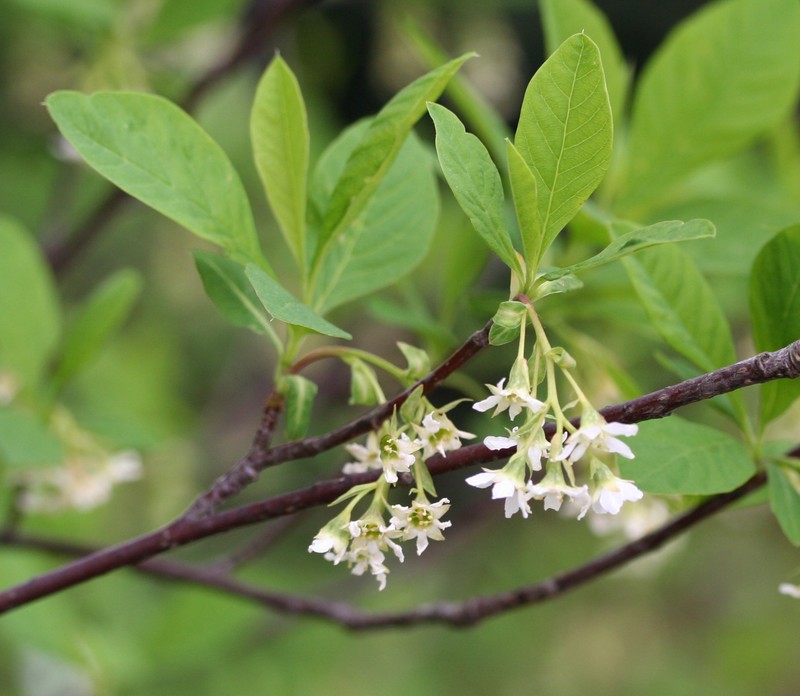
Taxonomy
- Division:
- Magnoliophyta | - Flowering plants
- Family:
- Rosaceae
- Genus:
- Oemleria
- Species:
- Oemleria cerasiformis
Growth Characteristics
- Life Cycle:
- Perennial
- Growth Habit:
- Shrub , Tree
- Height:
- 20-40 ft
- Light Requirements:
- Full Sun, Part Shade, Shade
- Drought Tolerance:
- High
- Bloom Months:
- feb, mar, apr, may
- Bloom Colors:
- White, Green, Brown
- Landscaping Shrub:
- Yes
Native Range
United States: California, Oregon, Washington, Canada: British Columbia
Host Plant for Caterpillars
Reported Fauna Sightings
Soil Requirements
- Soil Type:
- rich, well-drained loamy soil
- pH:
- 5.5 - 7.5 (slightly acidic to neutral)
- Drainage:
- excellent drainage required
- Moisture:
- consistently moist
- Notes:
- Prefers shaded or partially shaded areas
Germination Information
Pre-treatment: Seeds are placed into fine mesh bags and soaked in a 1% hydrogen peroxide (3:1 water/3% hydrogen peroxide) for 24 hours, then rinsed and placed in water for an additional 48 hours. Seeds are then layered in peat and placed into cold stratification (1 to 3 °C) for 90 days. Seeds should be checked weekly and if mold is evident, they should be treated with 1% hydrogen peroxide.
Establishment: Seeds are collected between May 7th and July 29th. The plant is found in canyons below 5,000 feet elevation, in the coastal and foothills of the Sierras; from Santa Barbara to Del Norte County and Tulare to Shasta County, California. There is a discrepancy in the length of the establishment phase between protocols, with one suggesting 3 to 4 weeks and the other suggesting 8 days.
Source: npn.rngr.net