
Pacific Ninebark
Physocarpus capitatus
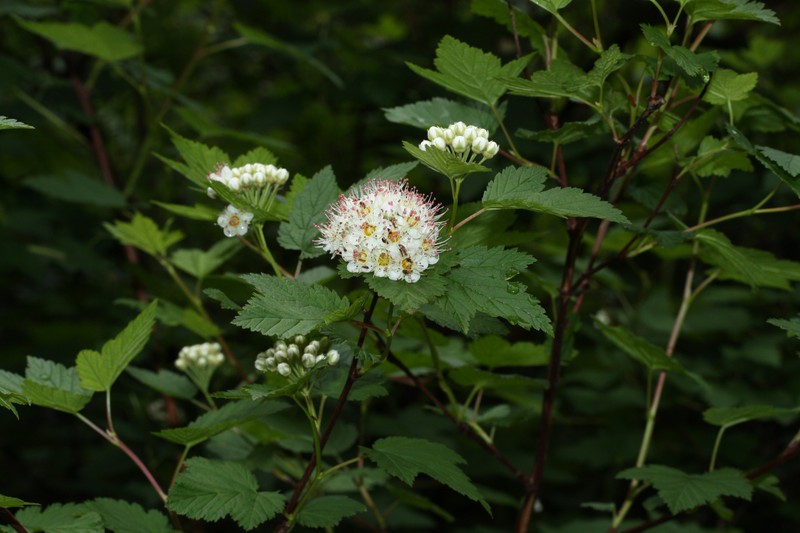
Taxonomy
- Division:
- Magnoliophyta | - Flowering plants
- Family:
- Rosaceae
- Genus:
- Physocarpus
- Species:
- Physocarpus capitatus
Growth Characteristics
- Life Cycle:
- Perennial
- Growth Habit:
- Shrub
- Height:
- 20-40 ft
- Light Requirements:
- Full Sun, Part Shade
- Drought Tolerance:
- High
- Bloom Months:
- may, jun, jul
- Bloom Colors:
- White
- Landscaping Shrub:
- Yes
Native Range
United States: Alaska, California, Idaho, Oregon, Washington, Canada: Alberta, British Columbia
Keystone Species Ranking
- Caterpillar Keystone:
- ★★★☆☆ Based on number of butterfly and moth species using this genus as host plant (Source: National Wildlife Federation)
Host Plant for Caterpillars
Eulithis xylina, hibiscus Quaker (Orthosia hibisci), Obliquebanded leafroller (Choristoneura rosaceana)
Reported Fauna Sightings
Bees: Black-tailed bumble bee (Bombus melanopygus), Black-tailed bumble bee (Bombus melanopygus), Fuzzy-horned bumble bee (Bombus mixtus), Fuzzy-horned bumble bee (Bombus mixtus), White-shouldered bumble bee (Bombus appositus), White-shouldered bumble bee (Bombus appositus)
Soil Requirements
- Soil Type:
- rich, well-drained loamy soil
- pH:
- 5.5 - 7.0 (slightly acidic to neutral)
- Drainage:
- tolerates poor drainage
- Moisture:
- consistently moist
- Notes:
- prefers riparian zones and wetland edges
Germination Information
Pre-treatment: Sow seed into trays filled with stabilized medium plugs (Q-plugs). Seal trays inside plastic bags and refrigerate at 1 to 3 °C for 30 days. Check trays weekly and keep moist. If mold is evident, treat with 1% hydrogen peroxide.
Establishment: Pacific ninebark is found primarily west of the British Columbia Coast, Cascade, and Sierra Nevada Mountain Ranges from extreme southeast Alaska to central California. Habitats include streambanks, lake margins, and swampy areas or openings in moist woods.
Source: npn.rngr.net