
Sweet Cherry
Prunus avium
Also known as: Sweet Almond
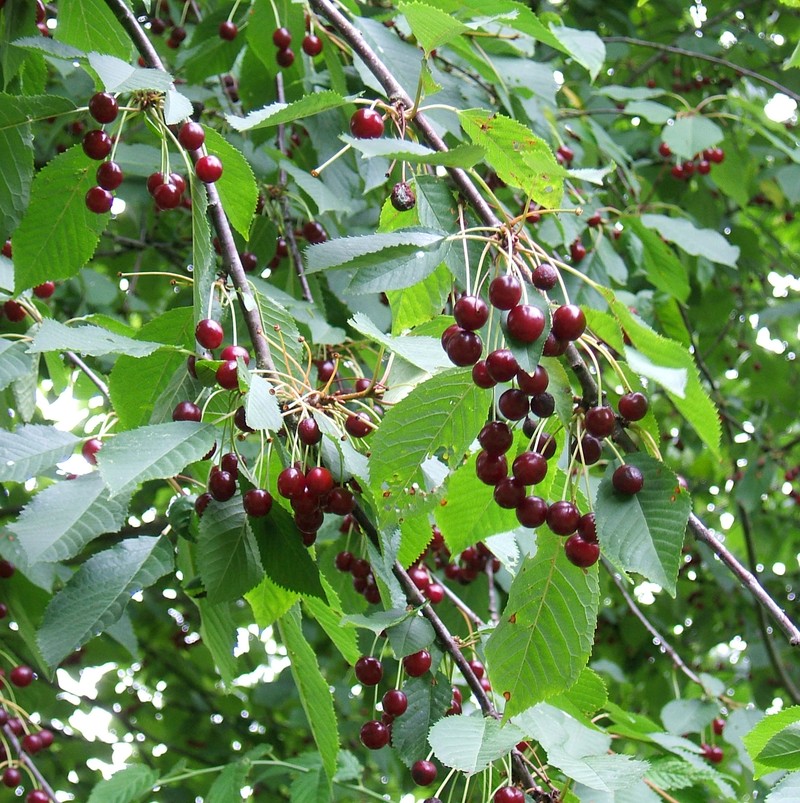
Taxonomy
- Division:
- Magnoliophyta | - Flowering plants
- Family:
- Rosaceae
- Genus:
- Prunus
- Species:
- Prunus avium
Growth Characteristics
- Life Cycle:
- Perennial
- Growth Habit:
- Tree
- Height:
- More than 40 ft
- Light Requirements:
- Full Sun
- Drought Tolerance:
- High
- Bloom Months:
- mar, apr, may
- Bloom Colors:
- white
Native Range
United States: California, Connecticut, District of Columbia, Delaware, Idaho, Illinois, Indiana, Kentucky, Massachusetts, Maryland, Maine, Michigan, Montana, North Carolina, New Hampshire, New Jersey, New York, Ohio, Oregon, Pennsylvania, Rhode Island, South Carolina, Tennessee, Utah, Virginia, Washington, Wisconsin, West Virginia, Wyoming, Canada: British Columbia, New Brunswick, Nova Scotia, Ontario, Quebec
Keystone Species Ranking
- Caterpillar Keystone:
- ★☆☆☆☆ Based on number of butterfly and moth species using this genus as host plant (Source: National Wildlife Federation)
Host Plant for Caterpillars
almond moth (Cadra cautella), Archips nr. argyrospilus, Ashen Pinion (Lithophane antennata), Black-etched Prominent (Cerura scitiscripta), Brown-tail moth (Euproctis chrysorrhoea), Carob moth (Ectomyelois ceratoniae), Cecropia moth (Hyalophora cecropia), Cinnamon Tussock Moth (Dasychira cinnamomea), Elegant Sheep Moth (Hemileuca eglanterina), Ephestiodes infimella, Euchlaena pectinaria, Eulia Leafroller (Eulia ministrana), Eumacaria latiferrugata, fall cankerworm (Alsophila pometaria), Fall webworm (Hyphantria cunea), Fig moth (Cadra figulilella), fruit-tree leafroller (Archips argyrospila), Garden Rose Tortrix (Acleris variegana), green oak slug moth (Parasa chloris), Gypsy moth (Lymantria dispar), Indian meal moth (Plodia interpunctella), Io moth (Automeris io), Isa textula, lanceolate dagger moth (Acronicta lanceolaria), Large Lace-border (Scopula limboundata), leaf crumpler moth (Acrobasis indigenella), lesser peachtree borer (Synanthedon pictipes), Monoleuca semifascia, northern furcula moth (Furcula borealis), Obliquebanded leafroller (Choristoneura rosaceana), orange tortrix moth (Argyrotaenia citrana), Pandemis leafroller (Pandemis pyrusana), Parornix geminatella, Peach tree borer (Synanthedon exitiosa), Phyllonorycter crataegella, reticulated sparganothis moth (Sparganothis reticulatana), stinging rose caterpillar (Parasa indetermina), ugly-nest caterpillar moth (Archips cerasivorana), Ultronia underwing (Catocala ultronia), Wild Cherry Sphinx (Sphinx drupiferarum)
Reported Fauna Sightings
Bees: Hunt's bumble bee (Bombus huntii), Hunt's bumble bee (Bombus huntii)
Soil Requirements
- Soil Type:
- rich, well-drained loamy soil
- pH:
- 6.0 - 7.5 (slightly acidic to neutral)
- Drainage:
- excellent drainage required
- Moisture:
- consistently moist
- Notes:
- prefers deep soils with good fertility