
Hollyleaf Cherry
Prunus ilicifolia
- Native to:
- Mexico, United States
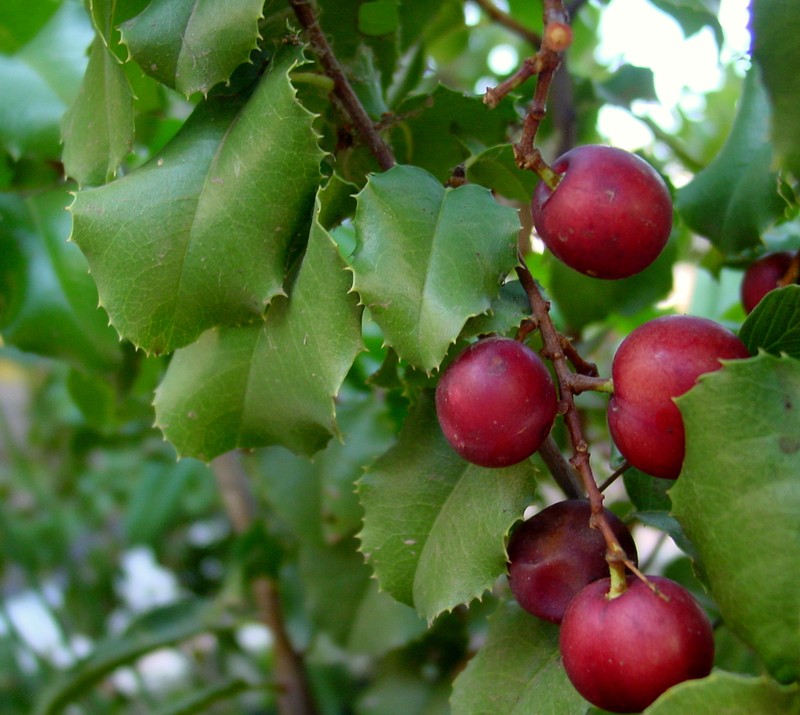
No machine-readable author provided. NoahElhardt assumed (based on copyright claims).
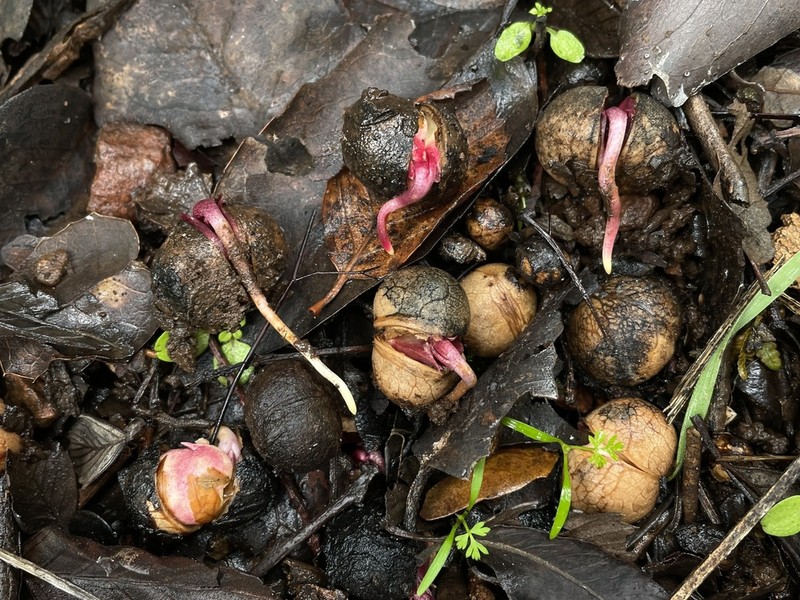
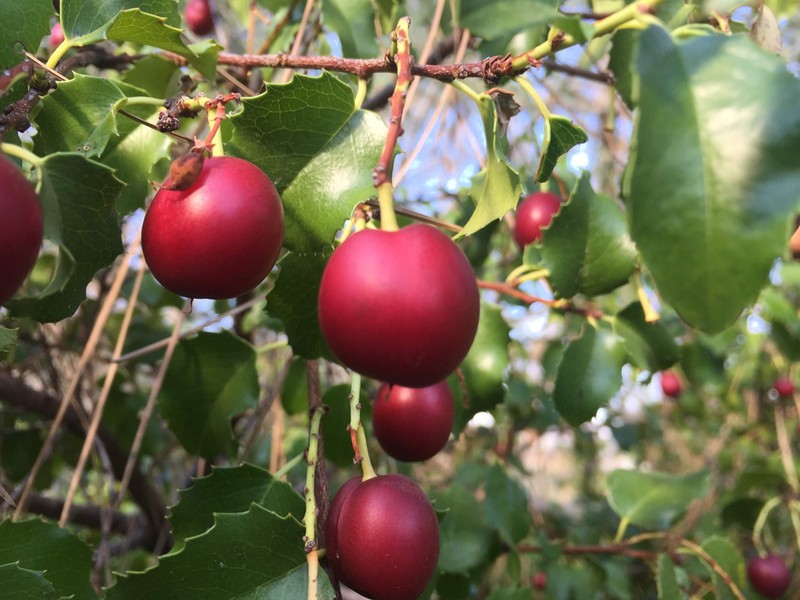
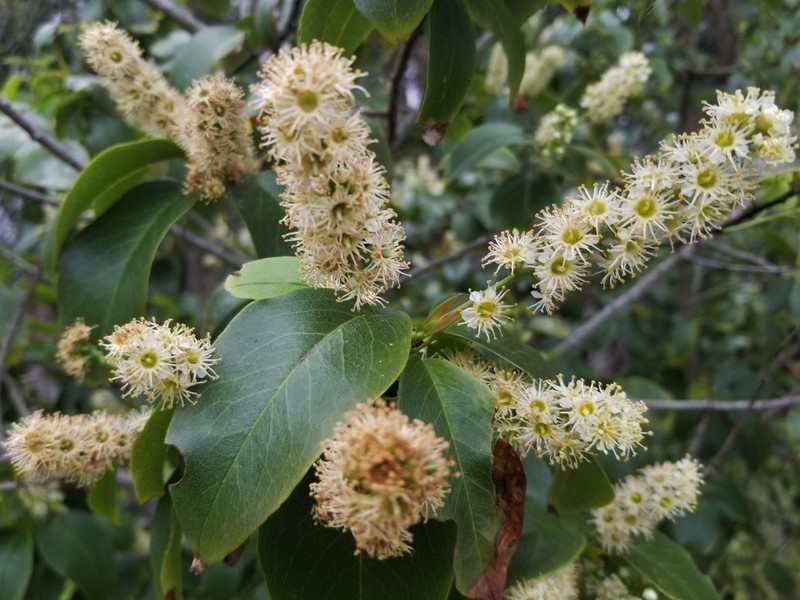
Taxonomy
- Division:
- Magnoliophyta | - Flowering plants
- Family:
- Rosaceae
- Genus:
- Prunus
- Species:
- Prunus ilicifolia
- USDA Symbol:
- PRIL
Growth Characteristics
- Life Cycle:
- Perennial
- Growth Habit:
- Shrub , Tree
- Height:
- 1500 cm
- Light Requirements:
- Full Sun
- Drought Tolerance:
- High
- Bloom Months:
- mar,apr,may
- Bloom Colors:
- white
- Evergreen Shrub:
- Yes
- Landscaping Shrub:
- Yes
Wildlife Benefits
- Bees:
- ★☆☆☆☆ Documented bee visitation (GBIF)
- Butterflies & Moths:
- ★★☆☆☆ Documented Lepidoptera association (GBIF)
- Caterpillars:
- ★★★★☆ Recorded caterpillar host plant (HOSTS Database)
Keystone Species Ranking
- Caterpillar Keystone:
- ★★★★★ Butterfly & moth species supported by this genus (NWF)
Host Plant for Caterpillars
Ailanthus silkmoth (Samia cynthia), Autumnal moth (Epirrita autumnata), Cecropia moth (Hyalophora cecropia), Ceranemota fasciata, Clinton's Underwing (Catocala clintonii), Coleotechnites sp., Eastern Tent Caterpillar (Malacosoma americana), Egira simplex, Elegant sphinx (Sphinx perelegans), Epinotia lomonana, Fall webworm (Hyphantria cunea), Feralia februalis, Filatima demissae, Melissopus latiferreanus, Oriental fruit moth (Cydia molesta), Paraleucoptera heinrichi, Phyllocnistis sp. n., Spotted Tussock Moth (Lophocampa maculata), Stigmella braunella, Tischeria immaculata, Ultronia underwing (Catocala ultronia), Walker’s Atlas Moth (Samia walkeri), Western amorbia moth (Amorbia cuneanum), Western tent caterpillar (Malacosoma californica), White-marked Tussock Moth (Orgyia leucostigma), Yellownecked caterpillar (Datana ministra), Eastern Tiger Swallowtail (Papilio glaucus), Harkenclenus titus, Holly Blue (Celastrina argiolus), Pale Swallowtail (Papilio eurymedon), Striped Hairstreak (Satyrium liparops), Two-tailed Swallowtail (Papilio multicaudatus), Western Tiger Swallowtail (Papilio rutulus)
Reported Fauna Sightings
Bees: Pyrobombus Dalla, ⚠️Western honey bee (Apis mellifera) Moths:Paraleucoptera heinrichi, Stigmella braunella, Western tussock moth (Orgyia vetusta) Butterflies:Pale Swallowtail (Papilio eurymedon)
Garden & Ecology Notes
- Wildlife Value:
- birds, mammals
- Salt Tolerant:
- Yes
- Fire Ecology:
- Fire adapted — tolerates or benefits from fire
- Fire Notes:
- Resprouts vigorously from root crown after fire; seeds also germinate in post-fire conditions.
Soil Requirements
- Soil Type:
- well-drained, sandy to loamy soil
- pH:
- 5.5 - 7.5 (slightly acidic to neutral)
- Drainage:
- excellent drainage required
- Moisture:
- dry to moderate
- Notes:
- Prefers native chaparral and coastal sage scrub habitats
Propagation & Germination
- Stratification:
- Cold/moist stratification required — 60–90 days
- Scarification:
- Seed coat scarification required before sowing
- Germination Time:
- 30–90 days
- Notes:
- Seeds require scarification (nicking or hot water) followed by cold stratification for 60-90 days.
Pre-treatment: Soak seeds overnight in fresh water. Rinse in 5% bleach solution for 1 minute and rinse thoroughly in water. Place seeds in a plastic freezer bag with an equal amount of perlite. Place in stratification at 40 F in a refrigerator for 1 to 3 months or until seeds begin to germinate.
Establishment: P. ilicifolia is found on dry slopes and fans, mostly below 5,000 feet elevation; from the Coast ranges and Napa County south to Lower California and Santa Catalina and San Clemente islands.
Source: npn.rngr.net
Where to Buy
Nationwide Seller
- Sheffield's Seed (seeds)