
Mexican Plum
Prunus mexicana
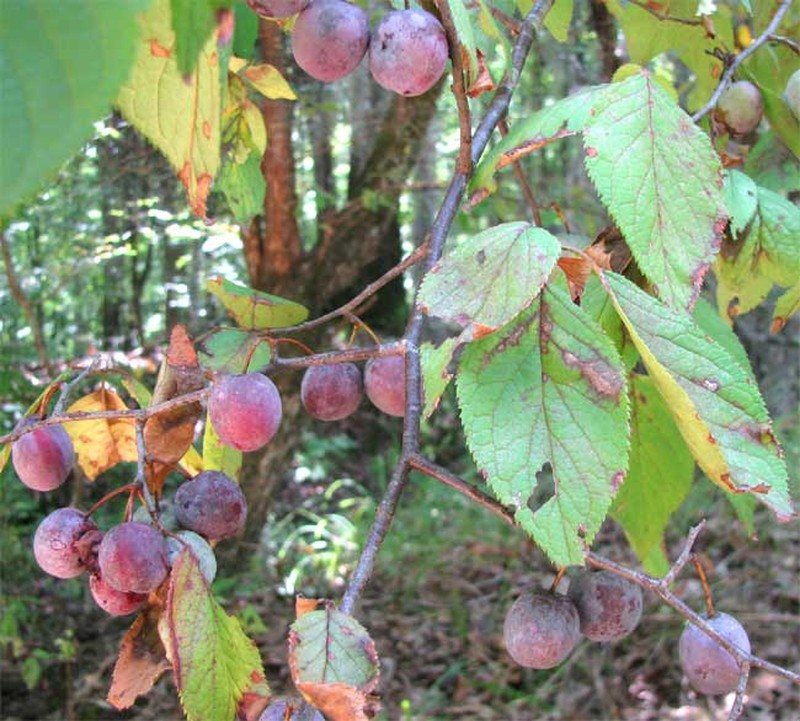
Jim Conrad
Taxonomy
- Division:
- Magnoliophyta | - Flowering plants
- Family:
- Rosaceae
- Genus:
- Prunus
- Species:
- Prunus mexicana
Growth Characteristics
- Life Cycle:
- Perennial
- Growth Habit:
- Shrub , Tree
- Height:
- 20-40 ft
- Light Requirements:
- Full Sun, Part Shade
- Drought Tolerance:
- High
- Bloom Months:
- feb, mar, apr
- Bloom Colors:
- White, Pink
Native Range
United States: Alabama, Arkansas, Georgia, Iowa, Illinois, Indiana, Kansas, Kentucky, Louisiana, Missouri, Mississippi, North Carolina, Nebraska, Ohio, Oklahoma, South Carolina, South Dakota, Tennessee, Texas, Wisconsin
Keystone Species Ranking
- Caterpillar Keystone:
- ★☆☆☆☆ Based on number of butterfly and moth species using this genus as host plant (Source: National Wildlife Federation)
Host Plant for Caterpillars
Acrobasis tricolorella, Acronicta dactylina, Acronicta furcifera, Acronicta superans, Ailanthus silkmoth (Samia cynthia), American Dagger Moth (Acronicta americana), American lappet moth (Phyllodesma americana), American plum leafminer (Stigmella slingerlandella), Apamea castanea, Argyresthia freyella, Argyrotaenia repertana, Army cutworm (Euxoa auxiliaris), Ashen Pinion (Lithophane antennata), Autumnal moth (Epirrita autumnata), bicolored sallow (Sunira bicolorago), blackberry looper (Chlorochlamys chloroleucaria), Brown angle shades (Phlogophora periculosa), Brown-tail moth (Euproctis chrysorrhoea), Bucculatrix copeuta, Bucculatrix pomifoliella, Calleta silkmoth (Eupackardia calleta), Cecropia moth (Hyalophora cecropia), Cerma cerintha, clear dagger moth (Acronicta clarescens), Clinton's Underwing (Catocala clintonii), Coleophora umbratica, Columbia silk moth (Hyalophora columbia), Copper Underwing (Amphipyra tragopoginis), Copper Underwing (Amphipyra pyramidoides), cora moth (Cerma cora), Dark-spotted Palthis (Palthis angulalis), dowdy pinion (Lithophane unimoda), Eastern Tent Caterpillar (Malacosoma americana), Epinotia rectiplicana, Eueretagrotis perattentus, Eumacaria latiferrugata, Eurois astricta, Evippe prunifoliella, fall cankerworm (Alsophila pometaria), Fall webworm (Hyphantria cunea), forked dagger moth (Acronicta hasta), fragile anacamptodes moth (Anacamptodes fragilaria), fragile dagger moth (Acronicta fragilis), fruit-tree tortrix (Ancylis tineana), gray spring moth (Lomographa glomeraria), Gypsy moth (Lymantria dispar), Heterocampa biundata, hibiscus Quaker (Orthosia hibisci), impressed dagger moth (Acronicta impressa), Interrupted Dagger Moth (Acronicta interrupta), Io moth (Automeris io), Lacinipolia cuneata, Lacinipolia lorea, lesser peachtree borer (Synanthedon pictipes), Linden looper (Erannis tiliaria), Lunate zale (Zale lunata), maple leaf blotch miner (Caloptilia invariabilis), Nameless Pinion (Lithophane innominata), Norman's dart (Xestia normanianus), Norman's Quaker (Crocigrapha normani), Orthosia praeses, Orthosia revicta, Papestra cristifera, pecan cigar casebearer (Coleophora laticornella), Phyllonorycter crataegella, Promethea silkmoth (Callosamia promethea), Protorthodes rufula, Radcliffe's dagger moth (Acronicta radcliffei), Red-banded leafroller (Argyrotaenia velutinana), Red-bordered Emerald (Nemoria bistriaria), Red-humped caterpillar moth (Schizura concinna), Ruby Quaker (Orthosia rubescens), Rusty Tussock Moth (Orgyia antiqua), Saddled Prominent (Heterocampa guttivitta), short-lined chocolate (Argyrostrotis anilis), Small-eyed Sphinx (Paonias myops), snowy-shouldered leafroller (Acleris nivisellana), Spotted Apatelodes (Apatelodes torrefacta), Spring cankerworm (Paleacrita vernata), Stigmella prunifoliella, Twin-spotted sphinx (Smerinthus jamaicensis), Ultronia underwing (Catocala ultronia), Unicorn caterpillar moth (Schizura unicornis), Unmarked dagger moth (Acronicta innotata), Variegated cutworm (Peridroma saucia), Walnut Sphinx (Amorpha juglandis), Western tent caterpillar (Malacosoma californica), Western tussock moth (Orgyia vetusta), wheatear sallow (Lithophane fagina), White-marked Tussock Moth (Orgyia leucostigma), Wild Cherry Sphinx (Sphinx drupiferarum), yellow-striped acleris moth (Acleris flavivittana), Yellow-washed metarranthis (Metarranthis obfirmaria), Yellownecked caterpillar (Datana ministra), Eastern Tiger Swallowtail (Papilio glaucus), Harkenclenus titus, Henry's Elfin (Incisalia henrici), Red-spotted Purple (Basilarchia arthemis), Striped Hairstreak (Satyrium liparops), Two-tailed Swallowtail (Papilio multicaudatus), Western Tiger Swallowtail (Papilio rutulus)
Soil Requirements
- Soil Type:
- rich, well-drained loamy soil
- pH:
- 5.5 - 7.5 (slightly acidic to neutral)
- Drainage:
- excellent drainage required
- Moisture:
- dry to moderate
- Notes:
- prefers calcareous soils in native range
Germination Information
Pre-treatment: Cold-moist stratification for 30 days at 1–5°C (34–41°F).; then Scarify, then cold-moist stratify for 60 days.
Source: OpenAI GPT-4o