
Pin Cherry
Prunus pensylvanica
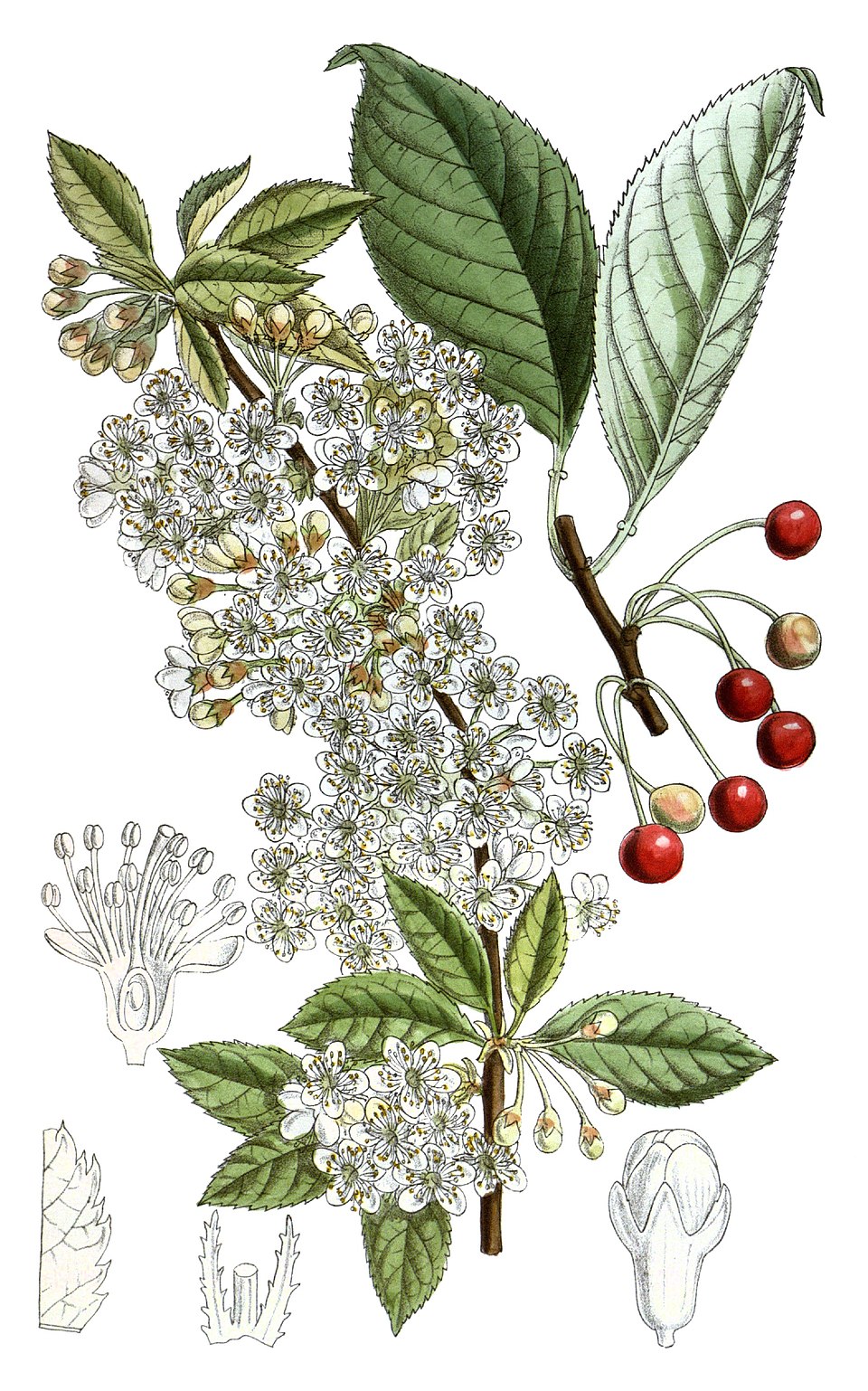
- Prunus_pennsylvanica_139-8486.jpg:
Taxonomy
- Division:
- Magnoliophyta | - Flowering plants
- Family:
- Rosaceae
- Genus:
- Prunus
- Species:
- Prunus pensylvanica
Growth Characteristics
- Life Cycle:
- Perennial
- Growth Habit:
- Shrub , Tree
- Height:
- 6-8 ft
- Light Requirements:
- Full Sun
- Drought Tolerance:
- Medium
- Bloom Months:
- may, jun
- Bloom Colors:
- red, white
Keystone Species Ranking
- Caterpillar Keystone:
- ★☆☆☆☆ Based on number of butterfly and moth species using this genus as host plant (Source: National Wildlife Federation)
Host Plant for Caterpillars
Acronicta dactylina, Acronicta furcifera, Acronicta superans, American lappet moth (Phyllodesma americana), Apamea castanea, Argyresthia freyella, Argyrotaenia repertana, blackberry looper (Chlorochlamys chloroleucaria), Brown-tail moth (Euproctis chrysorrhoea), Bucculatrix copeuta, Calleta silkmoth (Eupackardia calleta), Cecropia moth (Hyalophora cecropia), clear dagger moth (Acronicta clarescens), Columbia silk moth (Hyalophora columbia), cora moth (Cerma cora), Dark-spotted Palthis (Palthis angulalis), dowdy pinion (Lithophane unimoda), Eastern Tent Caterpillar (Malacosoma americana), Epinotia rectiplicana, Eueretagrotis perattentus, Eumacaria latiferrugata, Eurois astricta, forked dagger moth (Acronicta hasta), fragile dagger moth (Acronicta fragilis), fruit-tree tortrix (Ancylis tineana), gray spring moth (Lomographa glomeraria), Gypsy moth (Lymantria dispar), Heterocampa biundata, hibiscus Quaker (Orthosia hibisci), impressed dagger moth (Acronicta impressa), Interrupted Dagger Moth (Acronicta interrupta), Io moth (Automeris io), Lacinipolia cuneata, Lacinipolia lorea, maple leaf blotch miner (Caloptilia invariabilis), Norman's dart (Xestia normanianus), Norman's Quaker (Crocigrapha normani), Orthosia praeses, Orthosia revicta, Papestra cristifera, Phyllonorycter crataegella, Promethea silkmoth (Callosamia promethea), Radcliffe's dagger moth (Acronicta radcliffei), Red-banded leafroller (Argyrotaenia velutinana), Red-bordered Emerald (Nemoria bistriaria), Saddled Prominent (Heterocampa guttivitta), Small-eyed Sphinx (Paonias myops), snowy-shouldered leafroller (Acleris nivisellana), Spotted Apatelodes (Apatelodes torrefacta), Spring cankerworm (Paleacrita vernata), Ultronia underwing (Catocala ultronia), Unmarked dagger moth (Acronicta innotata), Walnut Sphinx (Amorpha juglandis), wheatear sallow (Lithophane fagina), Wild Cherry Sphinx (Sphinx drupiferarum), yellow-striped acleris moth (Acleris flavivittana), Yellow-washed metarranthis (Metarranthis obfirmaria), Eastern Tiger Swallowtail (Papilio glaucus), Henry's Elfin (Incisalia henrici), Red-spotted Purple (Basilarchia arthemis), Striped Hairstreak (Satyrium liparops)Reported Fauna Sightings
Bees: Brown-belted bumble bee (Bombus griseocollis), Brown-belted bumble bee (Bombus griseocollis), Confusing bumble bee (Bombus perplexus), Confusing bumble bee (Bombus perplexus)Soil Requirements
- Soil Type:
- sandy, well-drained, nutrient-poor soil
- pH:
- 4.5 - 6.5 (acidic to slightly acidic)
- Drainage:
- excellent drainage required
- Moisture:
- dry to moderate
- Notes:
- Common in disturbed sites and open areas
Germination Information
Pre-treatment: Seeds are cold stratified for 60 to 120 days
Establishment: P. pensylvanica is commonly found within temperate deciduous forests of North. There is a variation in the cold stratification period and germination temperature in different studies.
Source: npn.rngr.net
