
Peach
Prunus persica
- Native to:
- China
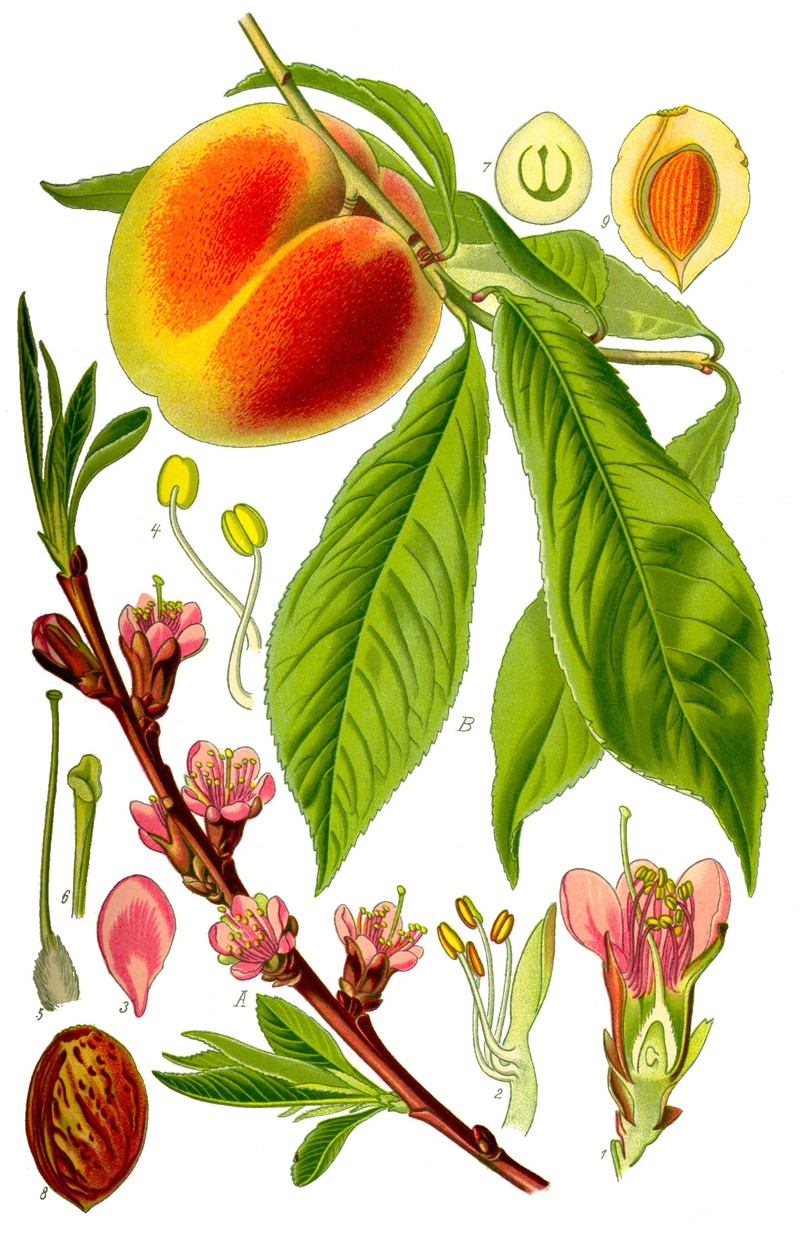
File:Illustration Prunus persica0.jpg : PLEASE COMPLETE AUTHOR INFORMATION derivative work: Kenraiz
Taxonomy
- Division:
- Magnoliophyta | - Flowering plants
- Family:
- Rosaceae
- Genus:
- Prunus
- Species:
- Prunus persica
- USDA Symbol:
- PRPE3
Growth Characteristics
- Life Cycle:
- Perennial
- Growth Habit:
- Tree
- Height:
- 800 cm
- Light Requirements:
- Full Sun
- Drought Tolerance:
- Medium
- Bloom Months:
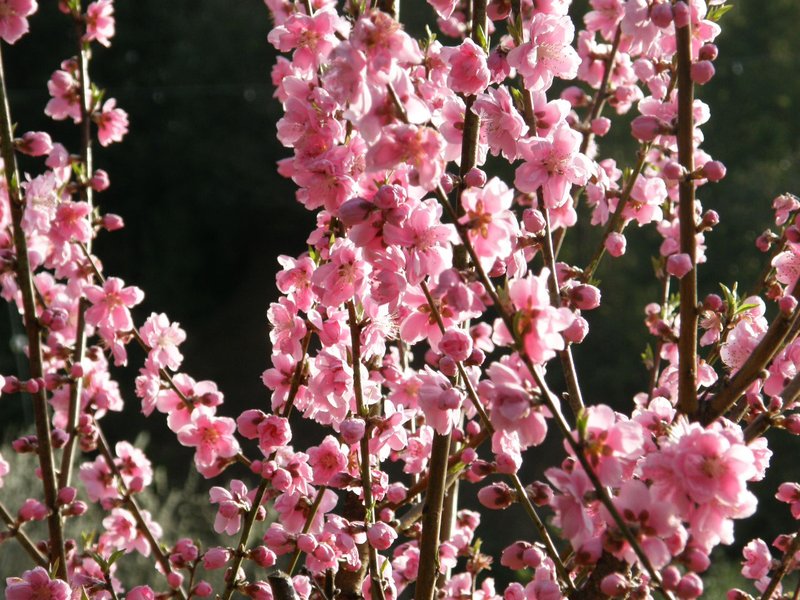
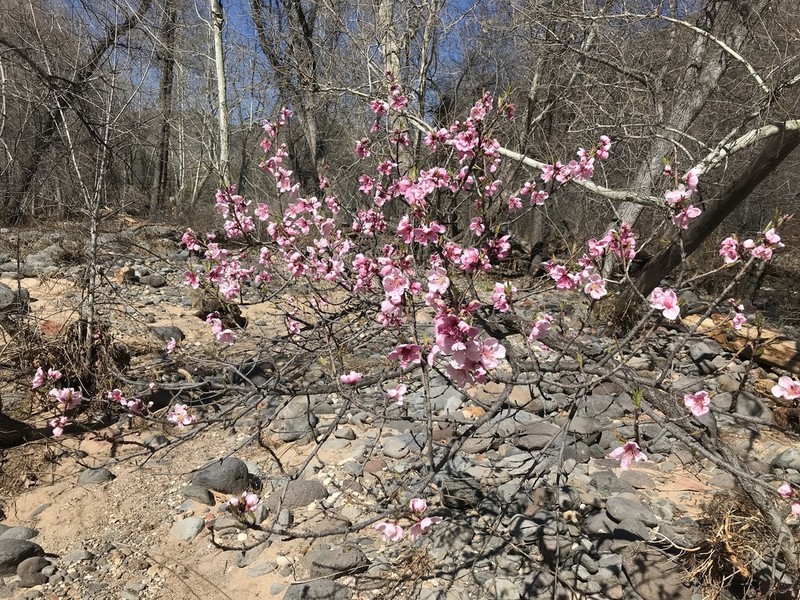
- mar,apr
- Bloom Colors:
- pink
- Food Forest:
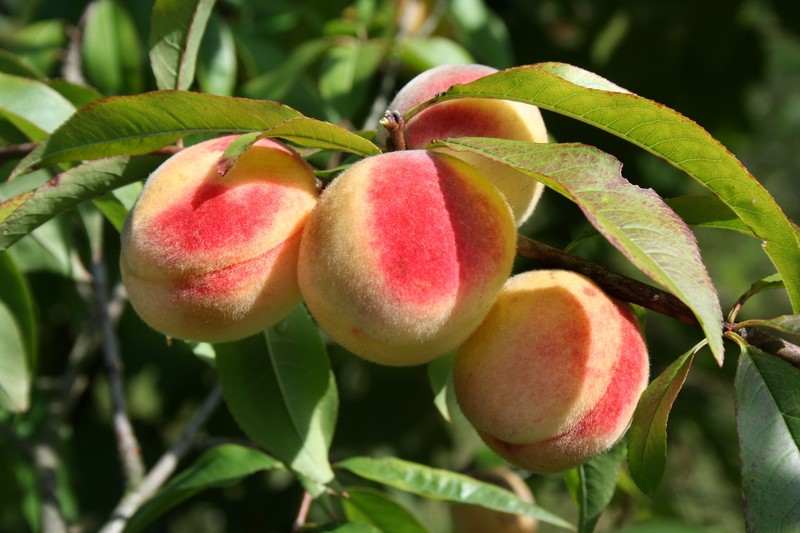
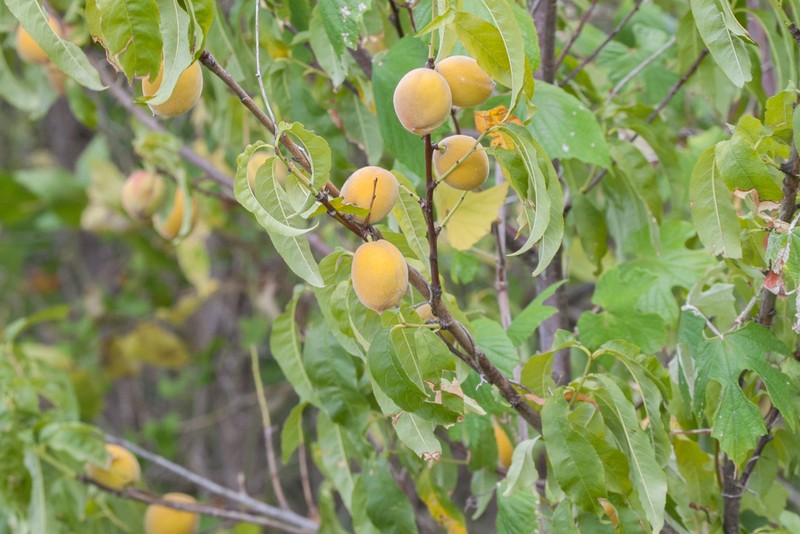
- Contains edible parts
Wildlife Benefits
- Bees:
- ★☆☆☆☆ Documented bee visitation (GBIF)
- Butterflies & Moths:
- ★★★★☆ Documented Lepidoptera association (GBIF)
- Caterpillars:
- ★★★★★ Recorded caterpillar host plant (HOSTS Database)
Keystone Species Ranking
- Caterpillar Keystone:
- ★★★★★ Butterfly & moth species supported by this genus (NWF)
Host Plant for Caterpillars
American plum borer (Euzophera semifuneralis), Army cutworm (Euxoa auxiliaris), Ashen Pinion (Lithophane antennata), Barnes' dart moth (Abagrotis barnesi), bicolored sallow (Sunira bicolorago), Black cutworm (Agrotis ipsilon), black-shaded platynota (Platynota flavedana), black-tipped pyralid moth (Moodna ostrinella), Bondia comonana, Brown-tail moth (Euproctis chrysorrhoea), Buck Moth (Hemileuca maia), Cecropia moth (Hyalophora cecropia), Cerma cerintha, Cherry fruitworm (Grapholita packardi), clandestine dart (Spaelotis clandestina), Clymene moth (Haploa clymene), Colona Haploa (Haploa colona), Conogethes sp., Copper Underwing (Amphipyra pyramidoides), corn earworm (Helicoverpa zea), Cosmet moth (Pyroderces rileyi), Cupid dart moth (Abagrotis cupida), darksided cutworm (Euxoa messoria), Dichomeris picrocarpa, Dogwood borer (Synanthedon scitula), dot-lined white (Artace cribraria), Eastern Tent Caterpillar (Malacosoma americana), Euxoa scandens, Euxoa tessellata, Fall armyworm (Spodoptera frugiperda), fall cankerworm (Alsophila pometaria), Fall webworm (Hyphantria cunea), Filatima persicaeella, Forest Tent Caterpillar (Malacosoma disstria), fruit-tree leafroller (Archips argyrospila), glassy cutworm (Apamea devastator), Gnorimoschema banksiella, Greater Red Dart (Abagrotis alternata), Gypsy moth (Lymantria dispar), hibiscus Quaker (Orthosia hibisci), Honeydew moth (Cryptoblabes gnidiella), incurve tent caterpillar (Malacosoma incurva), Indian meal moth (Plodia interpunctella), Isabella tiger moth (Pyrrharctia isabella), leaf crumpler moth (Acrobasis indigenella), Lebeau's silk moth (Rothschildia lebeau), Leconte's haploa (Haploa lecontei), lesser peachtree borer (Synanthedon pictipes), Lesser Peachtree Borer (Grapholita prunivora), Linden looper (Erannis tiliaria), long-winged dagger moth (Acronicta longa), navel orangeworm (Amyelois transitella), orange tortrix moth (Argyrotaenia citrana), Orbis Dart (Abagrotis orbis), Oriental fruit moth (Cydia molesta), Orthodes cynica, Ozamia fuscomaculella, Peach tree borer (Synanthedon exitiosa), Peach Twig Borer (Anarsia lineatella), Phyllonorycter crataegella, Polyphemus moth (Antheraea polyphemus), Promethea silkmoth (Callosamia promethea), Prosoeuzophera impletella, Protorthodes rufula, Pyroderces badia, Ruby Quaker (Orthosia rubescens), Sidus sallow (Eupsilia sidus), Smeared Dagger Moth (Acronicta oblinita), speckled cutworm (Lacanobia subjuncta), Spring cankerworm (Paleacrita vernata), stalk borer moth (Papaipema nebris), Variegated cutworm (Peridroma saucia), Western tent caterpillar (Malacosoma californica), Western tussock moth (Orgyia vetusta), Western yellowstriped armyworm (Spodoptera praefica), white triangle tortrix (Clepsis persicana), White-marked Tussock Moth (Orgyia leucostigma), Wild Cherry Sphinx (Sphinx drupiferarum), yellow-headed fireworm (Acleris minuta), Yellow-striped armyworm (Spodoptera ornithogalli), Yellownecked caterpillar (Datana ministra), Eastern Tiger Swallowtail (Papilio glaucus), Pale Swallowtail (Papilio eurymedon), Spicebush Swallowtail (Papilio troilus), Western Tiger Swallowtail (Papilio rutulus)
Garden & Ecology Notes
- Wildlife Value:
- birds, mammals
- Fragrant:
- Yes
- Fall Color:
- yellow, orange
Soil Requirements
- Soil Type:
- rich, well-drained loamy soil
- pH:
- 6.0 - 7.0 (slightly acidic to neutral)
- Drainage:
- excellent drainage required
- Moisture:
- dry to moderate
- Notes:
- native to regions with temperate climates
Propagation & Germination
- Stratification:
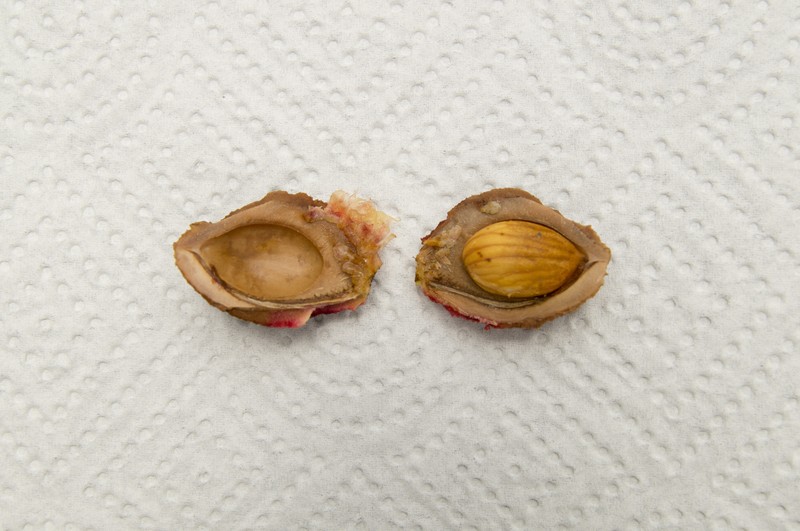
- Cold/moist stratification required — 60–90 days
- Germination Time:
- 30–60 days
- Notes:
- Seeds require cold stratification for 60-90 days to break dormancy.
Where to Buy
Nationwide Seller
- Sheffield's Seed (seeds)