
Black Cherry
Prunus serotina
- Native to:
- Canada, El Salvador, Guam, Guatemala, Honduras, Mexican Pacific Is., Mexico, Panamá, United States, Virgin Islands
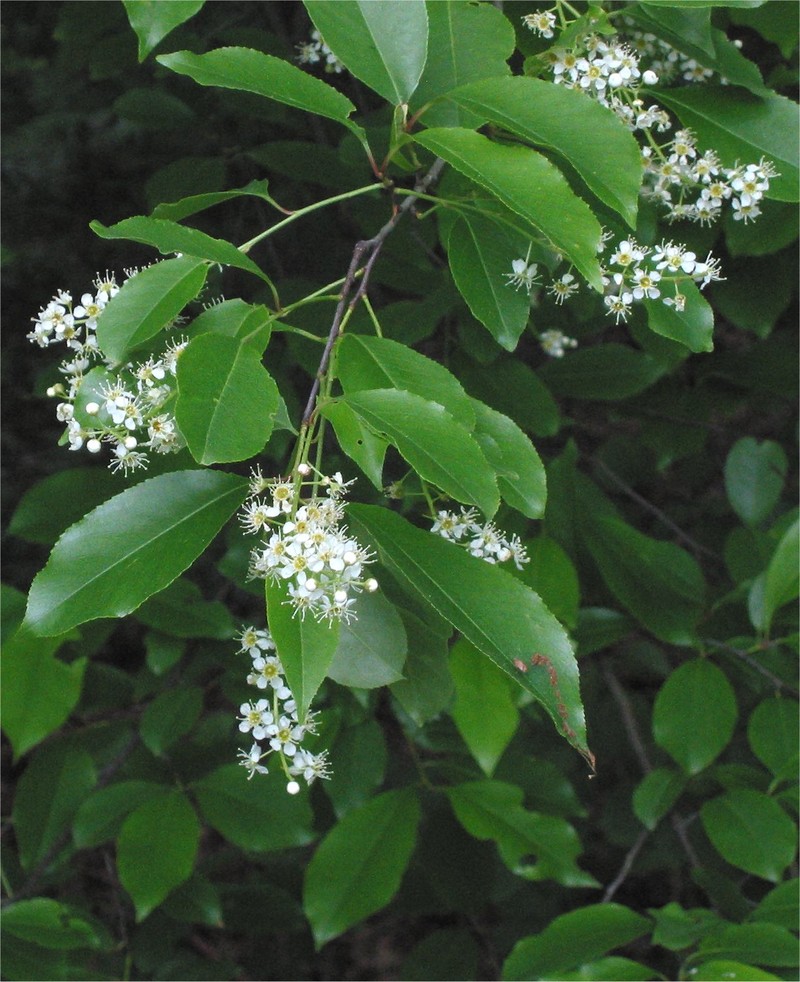
Rasbak
Taxonomy
- Division:
- Magnoliophyta | - Flowering plants
- Family:
- Rosaceae
- Genus:
- Prunus
- Species:
- Prunus serotina
- USDA Symbol:
- PRSE2
Growth Characteristics
- Life Cycle:
- Perennial
- Growth Habit:
- Shrub , Tree
- Height:
- 3000 cm
- Light Requirements:
- Full Sun,Part Shade,Shade
- Drought Tolerance:
- Medium
- Bloom Months:
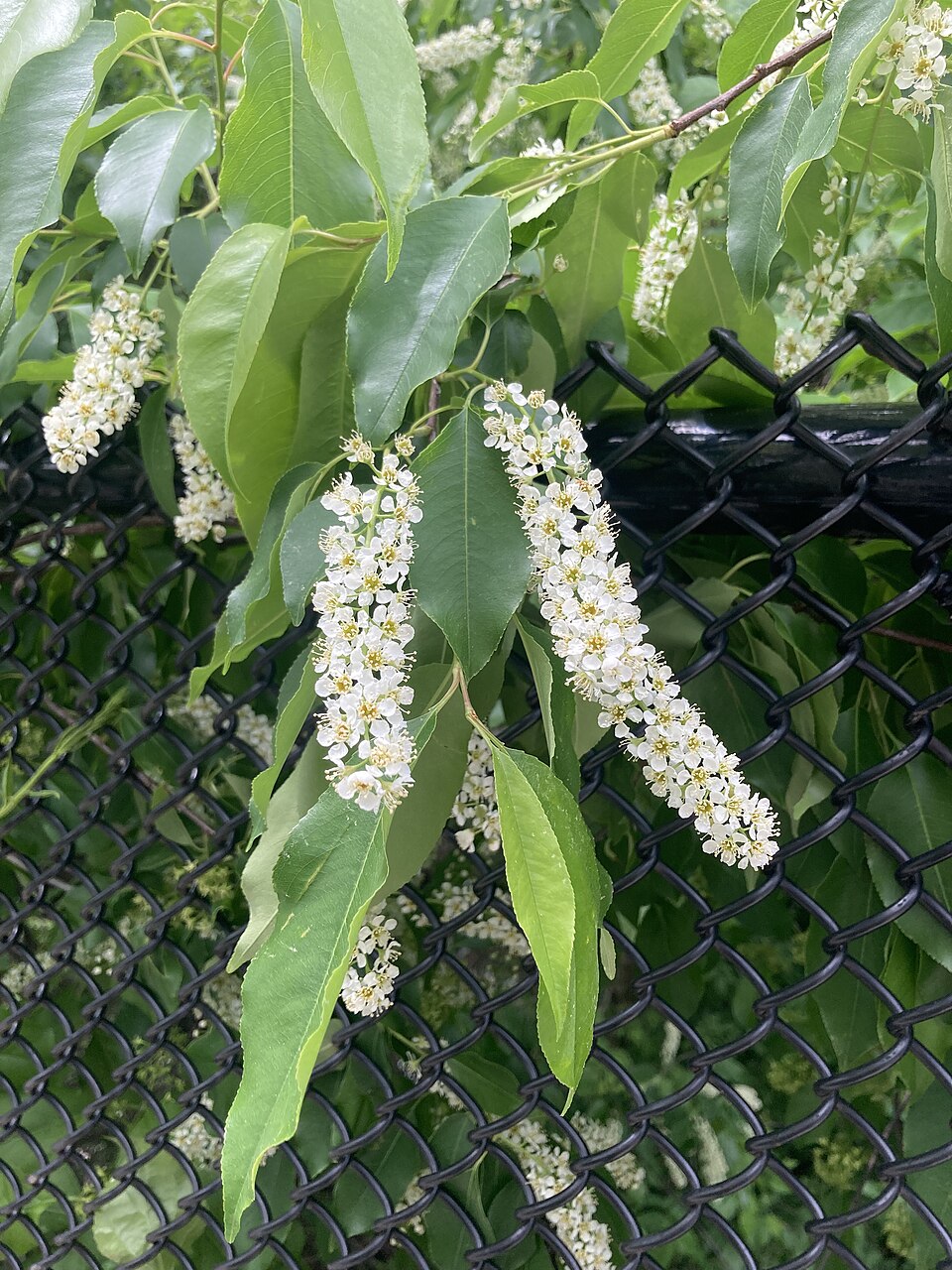
- apr,may,jun
- Bloom Colors:
- white
Wildlife Benefits
- Bees:
- ★☆☆☆☆ Documented bee visitation (GBIF)
- Butterflies & Moths:
- ★★★★★ Documented Lepidoptera association (GBIF)
- Caterpillars:
- ★★★★★ Recorded caterpillar host plant (HOSTS Database)
- Hummingbirds:
- ★☆☆☆☆ Documented hummingbird visits (GBIF)
Keystone Species Ranking
- Caterpillar Keystone:
- ★★★★★ Butterfly & moth species supported by this genus (NWF)
Host Plant for Caterpillars
Grote's Pinion (Lithophane grotei), Acronicta furcifera, Agrotis vancouverensis, Ailanthus silkmoth (Samia cynthia), Allen's Aphelia (Aphelia alleniana), Alurina Quaker (Orthosia alurina), American Dagger Moth (Acronicta americana), American lappet moth (Phyllodesma americana), Amyris metarranthis moth (Metarranthis amyrisaria), Ancylis apicana, Ancylis burgessiana, angled metarranthis moth (Metarranthis angularia), Apamea castanea, apple leafroller (Archips fuscocupreanus), Aseptis adnixa, Ashen Pinion (Lithophane antennata), Atlantic arches (Lacanobia atlantica), Automeris randa, Automeris zephyria, bad-wing (Dyspteris abortivaria), Bent-line gray (Iridopsis larvaria), Black-etched Prominent (Cerura scitiscripta), blackthorn dagger (Acronicta pruni), Blinded Sphinx (Paonias excaecata), bluish spring moth (Lomographa semiclarata), Brown-tail moth (Euproctis chrysorrhoea), Bucculatrix pomifoliella, Buck Moth (Hemileuca maia), Calleta silkmoth (Eupackardia calleta), Caloptilia serotinella, Canadian Melanolophia (Melanolophia canadaria), Ceanothus Silkmoth (Hyalophora euryalus), Cecropia moth (Hyalophora cecropia), Cecropis moth (Automeris cecrops), Cerma cerintha, Chain-lined geometer moth (Cingilia catenaria), cherry blotch miner moth (Phyllonorycter propinquinella), Cherry Casebearer Moth (Coleophora pruniella), Chlorosea nevadaria, Cinnamon Tussock Moth (Dasychira cinnamomea), clear dagger moth (Acronicta clarescens), Coleophora atlantica, Coleophora malivorella, Columbia silk moth (Hyalophora columbia), common eupithecia (Eupithecia miserulata), Confused Morrisonia (Morrisonia confusa), Copper Underwing (Amphipyra pyramidoides), Curve-toothed geometer (Eutrapela clemataria), Dasychira obliquata, distant dagger moth (Acronicta distans), Dogwood borer (Synanthedon scitula), dot-lined white (Artace cribraria), dowdy pinion (Lithophane unimoda), Duaria metarranthis moth (Metarranthis duaria), Eastern Tent Caterpillar (Malacosoma americana), Effecta Euchlaena Moth (Euchlaena effecta), Egira alternans, Elegant Sheep Moth (Hemileuca eglanterina), Euchlaena pectinaria, Eucirroedia pampina, Eupsilia cirripalea, Eurois astricta, Eversmann's rustic (Actebia fennica), fall cankerworm (Alsophila pometaria), Fall webworm (Hyphantria cunea), false prominent (Schizura leptinoides), Filatima serotinella, Forest Tent Caterpillar (Malacosoma disstria), forked dagger moth (Acronicta hasta), friendly probole (Probole amicaria), funeral dagger moth (Acronicta funeralis), Great Ash Sphinx (Sphinx chersis), Gypsy moth (Lymantria dispar), Hedya separatana, Heterocampa biundata, hibiscus Quaker (Orthosia hibisci), Hickory Tussock Moth (Lophocampa caryae), Hickory Tussock Moth (Anacamptodes humaria), Himella fidelis, honest pero moth (Pero honestaria), Huckleberry sphinx (Paonias astylus), Hydria undulata, Hyperaeschra georgica, Hyppa xylinoides, Imperial Moth (Eacles imperialis), incurve tent caterpillar (Malacosoma incurva), Interrupted Dagger Moth (Acronicta interrupta), Io moth (Automeris io), Isabella tiger moth (Pyrrharctia isabella), Itame pustularia, Lacinipolia lorea, lanceolate dagger moth (Acronicta lanceolaria), Large Lace-border (Scopula limboundata), Large Tolype (Tolype velleda), Lebeau's silk moth (Rothschildia lebeau), Leconte's haploa (Haploa lecontei), lemon plagodis (Plagodis serinaria), lesser peachtree borer (Synanthedon pictipes), Limbata angle moth (Nematocampa limbata), Linden looper (Erannis tiliaria), Lithophane laticinerea, Lithophane torrida, Lobel's dagger moth (Acronicta lobeliae), Louisiana eyed silkmoth (Automeris louisiana), Lunate zale (Zale lunata), Lunate zale moth (Zale lunifera), Lycophotia phyllophora, Manchester treble-bar (Carsia sororiata), Marmara serotinella, Mesothea incertata, Metarranthis refractaria, Mniotype ducta, Morrison's sallow (Eupsilia morrisoni), Morrisonia latex, Mournful Thorn (Lambdina fiscellaria), Nacophora quernaria, New England buck moth (Hemileuca lucina), nondescript dagger moth (Acronicta spinigera), Norman's dart (Xestia normanianus), Norman's Quaker (Crocigrapha normani), northern furcula moth (Furcula borealis), Northern Pine Tussock Moth (Dasychira plagiata), Northern Sallow (Homorthodes furfurata), Obtuse Euchlaena (Euchlaena obtusaria), Olethreutes inornatana, One-spotted variant moth (Hypagyrtis unipunctata), Orthosia pacifica, Orthotaenia undulana, Paradiarsia littoralis, Parornix geminatella, Peppered Moth (Biston betularia), Pero nerisaria, Pero occidentalis, Phyllonorycter crataegella, Pink-legged Tiger Moth (Spilosoma latipennis), plum bud moth (Hydria prunivorata), Polyphemus moth (Antheraea polyphemus), Prochoerodes transversata, Promethea silkmoth (Callosamia promethea), Pseudoglaea olivata, Pyrausta subsequalis, Radcliffe's dagger moth (Acronicta radcliffei), Red-humped caterpillar moth (Schizura concinna), Red-lined Panopoda (Panopoda rufimargo), Regal Moth (Citheronia regalis), Rothschildia cinctus, Rothschildia jorulla, Ruby Quaker (Orthosia rubescens), Rusty Tussock Moth (Orgyia antiqua), Sabulodes caberata, Saddled Prominent (Heterocampa guttivitta), Saturnia galbina, Scorched Wing (Plagodis phlogosaria), Sericaglaea signata, sharp-lined tussock moth (Dasychira dorsipennata), Sidus sallow (Eupsilia sidus), silky sallow (Chaetaglaea sericea), skiff moth (Prolimacodes badia), Sloping Sallow (Epiglaea decliva), Small-eyed Sphinx (Paonias myops), Somatolophia haydenata, southern metarranthis moth (Metarranthis hypochraria), southern tussock moth (Dasychira meridionalis), Sparganothis fruitworm moth (Sparganothis umbrana), Spilosoma prima, spiny looper moth (Phigalia titea), Spotted Apatelodes (Apatelodes torrefacta), Spotted Tussock Moth (Lophocampa maculata), Spring cankerworm (Paleacrita vernata), Stigmella prunifoliella, Striped Garden Caterpillar Moth (Trichordestra legitima), Three-spotted sallow (Eupsilia tristigmata), Tulip-tree Silkmoth (Callosamia angulifera), Twin-spotted sphinx (Smerinthus jamaicensis), ugly-nest caterpillar moth (Archips cerasivorana), Ultronia underwing (Catocala ultronia), Variable antepione (Antepione thisoaria), Virginia Tiger Moth (Spilosoma virginica), Walker’s Atlas Moth (Samia walkeri), Walnut Sphinx (Amorpha juglandis), Western tent caterpillar (Malacosoma californica), white slant-line (Tetracis cachexiata), white spring moth (Lomographa vestaliata), Wild Cherry Sphinx (Sphinx drupiferarum), woolly gray (Lycia ursaria), Xenotemna pallorana, Xystopeplus rufago, zebra caterpillar moth (Melanchra picta), Eastern Tiger Swallowtail (Papilio glaucus), Harkenclenus titus, Henry's Elfin (Incisalia henrici), Holly Blue (Celastrina argiolus), Red-spotted Purple (Basilarchia arthemis), Spicebush Swallowtail (Papilio troilus), Striped Hairstreak (Satyrium liparops), Two-tailed Swallowtail (Papilio multicaudatus)
Reported Fauna Sightings
Bees: ⚠️Western honey bee (Apis mellifera) Hummingbirds: Ruby-throated Hummingbird (Archilochus colubris) Moths:American plum leafminer (Stigmella slingerlandella), Bagworm moth (Thyridopteryx ephemeraeformis), Bucculatrix pomifoliella, Caloptilia serotinella, Cecrita guttivitta, Cecropia moth (Hyalophora cecropia), Cerma cerintha, Coelodasys Packard, Coleophora multipulvella, Confused Morrisonia (Morrisonia confusa), Copper Underwing (Amphipyra pyramidoides), Coptodisca splendoriferella, crispate flannel moth (Megalopyge crispata), Definite Tussock Moth (Orgyia definita), Eastern Tent Caterpillar (Malacosoma americana), Engrailed (Ectropis crepuscularia), fall cankerworm (Alsophila pometaria), Fall webworm (Hyphantria cunea), forked dagger moth (Acronicta hasta), funeral dagger moth (Acronicta funeralis), gray spring moth (Lomographa glomeraria), green oak slug moth (Parasa chloris), Gypsy moth (Lymantria dispar), Hemileuca Walker, Hickory Tussock Moth (Lophocampa caryae), Io moth (Automeris io), Marmara serotinella, Nason's slug moth (Natada nasoni), northern furcula moth (Furcula borealis), One-spotted variant moth (Hypagyrtis unipunctata), Packardia geminata, Parornix geminatella, plum bud moth (Hydria prunivorata), Promethea silkmoth (Callosamia promethea), Purple-crested Slug Moth (Adoneta spinuloides), Radcliffe's dagger moth (Acronicta radcliffei), Saddleback Caterpillar Moth (Acharia stimulea), skiff moth (Prolimacodes badia), Small-eyed Sphinx (Paonias myops), Spiny Oak Slug (Euclea delphinii), Spotted Apatelodes (Apatelodes torrefacta), Stigmella prunifoliella, stinging rose caterpillar (Parasa indetermina), tentoriferella (Machimia tentoriferella), Ultronia underwing (Catocala ultronia), White-marked Tussock Moth (Orgyia leucostigma), Yellow Slug Moth (Monema flavescens), Yellow-shouldered Slug Moth (Lithacodes fasciola) Butterflies:Eastern Tiger Swallowtail (Papilio glaucus), Papilio multicaudata, Red-banded Hairstreak (Calycopis cecrops), Viceroy butterfly (Limenitis archippus), White Admiral (Limenitis arthemis)
Garden & Ecology Notes
- Wildlife Value:
- birds, mammals, butterflies
- Fall Color:
- yellow, red
Soil Requirements
- Soil Type:
- rich, well-drained loamy soil
- pH:
- 5.5 - 7.0 (slightly acidic to neutral)
- Drainage:
- excellent drainage required
- Moisture:
- dry to moderate
- Notes:
- prefers fertile soils but adaptable
Propagation & Germination
- Stratification:
- Cold/moist stratification required — 90–120 days
- Germination Time:
- 30–60 days
- Notes:
- Seeds require cold stratification for 90-120 days to break dormancy; germination occurs in spring.
Pre-treatment: Seeds are cold stratified for 30 to 60 days or sown outdoors in the fall to take advantage of natural stratification. Alternatively, seeds can be stored in a refrigerator or cold garage (33-42 degrees F) for at least four months. Seeds used should be one year old and can be held in freezer storage.
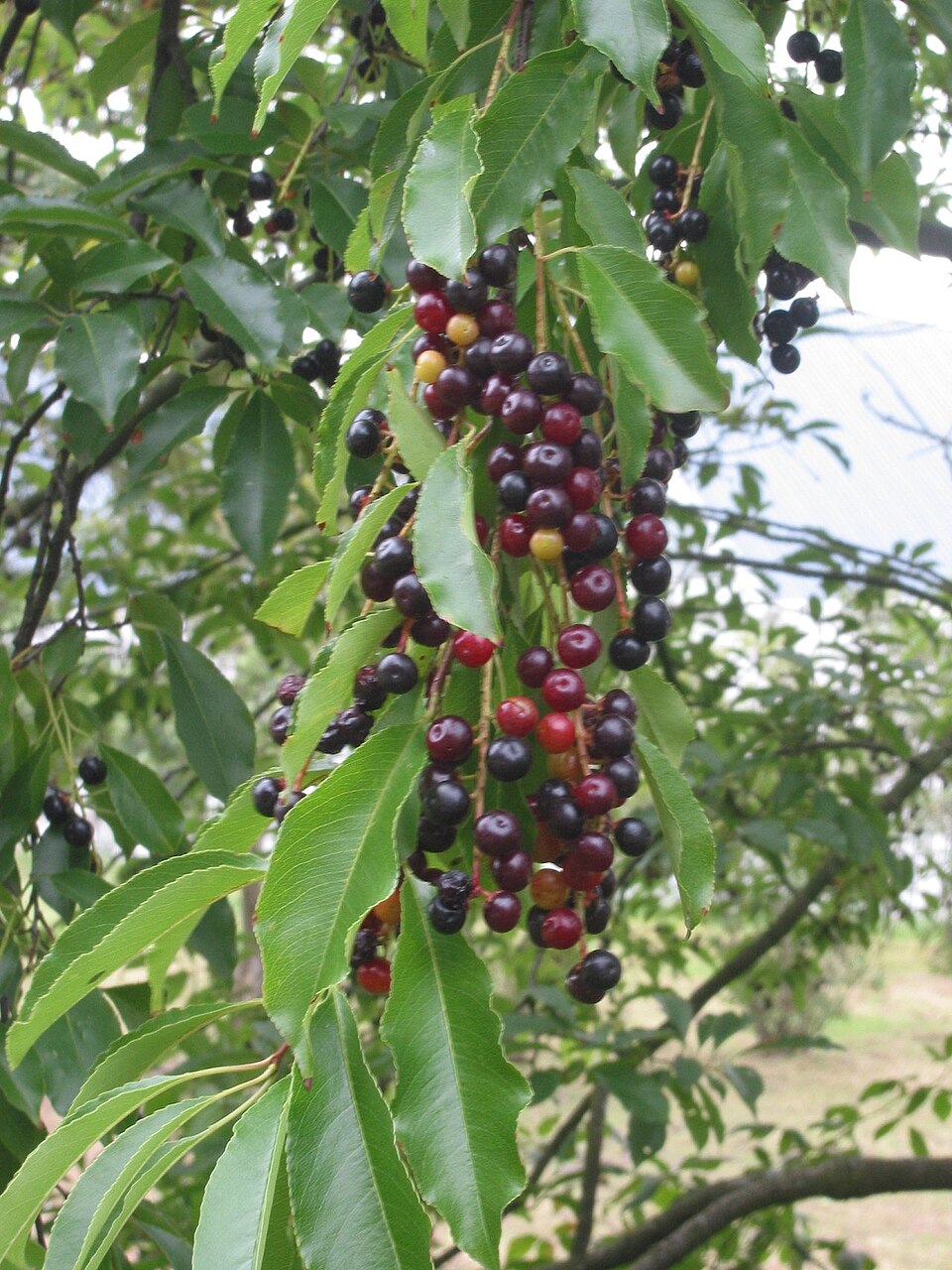
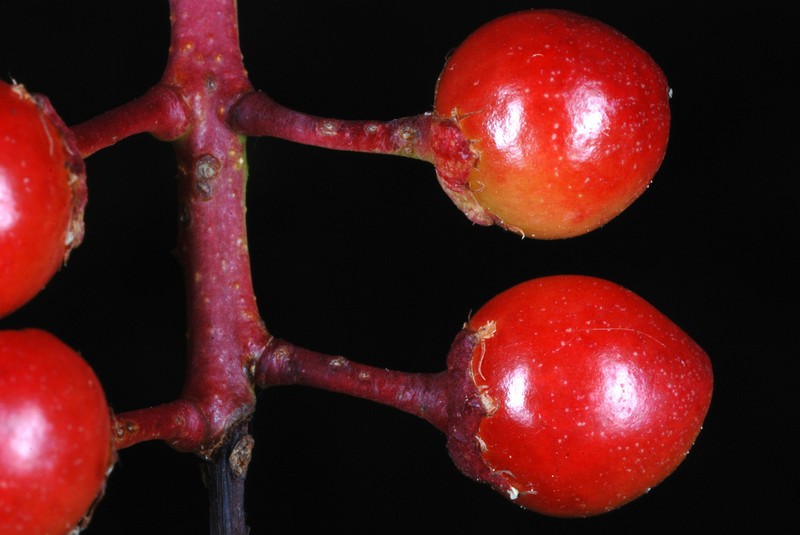
Establishment: Seeds are collected from locally native plants or purchased from local people. The fleshy fruits are shiny, black drupes that are 7 to 10 mm in diameter. Fruits mature from late August to September. Black cherry is found throughout eastern North America and in temperate deciduous forests.
Source: npn.rngr.net
Where to Buy
Nationwide Seller
- Ernst Seeds (seeds)
- Native Plants Nursery (nursery)
- Sheffield's Seed (seeds)