
Smooth Rose
Rosa blanda
- Native to:
- Canada, United States
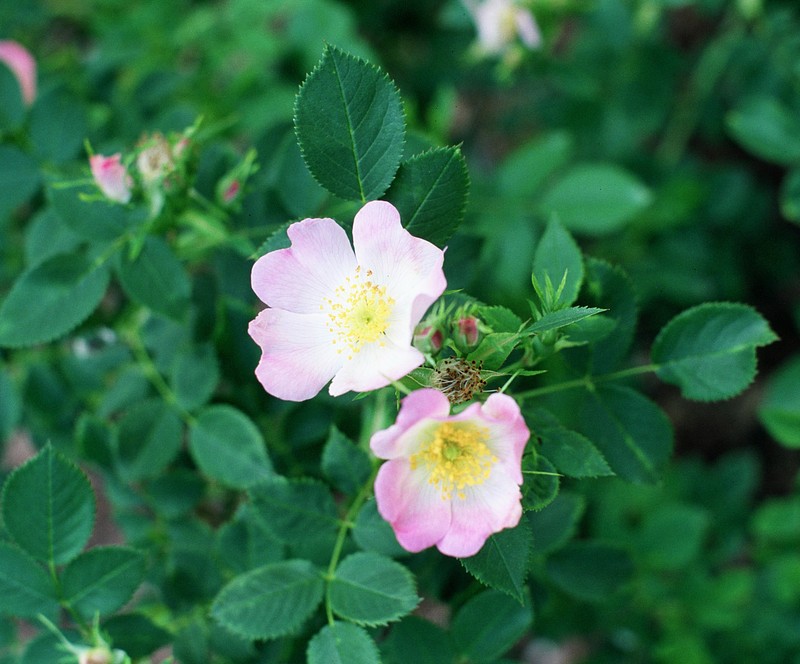
A. Barra
Taxonomy
- Division:
- Magnoliophyta | - Flowering plants
- Family:
- Rosaceae
- Genus:
- Rosa
- Species:
- Rosa blanda
- USDA Symbol:
- ROBL
Growth Characteristics
- Life Cycle:
- Perennial
- Growth Habit:
- Subshrub
- Height:
- 150 cm
- Light Requirements:
- Full Sun
- Drought Tolerance:
- Medium
- Bloom Months:
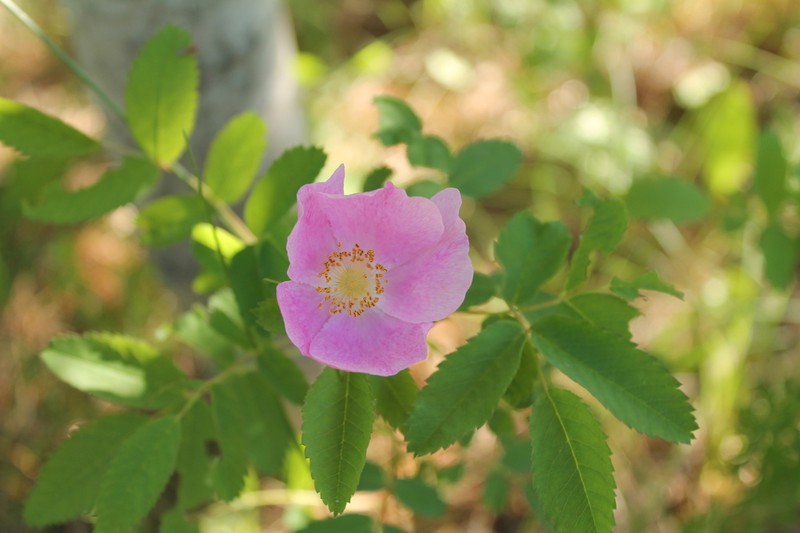
- may,jun,jul
- Bloom Colors:
- pink
- Landscaping Shrub:
- Yes
Wildlife Benefits
- Bees:
- ★☆☆☆☆ Documented bee visitation (GBIF)
- Butterflies & Moths:
- ★★☆☆☆ Documented Lepidoptera association (GBIF)
- Caterpillars:
- ★★☆☆☆ Recorded caterpillar host plant (HOSTS Database)
Keystone Species Ranking
- Caterpillar Keystone:
- ★★★★★ Butterfly & moth species supported by this genus (NWF)
Host Plant for Caterpillars
Reported Fauna Sightings
Garden & Ecology Notes
- Wildlife Value:
- birds, butterflies, small mammals
- Fragrant:
- Yes
- Fall Color:
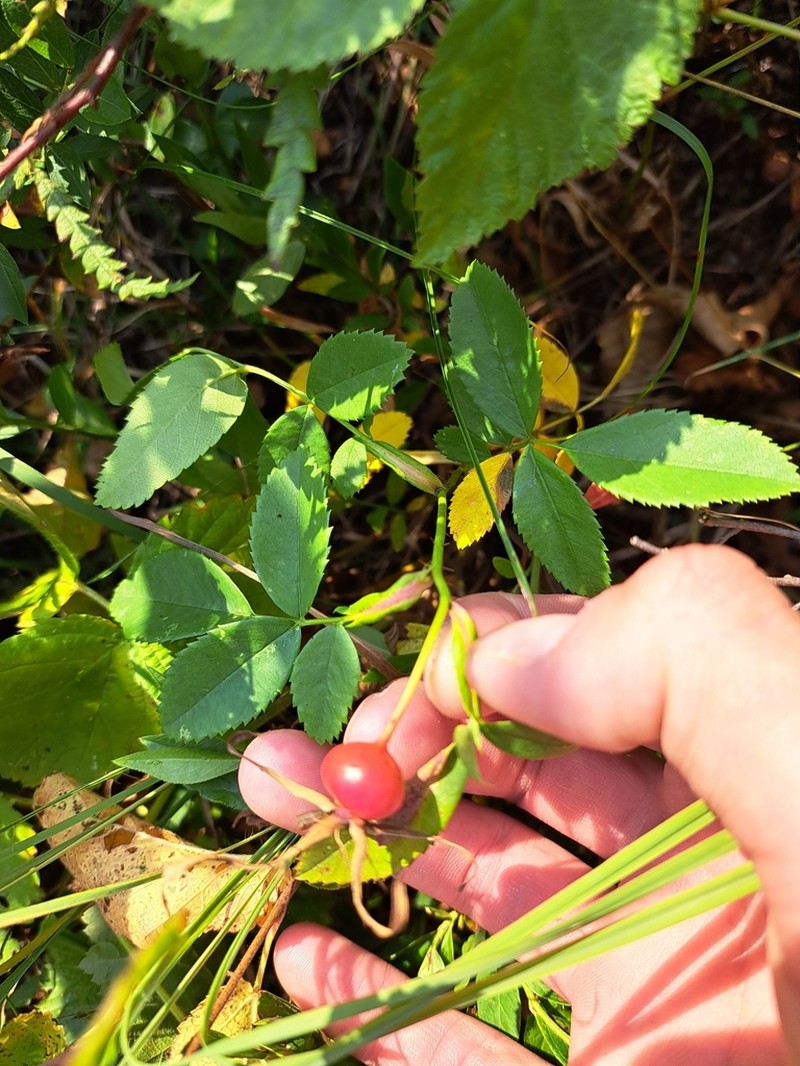
- red, orange
Soil Requirements
- Soil Type:
- well-drained, sandy or loamy soil
- pH:
- 5.5 - 7.5 (slightly acidic to neutral)
- Drainage:
- excellent drainage required
- Moisture:
- dry to moderate
- Notes:
- native to prairies and open woods
Propagation & Germination
- Stratification:
- Cold/moist stratification required — 60–90 days
- Germination Time:
- 30–90 days
- Notes:
- Seeds benefit from cold stratification for 60-90 days to break dormancy.
Pre-treatment: Seeds are scarified by pouring boiling water over them and letting them sit for 24 hours. This is followed by one month of warm moist stratification and four months of cold moist stratification. Seeds are mixed with equal amount of perlite or vermiculite in a Ziploc-style bag or a small Rubbermaid-style container, with a small amount of water added. The mixture is then placed in a room temperature setting for at least 1 month followed by a refrigerator or cold garage (33-42 degrees F) for at least 4 months. Seeds can be cold stored until planted for up to 3 years.
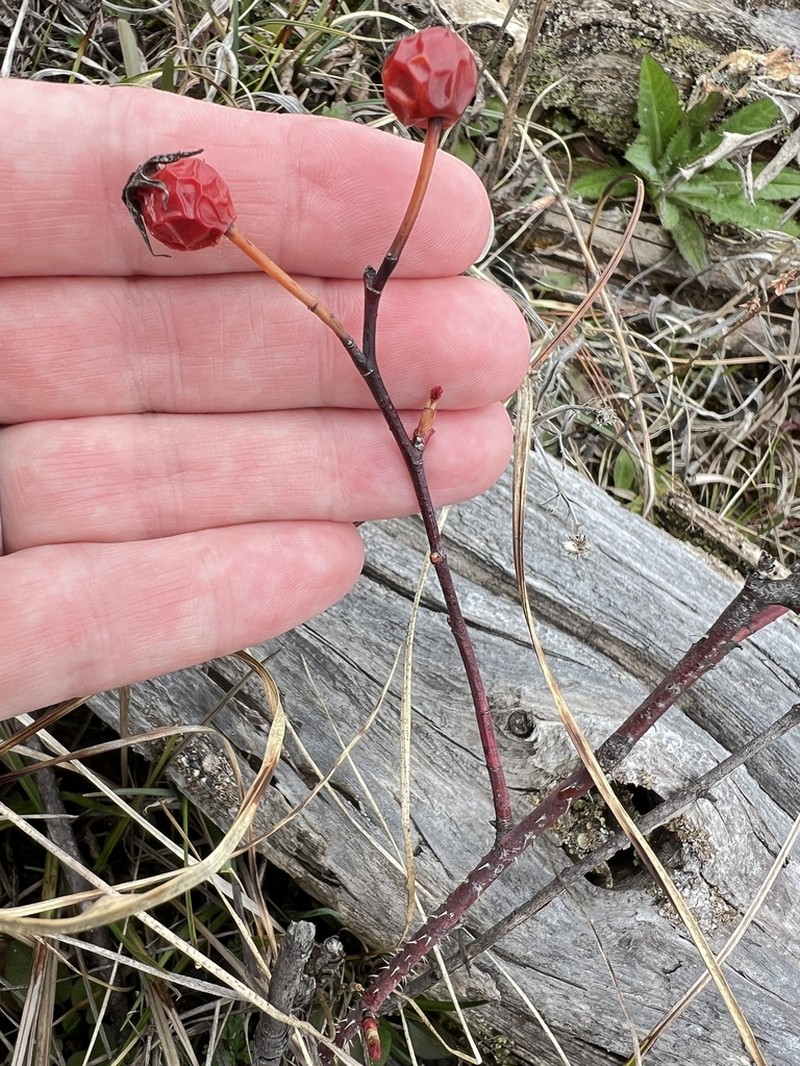
Establishment: Seeds are collected by hand from locally native plants within the eastern central Upper Peninsula. The plant flowers from May to June and seeds are harvested in October. The plant is generally distributed in dunes, sandy bluffs, shores, jack pine woodland, river banks, borders of woods and thickets, rocky openings and outcrops, fields and fencerows.
Source: npn.rngr.net
ORGHPS Germination Guide: Use repeated cycles of 20°C, then 4°C for 3 months each. Germination is very prolonged. Pulpy coat inhibits germination. Remove by soaking and rinsing in clean water for approximately 7 days. Discard water. * soak in hot water for 24 hours to scarify
Where to Buy
Nationwide Seller
- Sheffield's Seed (seeds)
- Prairie Moon Nursery (nursery and seeds)
- Vermont Wildflower Farm (nursery and seeds)