
Dwarf Rose
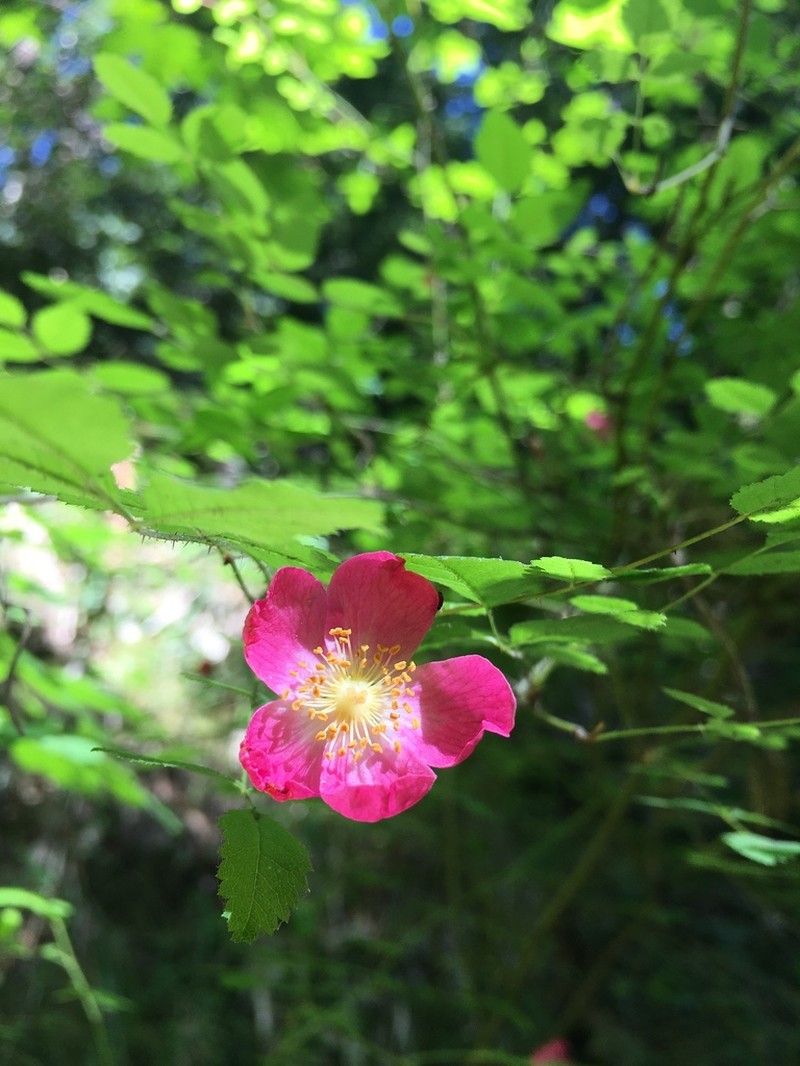
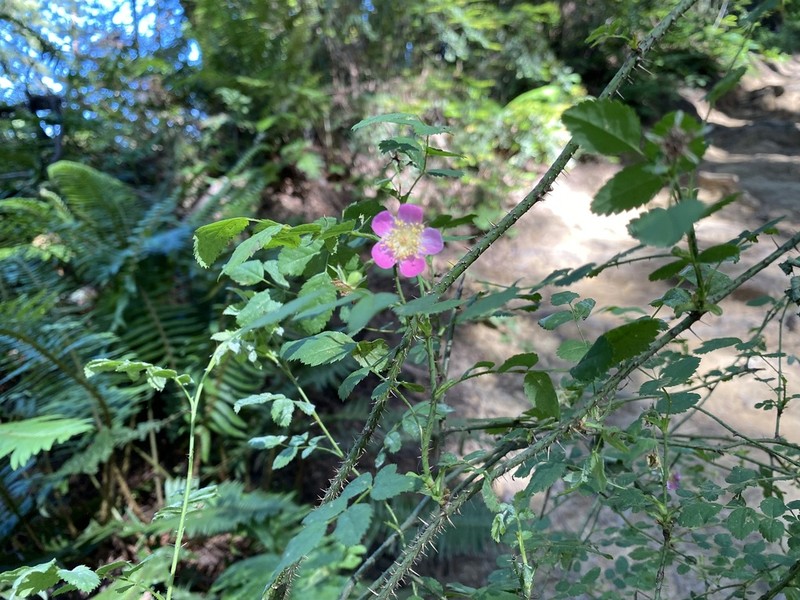
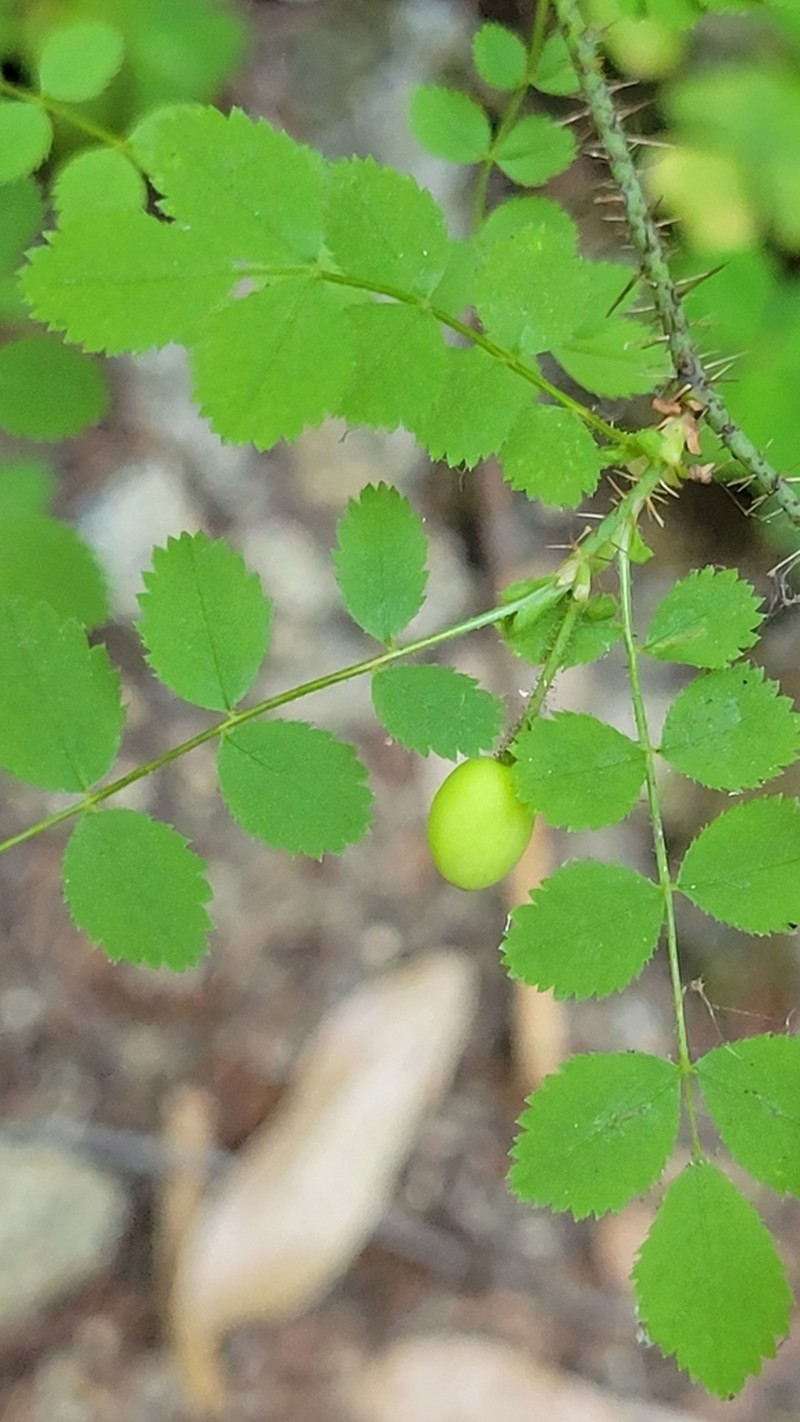
Rosa gymnocarpa
- Native to:
- Canada, United States
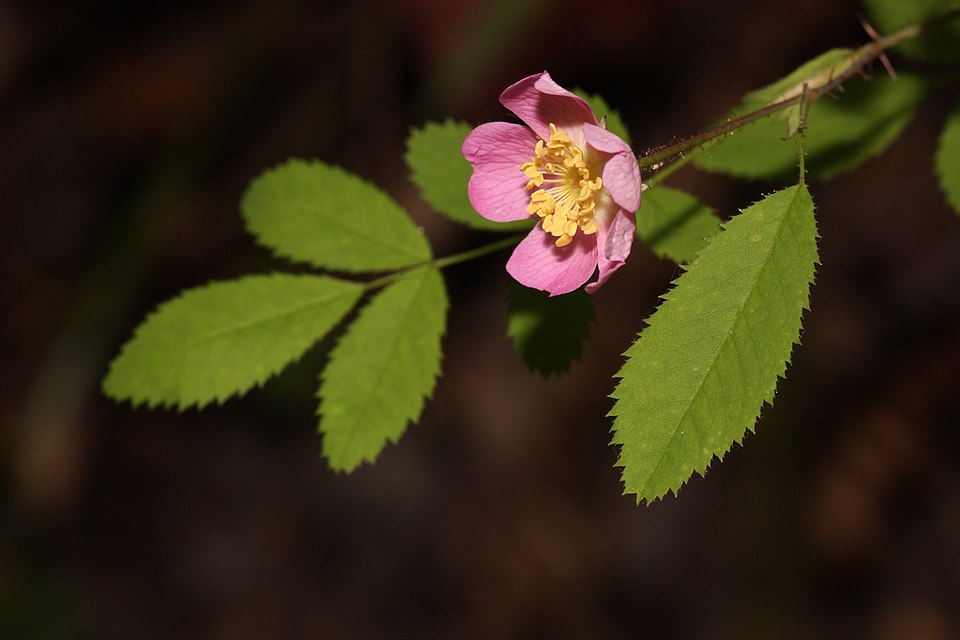
Walter Siegmund (talk)
Taxonomy
- Division:
- Magnoliophyta | - Flowering plants
- Family:
- Rosaceae
- Genus:
- Rosa
- Species:
- Rosa gymnocarpa
- USDA Symbol:
- ROGY
Growth Characteristics
- Life Cycle:
- Perennial
- Growth Habit:
- Subshrub
- Height:
- 200 cm
- Light Requirements:
- Full Sun,Part Shade,Shade
- Drought Tolerance:
- Medium
- Bloom Months:
- may,jun,jul
- Bloom Colors:
- pink
- Landscaping Shrub:
- Yes
Wildlife Benefits
- Bees:
- ★☆☆☆☆ Documented bee visitation (GBIF)
- Caterpillars:
- ★☆☆☆☆ Recorded caterpillar host plant (HOSTS Database)
Keystone Species Ranking
- Caterpillar Keystone:
- ★★★★★ Butterfly & moth species supported by this genus (NWF)
Host Plant for Caterpillars
Garden & Ecology Notes
- Wildlife Value:
- birds, small mammals
- Fall Color:
- red, orange
Soil Requirements
- Soil Type:
- rich, well-drained loamy soil
- pH:
- 5.5 - 7.0 (slightly acidic to neutral)
- Drainage:
- good drainage preferred
- Moisture:
- dry to moderate
- Notes:
- prefers shaded or semi-shaded areas
Propagation & Germination
- Stratification:
- Cold/moist stratification required — 60–90 days
- Germination Time:
- 30–90 days
- Notes:
- Seeds benefit from cold stratification for 60-90 days to break dormancy.
Pre-treatment: Seeds are placed into fine mesh bags and soaked in a 1% hydrogen peroxide (3:1 water/3% hydrogen peroxide) for 24 hours, rinsed, and placed in water for an additional 24 hours. Seeds are then layered in peat in a sealed container and placed into cold stratification (1 to 3 °C) for 90 to 100 days. Check seeds in warm strat and peat weekly. If mold is evident, seeds should be treated with 1% hydrogen peroxide.
Establishment: Rosa gymnocarpa is found in southern British Columbia, on both sides of the Cascade Mountains in Washington and Oregon, in the Sierra Nevada of California, in northern and central Idaho, and in western Montana. The genus is divided into two varieties: var. gymnocarpa, which grows throughout all of the species’ range, and var. serpentina, which grows only in California and Oregon.
Source: npn.rngr.net
ORGHPS Germination Guide: Requires scarification. Nick or rub between sheets of sandpaper. Requires soaking. Place in warm water until seeds swell, usually 24-48 hours. Discard water and any seeds that remain floating. Pulpy coat inhibits germination. Remove by soaking and rinsing in clean water for approximately 7 days. Discard water. * soak in hot water for 24 hours to scarify; plant at 32°C for 2-3 weeks, then 4°C for 4 months
Where to Buy
Nationwide Seller
- Sheffield's Seed (seeds)