
Thimbleberry
Rubus parviflorus
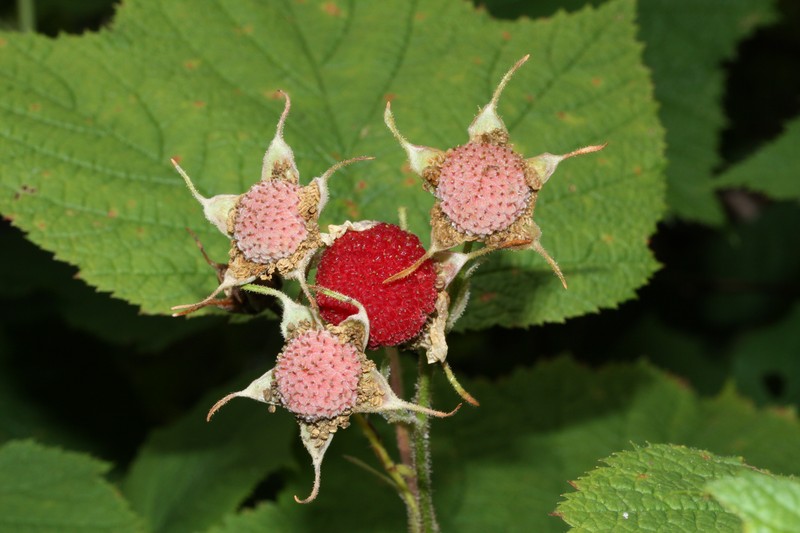
Taxonomy
- Division:
- Magnoliophyta | - Flowering plants
- Family:
- Rosaceae
- Genus:
- Rubus
- Species:
- Rubus parviflorus
Growth Characteristics
- Life Cycle:
- Perennial
- Growth Habit:
- Subshrub
- Height:
- 8-12 ft
- Light Requirements:
- Full Sun, Part Shade, Shade
- Drought Tolerance:
- Medium
- Bloom Months:
- may, jun, jul, aug
- Bloom Colors:
- White
- Food Forest:
- Plant contains edible parts
- Landscaping Shrub:
- Yes
Native Range
United States: Alaska, Arizona, California, Colorado, Iowa, Idaho, Illinois, Massachusetts, Michigan, Minnesota, Montana, New Mexico, Nevada, Oregon, South Dakota, Utah, Washington, Wisconsin, Wyoming, Canada: Alberta, British Columbia, Ontario
Keystone Species Ranking
- Caterpillar Keystone:
- ★☆☆☆☆ Based on number of butterfly and moth species using this genus as host plant (Source: National Wildlife Federation)
Host Plant for Caterpillars
Reported Fauna Sightings
Soil Requirements
- Soil Type:
- rich, well-drained loamy soil
- pH:
- 5.5 - 7.5 (slightly acidic to neutral)
- Drainage:
- good drainage preferred
- Moisture:
- consistently moist
- Notes:
- thrives in forest understory with organic matter
Germination Information
Pre-treatment: Seeds are cleansed with 1:3 (v:v) water and 3% hydrogen peroxide rinse for 15 minutes, then placed into a 24 to 48 hour running water soak rinse to a 90 day cold, moist stratification. Seeds are placed in fine mesh bags and are buried in moistened peat moss in ventilated containers under refrigeration at 3C.
Establishment: Seed is collected in late August when fruits are bright red and are easily pulled from hypanthium disk. Seeds are tan at maturity. Fruits are collected in plastic bags and kept under refrigeration prior to cleaning. There is a variation in the pre-treatment protocol across different sources, some suggest coating seeds with ThiramT, others suggest using a mild bleach solution for cuttings.
Source: npn.rngr.net