
Thimbleberry
Rubus parviflorus
- Native to:
- Canada, Mexico, United States
Walter Siegmund (talk)
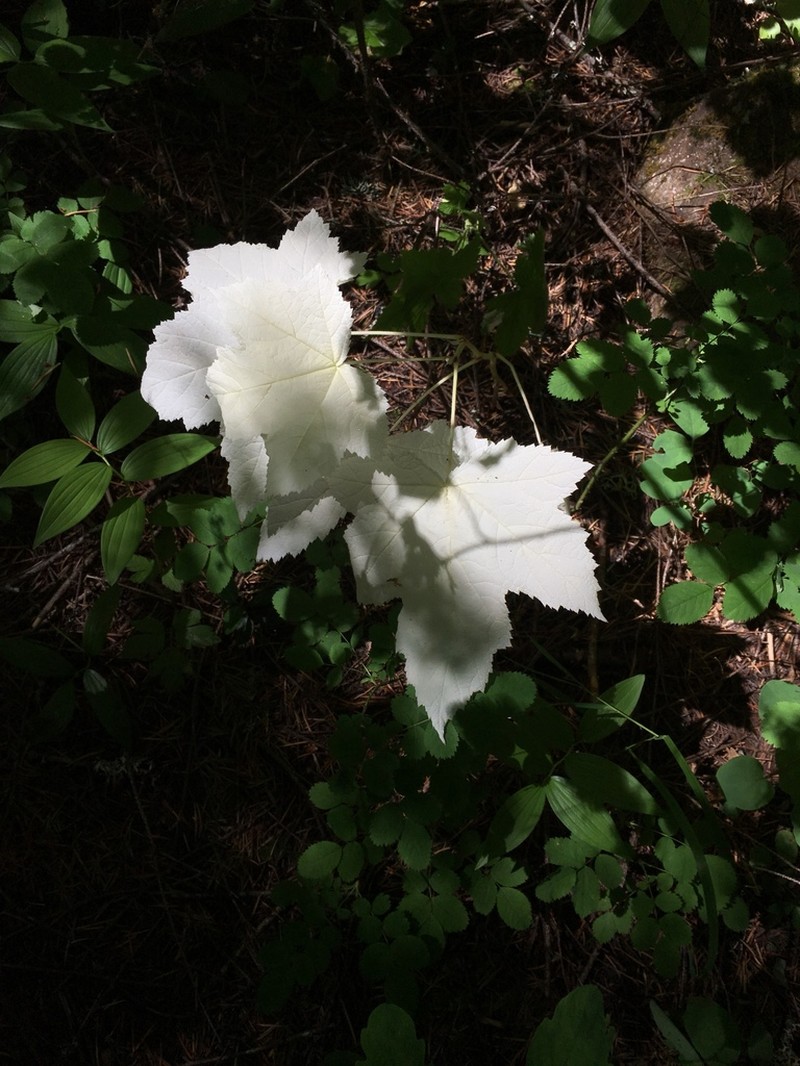
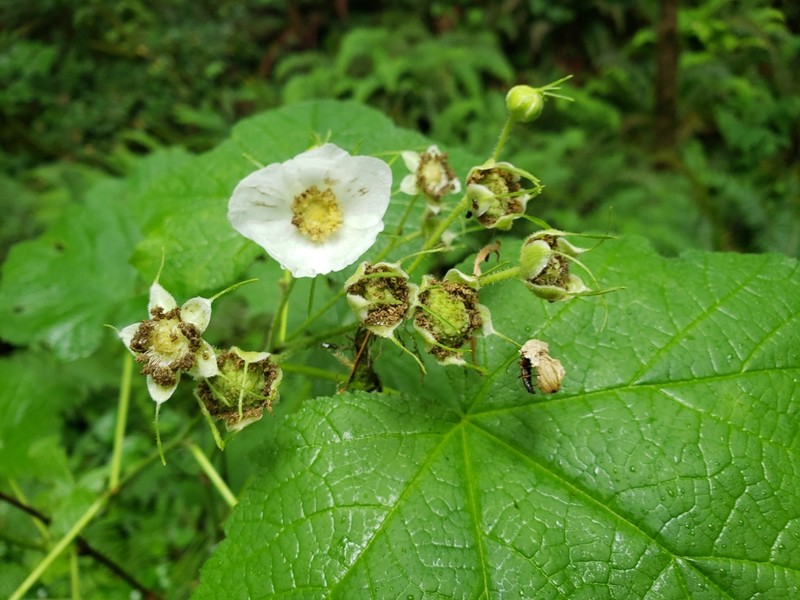
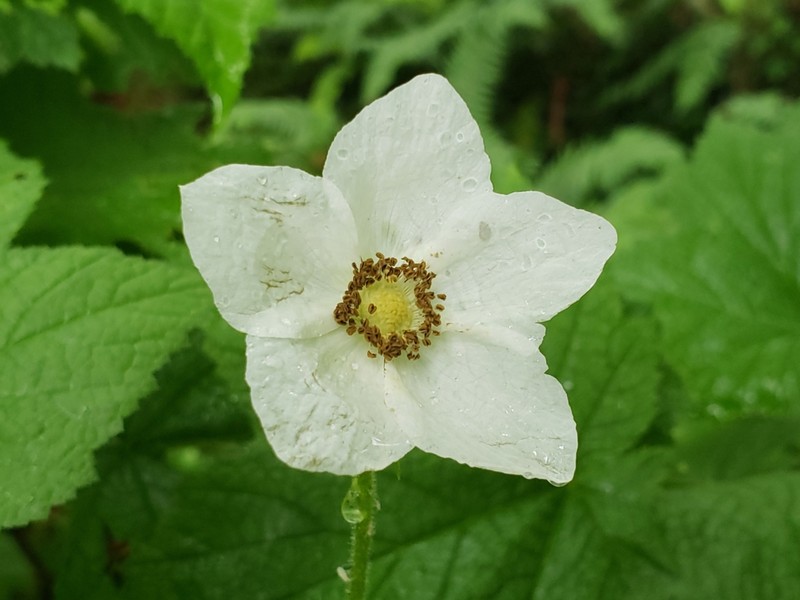
Taxonomy
- Division:
- Magnoliophyta | - Flowering plants
- Family:
- Rosaceae
- Genus:
- Rubus
- Species:
- Rubus parviflorus
- USDA Symbol:
- RUPA
Growth Characteristics
- Life Cycle:
- Perennial
- Growth Habit:
- Subshrub
- Height:
- 250 cm
- Light Requirements:
- Full Sun,Part Shade,Shade
- Drought Tolerance:
- Medium
- Bloom Months:
- may,jun,jul
- Bloom Colors:
- white
- Food Forest:
- Contains edible parts
- Landscaping Shrub:
- Yes
Wildlife Benefits
- Bees:
- ★☆☆☆☆ Documented bee visitation (GBIF)
- Butterflies & Moths:
- ★★★☆☆ Documented Lepidoptera association (GBIF)
- Caterpillars:
- ★★☆☆☆ Recorded caterpillar host plant (HOSTS Database)
Keystone Species Ranking
- Caterpillar Keystone:
- ★★★★★ Butterfly & moth species supported by this genus (NWF)
Host Plant for Caterpillars
Reported Fauna Sightings
Garden & Ecology Notes
- Wildlife Value:
- birds, butterflies, small mammals
- Fall Color:
- yellow, red
- Fire Ecology:
- Fire adapted — tolerates or benefits from fire
- Fire Notes:
- Resprouts vigorously from rhizomes after fire; benefits from post-fire conditions.
Soil Requirements
- Soil Type:
- rich, well-drained loamy soil
- pH:
- 5.5 - 7.5 (slightly acidic to neutral)
- Drainage:
- good drainage preferred
- Moisture:
- consistently moist
- Notes:
- thrives in forest understory with organic matter
Propagation & Germination
- Stratification:
- Cold/moist stratification required — 60–90 days
- Germination Time:
- 30–60 days
- Notes:
- Seeds benefit from cold stratification for 60-90 days to break dormancy.
Pre-treatment: Seeds are cleansed with 1:3 (v:v) water and 3% hydrogen peroxide rinse for 15 minutes, then placed into a 24 to 48 hour running water soak rinse to a 90 day cold, moist stratification. Seeds are placed in fine mesh bags and are buried in moistened peat moss in ventilated containers under refrigeration at 3C.
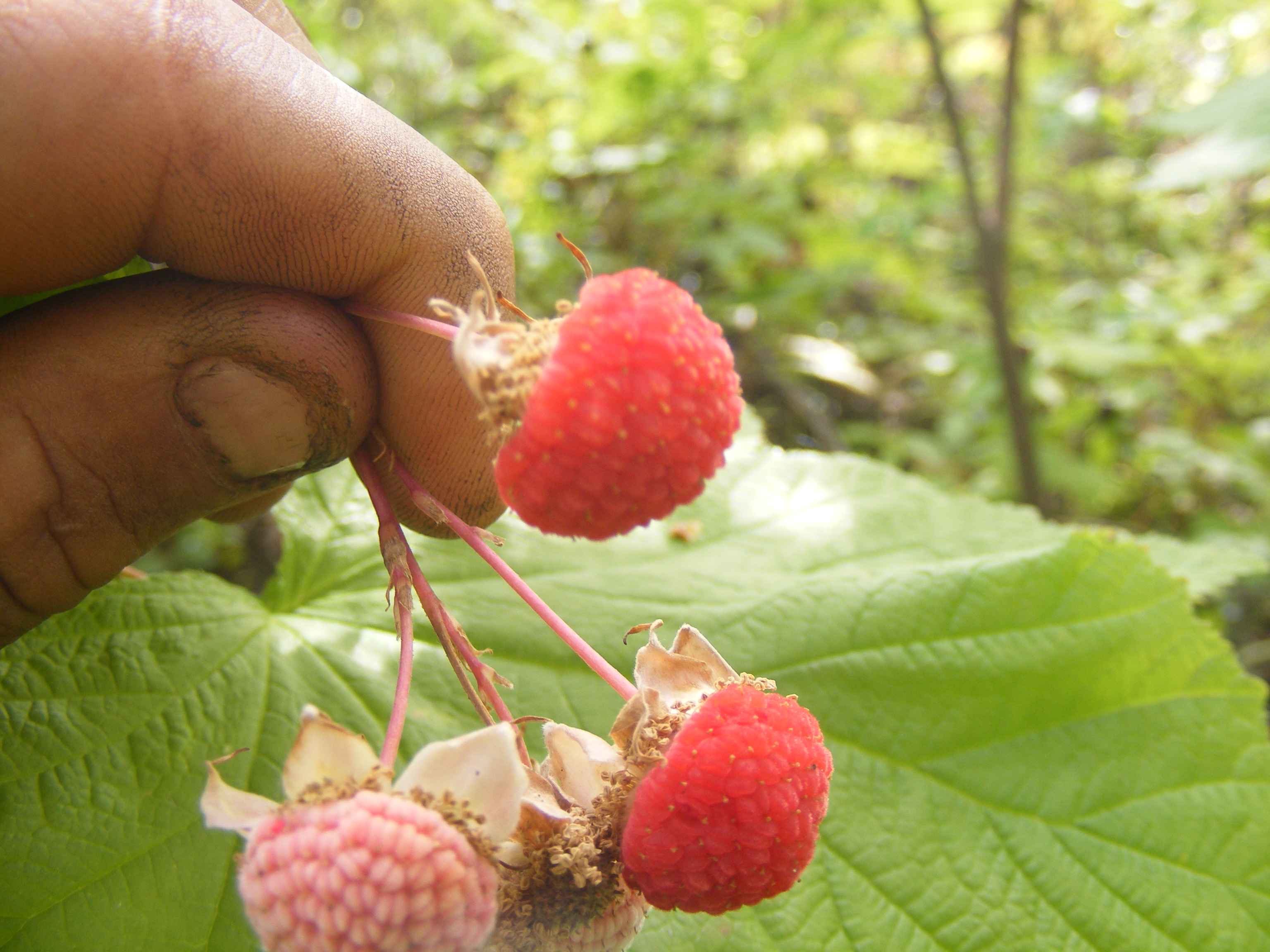
Establishment: Seed is collected in late August when fruits are bright red and are easily pulled from hypanthium disk. Seeds are tan at maturity. Fruits are collected in plastic bags and kept under refrigeration prior to cleaning. There is a variation in the pre-treatment protocol across different sources, some suggest coating seeds with ThiramT, others suggest using a mild bleach solution for cuttings.
Source: npn.rngr.net
ORGHPS Germination Guide: Expose to fluctuating outdoor winter temps incl. freezing for 3 months. Increase light/temp in spring.
Where to Buy
Nationwide Seller
- Sheffield's Seed (seeds)
- Butterfield Seeds (seeds)