
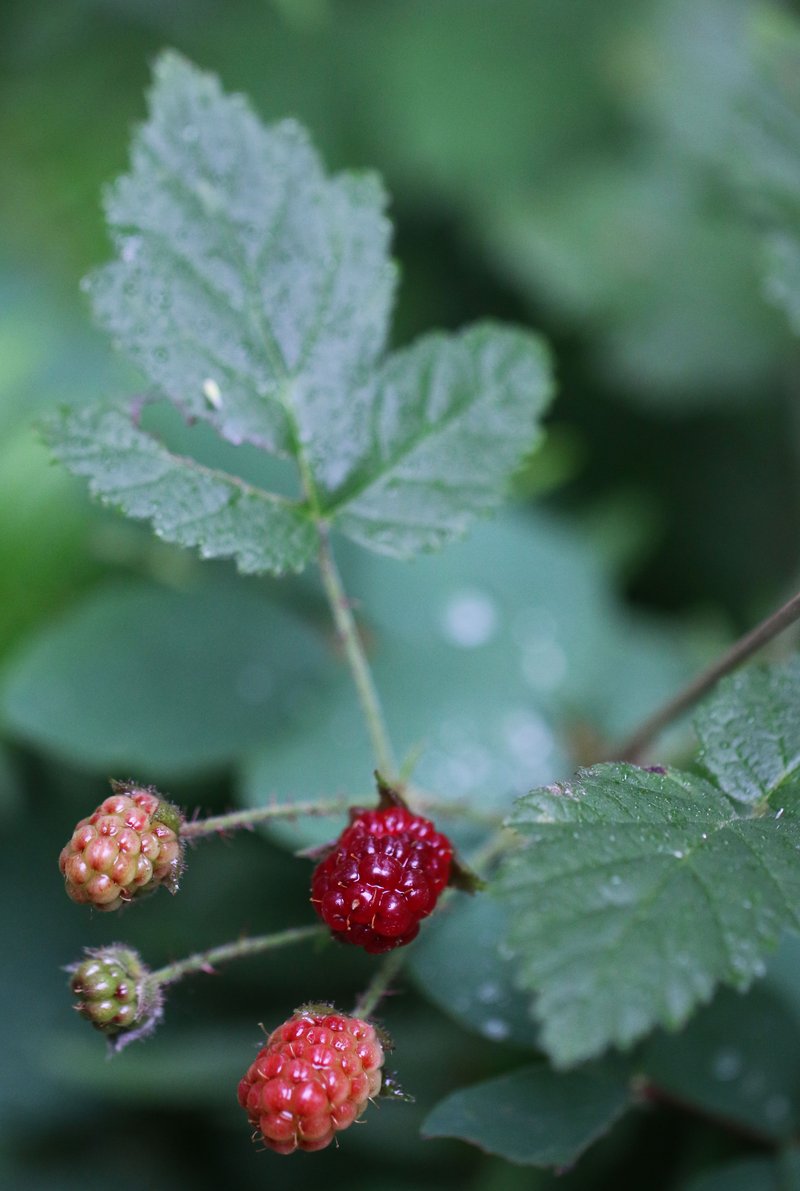
California Blackberry
Rubus ursinus
Also known as: Pacific Dewberry
Taxonomy
- Division:
- Magnoliophyta | - Flowering plants
- Family:
- Rosaceae
- Genus:
- Rubus
- Species:
- Rubus ursinus
Growth Characteristics
- Life Cycle:
- Perennial
- Growth Habit:
- Subshrub
- Height:
- 4-6 ft
- Light Requirements:
- Full Sun, Part Shade, Shade
- Drought Tolerance:
- Medium
- Bloom Months:
- mar, apr, may, jun, jul
- Bloom Colors:
- White, Pink
Native Range
United States: California, Idaho, Montana, Oregon, Washington, Canada: British Columbia
Keystone Species Ranking
- Caterpillar Keystone:
- ★☆☆☆☆ Based on number of butterfly and moth species using this genus as host plant (Source: National Wildlife Federation)
Host Plant for Caterpillars
Reported Fauna Sightings
Soil Requirements
- Soil Type:
- rich, well-drained loamy soil
- pH:
- 5.5 - 7.0 (slightly acidic to neutral)
- Drainage:
- excellent drainage required
- Moisture:
- consistently moist
- Notes:
- thrives in forest edges and clearings
Germination Information
Pre-treatment: For seeds, sow into trays filled with stabilized medium plugs (Q-plugs) and refrigerate at 1 to 3 °C for 120 days. For cuttings, dip in a mild bleach solution for 30 seconds, recut to 5 inch lengths of 4 nodes each, and treat with Hormex (3000 ppm IBA) rooting powder.
Establishment: R. ursinus is found mostly below 3,000 feet elevation in canyons and waste places; from Oregon to Lower California. Seeds are collected between June and August. Hardwood cuttings are collected between December 15th and January 31st. There are variations in the pre-treatment and establishment protocols between seeds and cuttings.
Source: npn.rngr.net