
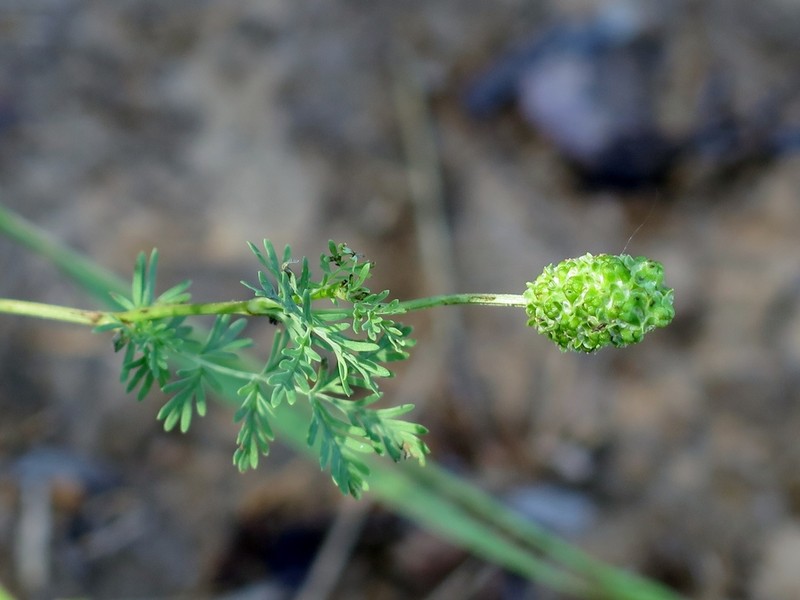
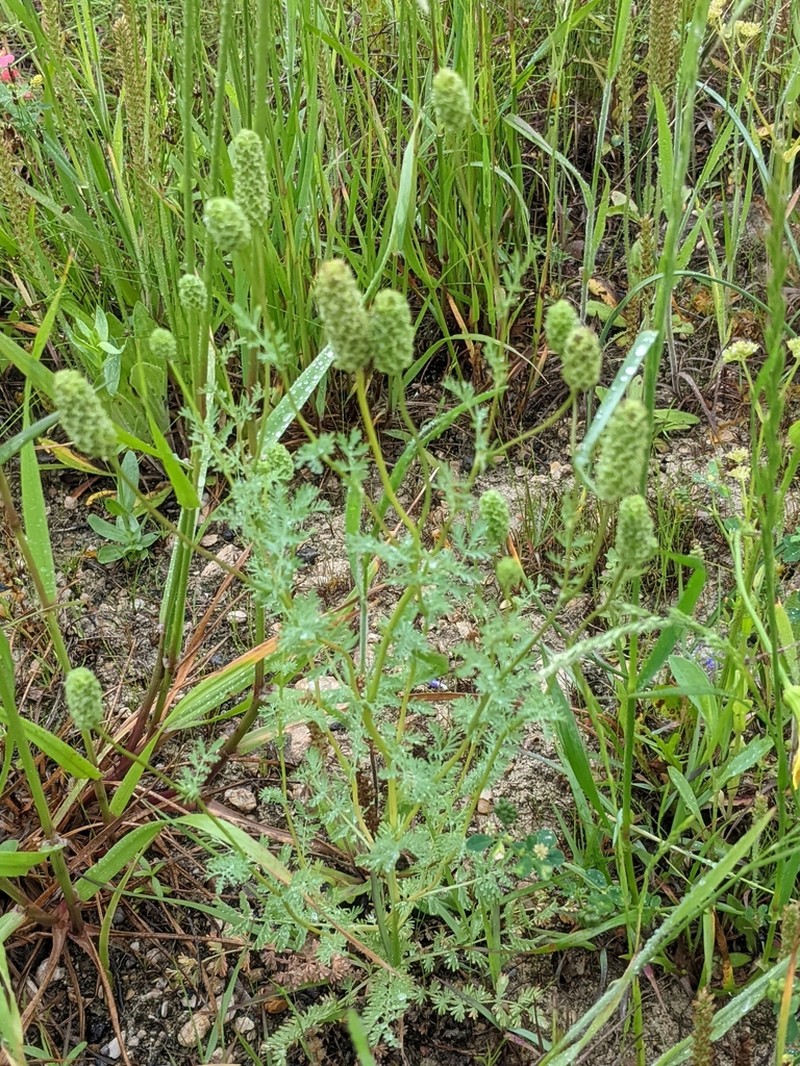
Prairie Burnet
Sanguisorba annua
- Native to:
- Canada, United States
Stickpen
Taxonomy
- Division:
- Magnoliophyta | - Flowering plants
- Family:
- Rosaceae
- Genus:
- Sanguisorba
- Species:
- Sanguisorba annua
- USDA Symbol:
- SAAN2
Growth Characteristics
- Life Cycle:
- Annual | Perennial
- Growth Habit:
- Forb/herb
- Height:
- 100 cm
- Light Requirements:
- Full Sun
- Drought Tolerance:
- Medium
- Bloom Months:
- jun,jul,aug
- Bloom Colors:
- white, greenish
Soil Requirements
- Soil Type:
- well-drained, sandy or gravelly soil
- pH:
- 6.0 - 7.5 (slightly acidic to neutral)
- Drainage:
- excellent drainage required
- Moisture:
- dry to moderate
- Notes:
- native to open, rocky or sandy areas
Propagation & Germination
- Stratification:
- Cold/moist stratification required — 30–60 days
- Germination Time:
- 14–30 days
- Notes:
- Seeds germinate readily after cold stratification; sow in fall or stratify for 30-60 days.
Pre-treatment: Extended cold, moist stratification. 90 days of cold, moist stratification resulted in 33% emergence. Containers sown in November and left outside under cool, fluctuating spring temperatures achieved 97% emergence.
Establishment: Seeds were covered in all trials. The effects of light on germination were not explored. Seedlings which germinated in the greenhouse thrived in the constant warmth, so it is likely the longer stratification time and not the cool, fluctuating temperature was the factor in the increased germination. Seed is collected in early July when the inflorescence is dry and the seeds are grayish-brown in color.
Source: npn.rngr.net